Awamori, Japan’s oldest distilled liquor, is a unique beverage deeply rooted in the culture and history of Okinawa, the country’s southernmost prefecture. Unlike the more widely known sake or shōchū, awamori holds a special place in the hearts of the Okinawan people and represents the rich heritage of the Ryukyu Islands. With a legacy spanning over 600 years, it remains a powerful symbol of Okinawan hospitality and pride.
What is Awamori?
Awamori is a unique spirit made primarily from long-grain Thai rice, also known as “Indica rice.” The primary distinction between awamori and other Japanese liquors, such as shōchū, lies in its fermentation process. The rice is soaked in water and then inoculated with black koji mold, a variety specific to Okinawan brewing. After being fermented with water and yeast, it undergoes a single distillation. This method preserves a signature, deep flavor, and a remarkably smooth finish.
The alcohol content typically ranges between 30% and 40%, although certain varieties, like Hanasake, can reach up to 60%. Known for a profile that is strong yet smooth with subtle fruity undertones, it is a versatile drink that can be enjoyed in numerous ways.
One particularly prized variation is “Kusu,” the term for aged awamori. Kusu is valued for its mellow and refined character, which develops over years or even decades of maturation in clay pots. Okinawans hold Kusu in high regard, often reserving it for significant celebrations or special occasions.
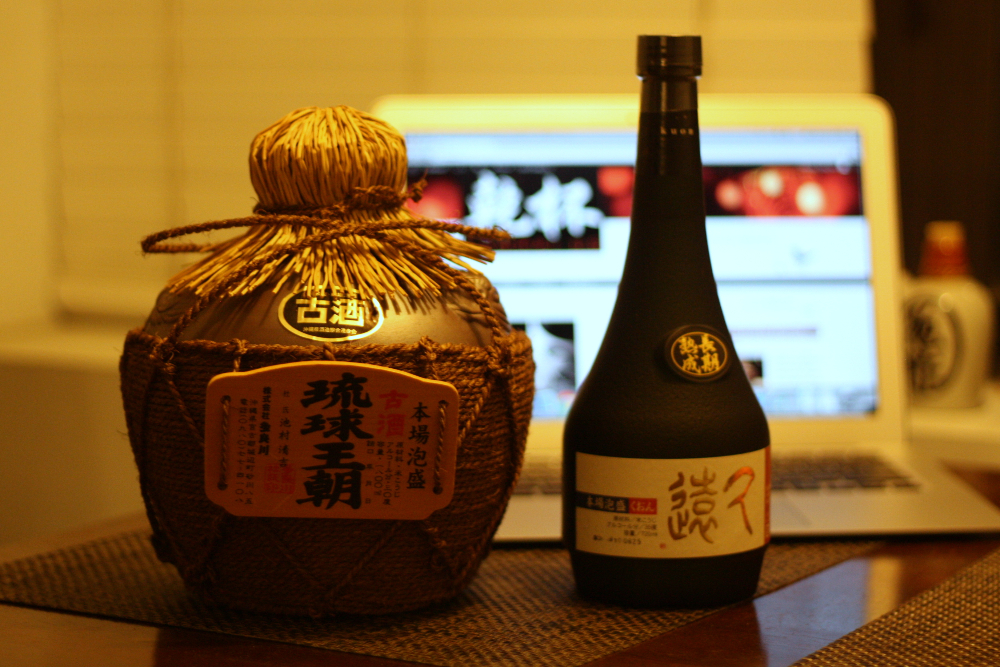
Traditional clay pot next to a bottle of 8-year-old Kusu Awamori – Photo Credit: Stephen on Kanpai
A Brief History
The story of awamori is inseparable from the history of Okinawa itself. The Ryukyu Kingdom, which flourished between the 15th and 19th centuries, served as a vital maritime trading hub connecting China, Korea, Southeast Asia, and Japan. During these exchanges, the technique of distilling liquor was introduced to the kingdom from Thailand. The continued use of Thai rice in modern production is a lasting reflection of these ancient historical ties.
How to Enjoy Awamori
Because it is so versatile, awamori can be served in several ways depending on your personal preference or the setting. Here are a few common methods:
Neat: For those who want to experience the full depth of awamori’s flavor, drinking it neat is the best way. This allows you to savor the taste.
On the rocks: Serving the liquor over ice is another popular choice. The ice helps mellow the alcohol while slowly releasing different flavor notes as it melts, providing a refreshing experience.
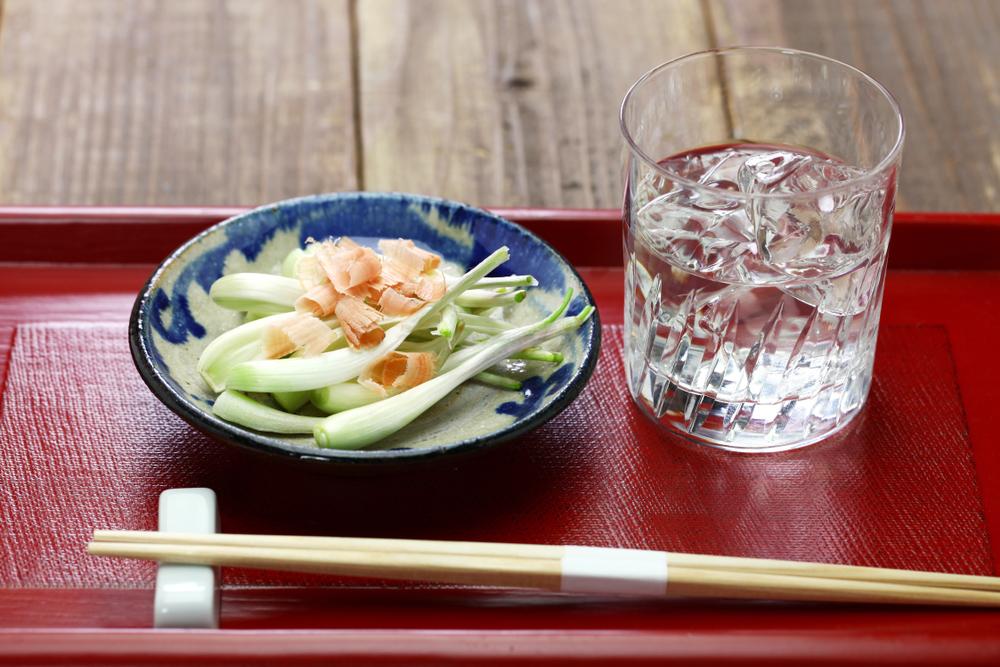
With water (Mizuwari): This is the most common method in Okinawa, especially for higher-proof varieties. Mixing awamori with cold water creates a lighter, smoother drink, while adding hot water enhances its aromatic bouquet.
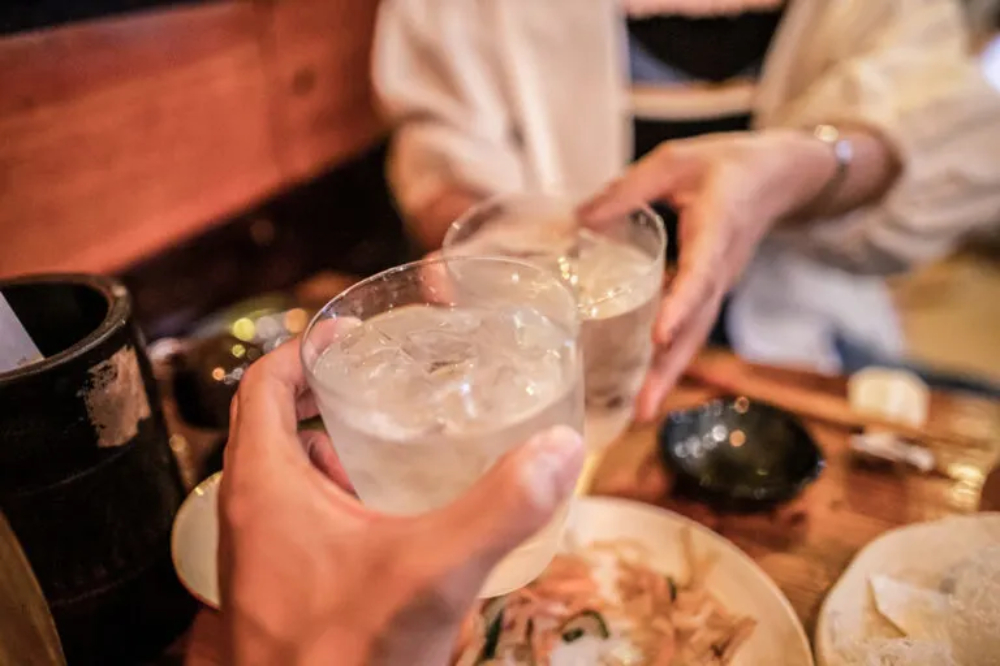
Mizuwari enjoyed with friends – Photo Credit: Phoebe on Japanese Food Guide
Cocktails: While traditionally enjoyed simply, awamori has recently gained popularity as a cocktail base. Its rich body makes it an excellent foundation for many drinks, pairing well with soda, lime, or tropical juices like pineapple and mango.
Aged (Kusu): Aged awamori (kusu) is often sipped slowly to fully enjoy the complex, deep flavors that develop over time.

Awamori maturing in a cellar at Taragawa Co. – Photo Credit: Taragawa Distillery
Ultimately, there are no strict rules. Feel free to experiment with shikuwasa (Okinawan lime), turmeric, oolong tea, or even carbonated mixers to find your favorite combination!
Food pairings
Awamori’s unique flavor profile makes it an excellent accompaniment to a wide variety of foods, especially Okinawan cuisine. Here are some of the best food pairings for awamori:
Goya Chanpurū: This iconic stir-fry is a staple of the island’s cuisine. Goya Chanpurū is considered the representative dish of Okinawan cuisine and typically features tofu, egg, and meat combined with goya (bitter melon). The bitterness of the melon pairs perfectly with the earthy, smooth notes of the drink.
Rafute: A traditional dish of braised pork belly, Rafute is rich and savory with a sweet glaze. These heavy flavors are beautifully balanced by the mellow strength of a good awamori.
Soki Soba: This classic noodle soup features thick wheat noodles and tender pork spare ribs. The comforting, savory broth is well-complemented by the spirit’s bold character.
Sashimi: For a lighter pairing, the clean, subtle flavors of fresh raw fish allow the complexity of the awamori to shine without being overpowered.
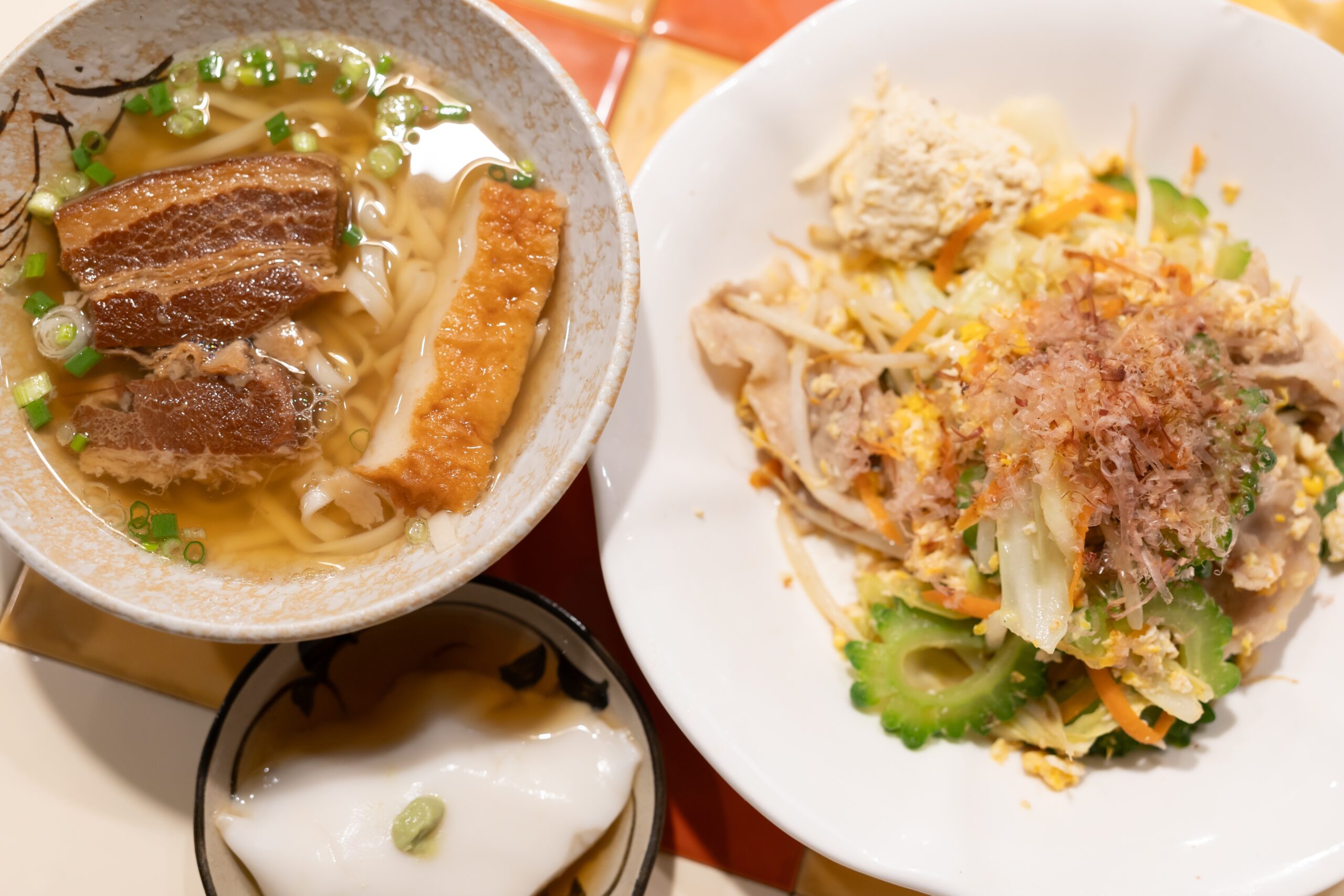
Okinawa cuisine: Goya Chanpuru, bitter melon stir-fried with pork, tofu, and egg with soba – Photo Credit: Wongsakorn 2468
Cultural significance
Beyond its taste, awamori holds a sacred place in Okinawan life. It is used in rituals, milestone celebrations, and as an offering at ancestral altars. Many locals believe that sharing a glass with family or friends helps strengthen social bonds and express gratitude.
Whether at a wedding, a New Year’s gathering, or an ancestral worship ceremony, the presence of awamori symbolizes unity and prosperity. While it has gained international recognition in recent years, it remains a cultural treasure of the islands, deeply connected to the Ryukyu way of life.
Awamori is more than just a spirit; it is a symbol of Okinawa’s vibrant history and culture. Whether you enjoy it neat, with water, or paired with traditional Okinawan dishes, awamori offers a rich and complex drinking experience that has been perfected over centuries. So the next time you have the opportunity to enjoy awamori, take a moment to appreciate the centuries of craftsmanship, tradition, and Okinawan pride distilled into every bottle. Cheers, or as they say in Okinawa, “karii”!
Featured Photo Credit: Bonchan