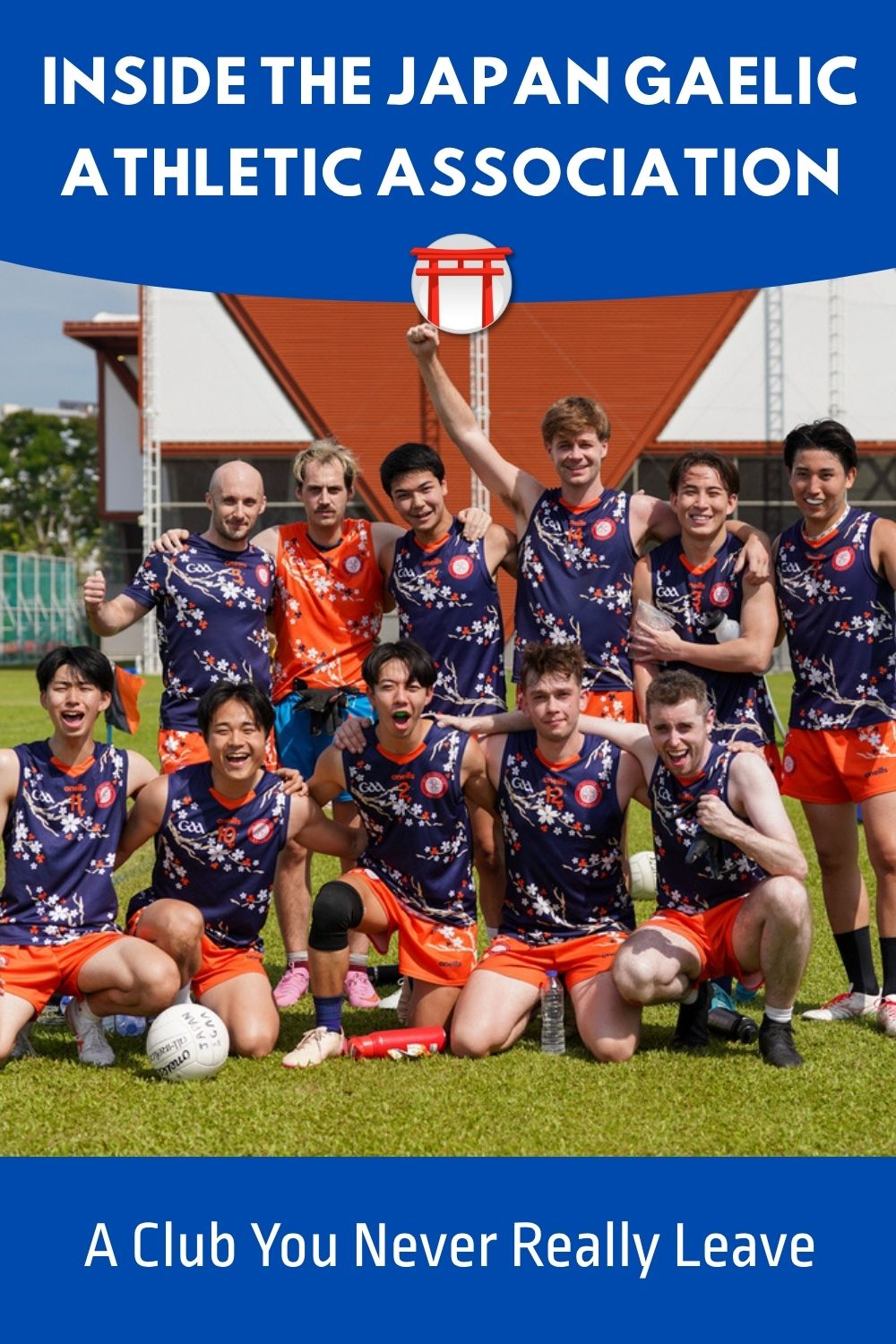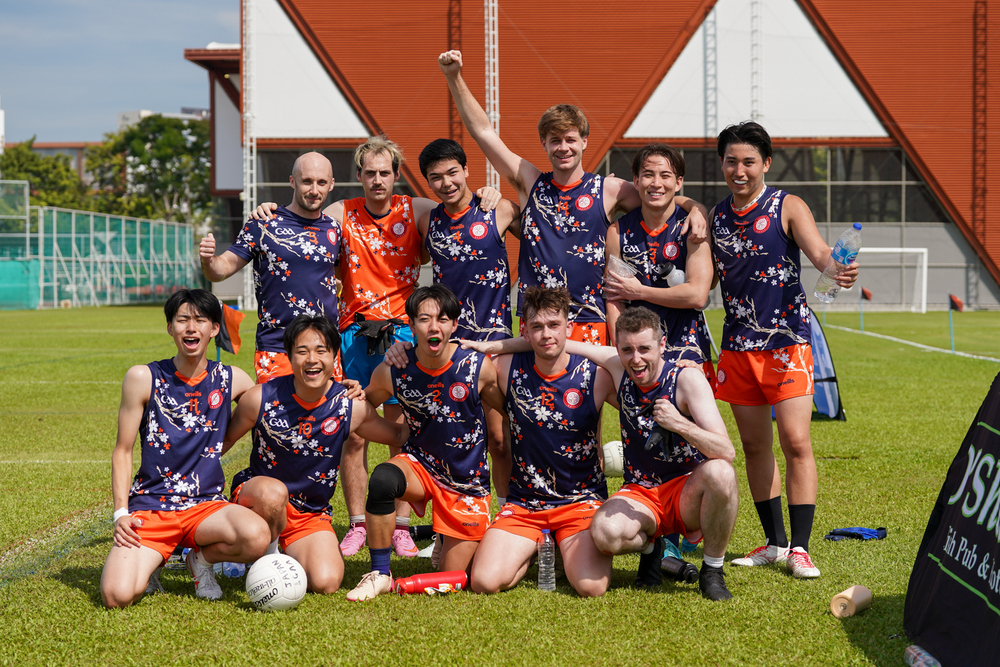
Sport has long served as one of the most influential forms of soft power throughout human history. Beyond physical fitness and competition, competition has the ability to bring people together, foster shared understanding, and build lasting communities. In the case of Japan GAA, sport is used not only as a tool for community building, but also as a meaningful bridge for international connection and cultural exchange.
The Japan Gaelic Athletic Association (GAA) is a non-profit, volunteer-led organization dedicated to promoting international friendship and understanding through participation in Gaelic sports and Irish culture. While Gaelic football is the club’s primary sport, Japan GAA actively introduces members to hurling, camogie, and other traditional Gaelic games. As an overseas brand of the Gaelic Athletic Association (GAA), the world’s largest amateur sporting organization founded in Ireland, Japan GAA carries forward the values of inclusivity, community, and cultural pride in a distinctly international setting.
Through my previous experience working with Cork GAA and participating in Japan GAA practices and events, this interview presented a unique opportunity to better understand how the organization has grown over time and how it continues to create a welcoming environment for players of all backgrounds. This conversation offered insight into Japan GAA’s development, the importance of diversity within sports, and the ways in which shared experiences on and off the pitch help strengthen its community.
With that in mind, we are excited to introduce you to Amanda Clawson, a current member of Japan GAA. Through this interview, we hope to highlight not only the joy of Gaelic sports but also the role Japan GAA plays in connecting people across cultures.
It is a pleasure to meet you. I appreciate you taking the time to chat with us about Japan GAA today. To start, could you please introduce yourself and tell us how you got involved with Japan GAA?
Hi there, my name is Amanda. I joined Japan GAA in 2024, so I’m in my third season right now. I had played Gaelic Football in Bahrain, so I knew a little bit about the sport before I came here. When I first arrived in Japan, I didn’t know anyone, so joining the club for me was the best and quickest way to build friendships and assimilate into Japan. Even within the club, there is such a variety of players who come from different backgrounds, you can easily find your group of people. While we are a club dedicated to athletics, so much of our time is dedicated to team bonding and participating in social activities.
Before diving deeper into Japan GAA, many of our readers may not be familiar with the Gaelic Athletic Association (GAA) as a whole. Could you share a bit about the history of the GAA, the sports played, and how its guiding mission and values resonate with you personally?
The Gaelic Athletic Association was founded in Ireland in 1885 with the goal of preserving Ireland’s unique games. The GAA manages and promotes Gaelic games and promotes Irish culture and language. The sports played under GAA are Gaelic football, hurling, camogie, handball, and rounders. The official purpose of the GAA is to “promote Gaelic games, culture and lifelong participation as a community-based, volunteer-led organisation which enriches lives and communities.” What really resonates with me is the fact that it’s all volunteer-based. People truly work together to create a harmonious club that continues to thrive, often without recognition. Since joining, I’ve been able to volunteer at the school I work at to teach Gaelic football to the next generation of players, which has been incredibly rewarding.
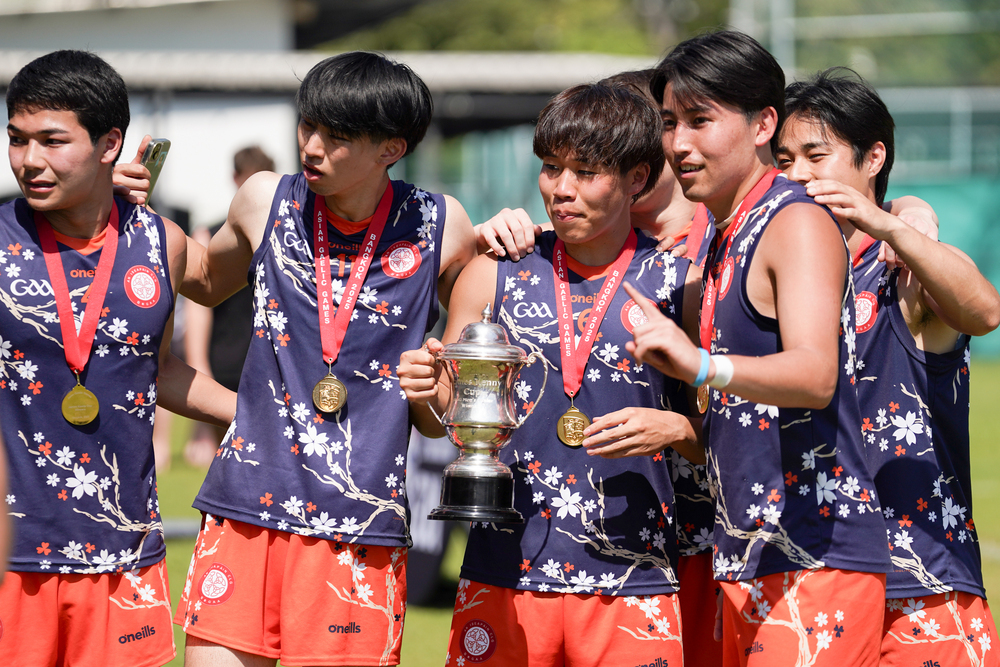
Hoisting one of the trophies won during the Asian Gaelic Games in Bangkok 2025 – Photo Credit: Japan GAA
Now a bit more on Japan GAA. Since its founding in 1995, the club has experienced many changes in membership while continuing to grow and thrive. From preparing for tournaments like the Asian Gaelic Games to becoming a year-round sporting and cultural organization, how have you seen Japan GAA evolve over time while staying true to the wider GAA mission?
The greater Japan GAA community is more than 300 strong, while attendance at training and tournaments ebbs and flows, the community remains strong and connected through various events throughout the year. In September, we celebrated 30 years of Japan GAA at Ireland House, and it was such a beautiful experience for current and retired players to connect over shared experiences that have transcended the years and just the love of the game. Japan GAA has connected so many people who would have otherwise not crossed paths, which directly aligns with the GAA values of community identity and inclusiveness.
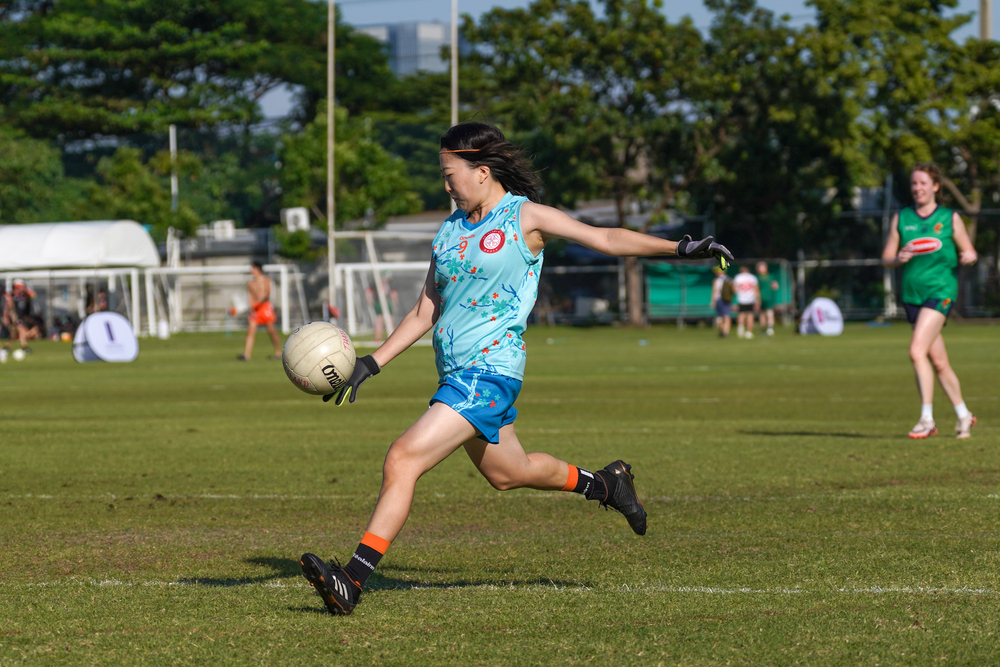
Kicking motion in Gaelic Football. This is the only way to score between the goal posts or in the net – Photo Credit: Japan GAA
For some members or even newcomers who may join for a training session who have no prior experience in Gaelic football, hurling, or camogie, how would the club make them feel welcomed and teach them the basics of the sports while maintaining an inclusive and supportive environment? And if possible, what does a typical training session look like?
A typical training session for GAA runs for two hours, and we keep that time window so long to accommodate anyone who needs to arrive late or leave early. I remember my first training with Japan GAA, I got lost and ended up arriving nearly an hour late! When I finally arrived, the whole group included me immediately, and it was such a fun session. At a usual training session, we spend the first fifteen minutes warming up and stretching, during this time, we’re chatting casually. After we get all warmed up, we make a giant circle, and everyone introduces themselves twice. When we have a larger group of players at a session, we split up into men’s and women’s teams for our own drills. We practice passing, kicking, shooting, and running plays up and down the field. The last hour is usually reserved for game play, which we play co-ed. It’s a really fun time when we’re all playing games together. Some of our players have backgrounds in other sports like soccer, rugby, volleyball, or cross-country running, and you can really see those skills shine through during gameplay. We have some players who have no experience in any sport whatsoever, and usually we have a mini-session on the side of the regular training in order to teach the basic movements and skills before joining the rest of the squad. Sometimes we go out for a pint (or two) after training to catch up and connect with new players.
Japan GAA has a notable international membership, with strong participation from Japanese players, especially on the women’s team. How does this diversity shape the atmosphere of the club, both on and off the pitch?
Japan GAA’s diversity is one of the club’s greatest strengths. Having a mix of Japanese and international players creates an atmosphere that’s welcoming and open both on and off the pitch. On the field, this diversity encourages learning, adaptability, and strong communication, something that’s actively supported by training sessions being run in both English and Japanese to ensure everyone feels included and confident. This is especially evident within the women’s team, where Japanese players play a central role and are very helpful in translating for our non-Japanese speakers. Off the pitch, the same diversity shapes a warm, social culture where members share not just the joy of sports but are able exchange cultures. It makes the club feel less like a single team and more like a community, united by the sport but enriched by different experiences.
Sport often plays a quiet but powerful role in international relations. In your view, how does Japan GAA act as a bridge between Irish and Japanese culture, and more broadly between Japan and the international community?
Japan GAA provides a space where cultural exchange happens naturally rather than formally. Through training and social events, Japanese and international players exchange culture and share language. Each training session becomes a sports-themed Japanese lesson, where our international players are learning words like gōru, kīpā, pasu, etc. The connection with the greater international community comes in the form of players who travel to Japan on vacation and drop into a session. Over the past two years, we have had players drop in from Belgium, France, Ireland, Vietnam, Denmark, and Germany. Each player has brought the traditions of their main club and shared something with us!
With a full calendar of sporting and cultural events throughout the year, there always seems to be something happening. Are there any upcoming events or tournaments you are most excited for, and or readers can possibly participate in or volunteer for?
Our calendar is jam-packed with events for March! We will have a booth at the “I Love Ireland” Festival in Yoyogi Park on March 14th and 15th. We will be marching in the St. Patrick’s Day Yokohama Parade on March 14th, the St. Patrick’s Day Harajuku Parade on March 15th, and the St. Patrick’s Day Chiba Parade on March 21st. For anyone who is ready to jump straight into a tournament, we are already preparing for the North Asian Gaelic Games in Shunde in May! The NAGGs are a smaller event than the Asian Gaelic Games in November, which makes it easier to interact and socialize with other teams across the region.
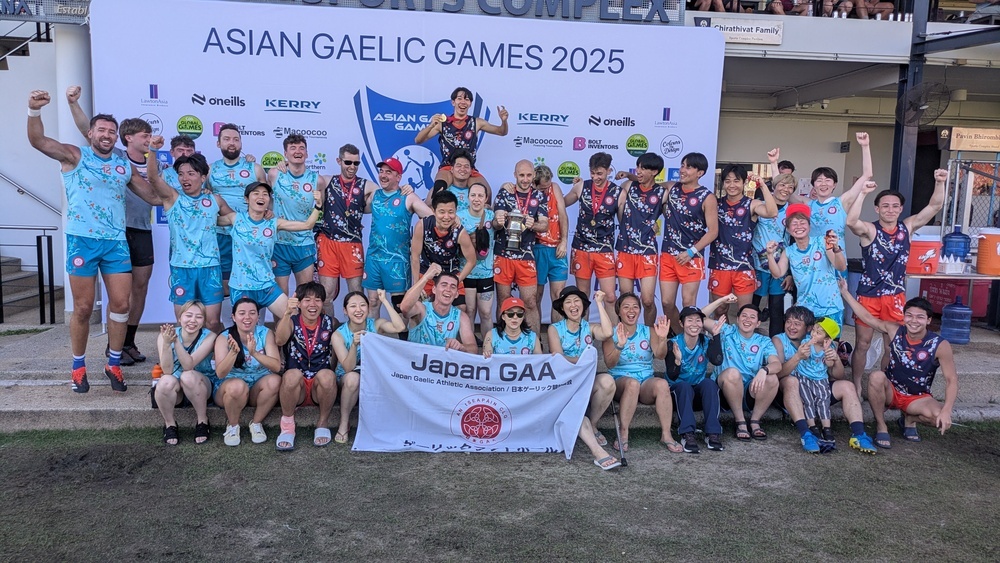
All of the Japan GAA participants united as one during the Asian Gaelic Games 2025 – Photo Credit: Japan GAA
To circle back to the community aspect of Japan GAA, from my time participating in a few practices, it appeared that the club would always have past members come back to visit and practice for the pure fun of the sport and the camaraderie they developed with everyone. It’s something I have not been able to see with any other organization or club I’ve been a part of, and it is what I think makes Japan GAA unique. To the point, with it already telling that Japan GAA has a strong community at an international level, what do you think makes Japan GAA, and the GAA more broadly, so unique in fostering long-term bonds that go beyond active membership or competition?
What makes Japan GAA, and the GAA more broadly, so unique is that the club is built as a community first and a competitive organization second. Before I moved to Japan, I was a member of a GAA club in Bahrain, and they reached out on my behalf to the Japan GAA to ensure a smooth transition. That’s just one of the many indicators of the international GAA community. At every tournament we attend, we are catching up with former colleagues, teammates, and even opponents. I think this comes from the values at the core of the GAA — volunteerism, inclusivity, and community building — which are reinforced within Japan GAA by its international and welcoming nature. Because many members are living abroad, the club often becomes a key social anchor, offering friendship, support, and continuity during a transient period of life. As a result, relationships formed through the club tend to outlast active membership or competition. Japan GAA doesn’t just create teams; it creates a shared identity and a lasting community that people continue to return to long after their playing days.
We are foodies at Arigato Travel, and we always bring some form of food or beverage into the conversation. For yourself and possibly the group, do you have a favorite restaurant or bar to go to with the others after a training session or event? Also, what would be the go-to food or drink orders?
Our two most frequented establishments in Tokyo are Craic in Akasaka and An Solas in Shibuya, although realistically, we’ll go to any bar that serves a good pint of Guinness! Our social members are always looking to find cool new pubs, we’ve organized outings to the Muscle Girls Bar, gyoza nights at local izakayas, and casual Saturdays in Yoyogi park or at a Torikizoku.
While we have gone over quite a lot in this conversation, it would be nice to ask what the future looks like for Japan GAA and how it will continue to serve not just as an ambassador between Irish and Japanese relations, but also how nations in the future will or even should engage in cultural exchanges with a nation such as Japan?
The future of Japan GAA is rooted in sustainable, community-led growth. Through initiatives such as kids’ GAA at a local school, strong engagement with university students, and plans to reach out to international teachers and workers, the club is investing in long-term participation rather than short-term involvement. These efforts ensure that cultural exchange happens across generations and communities, not just among active players. By building inclusive pathways into the sport, Japan GAA will continue to serve as a model for how meaningful cultural exchange with Japan can be based on shared experience, mutual respect, and lasting relationships both on and off the pitch.
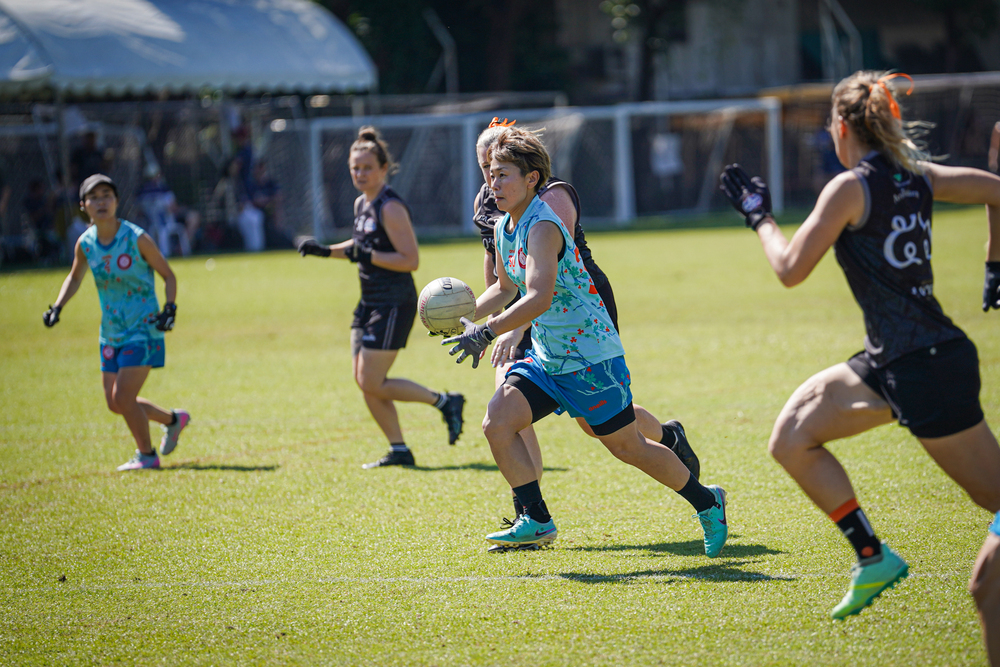
Running Bounce during Gaelic Football. Players are only allowed to take 4 steps and must bounce the ball on the ground or kick it up – Photo Credit: Japan GAA
Thank you so much for your time to do this interview with us! Before we go, would you like to leave a message with travelers who would be interested in participating in a training session, event, or even becoming a member?
From playing hard on the field to having a nice pint with the lads, Japan GAA continues to serve as a key pillar in Irish-Japanese cultural relations. Through sport, camaraderie, and openness, the club remains a welcoming space for both travelers and local residents alike.
From playing hard on the field to having a nice pint with the lads, Japan GAA continues to serve as a key pillar in Irish-Japanese cultural relations. Through sport, camaraderie, and openness, the club remains a welcoming space for both travelers and local residents alike.
We would like to sincerely thank Amanda for taking the time to share the club’s story with us and for their continued efforts in strengthening community and cultural connection through sport.
Follow Japan GAA On:
Website: https://www.japangaa.org/home
Instagram: @japangaa
Facebook: Japan GAA
X: @JapanGAA
Club Shop: https://www.oneills.com/int_en/shop-by-team/gaa/asia-gulf/japan-gaa-club.html
Featured Photo Credit: Japan GAA
If you’re visiting one of Japan’s three major cities, book one of our authentic Japanese cuisine food tours in Tokyo, Kyoto, or Osaka to experience the country like a local.
PIN THIS FOR LATER