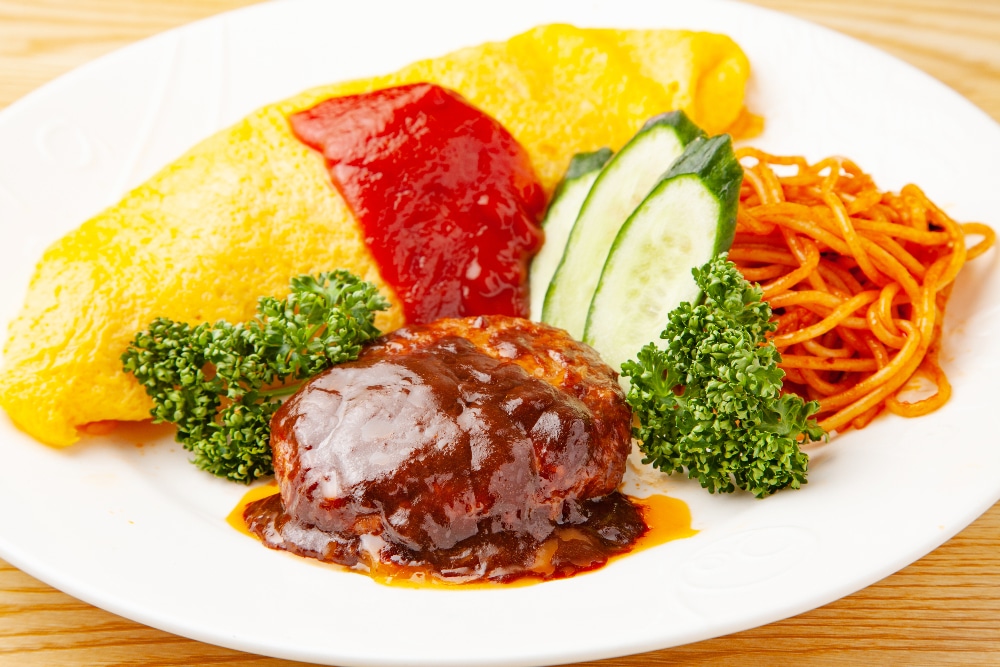
After opening its borders to foreign trade in 1853, Japan welcomed many international guests. Initially, the country hosted banquets featuring honzen ryori, traditional Japanese cuisine, to demonstrate the highest level of respect and hospitality. However, these meals were not well-received by Western visitors due to their light, delicate flavors. Recognizing the importance of diplomatic relations, Japan realized the necessity of serving food that their guests truly enjoyed, quickly pivoting to the study of Western culinary techniques and etiquette.
In the early Meiji Period, Western dishes were reserved exclusively for influential officials. It wasn’t until the late Meiji era that this style of cooking reached the general public. Because many Japanese people found traditional Western flavors unfamiliar, they adapted and altered the recipes to suit local palates. This gave birth to Japanese-style Western food, known as yoshoku.
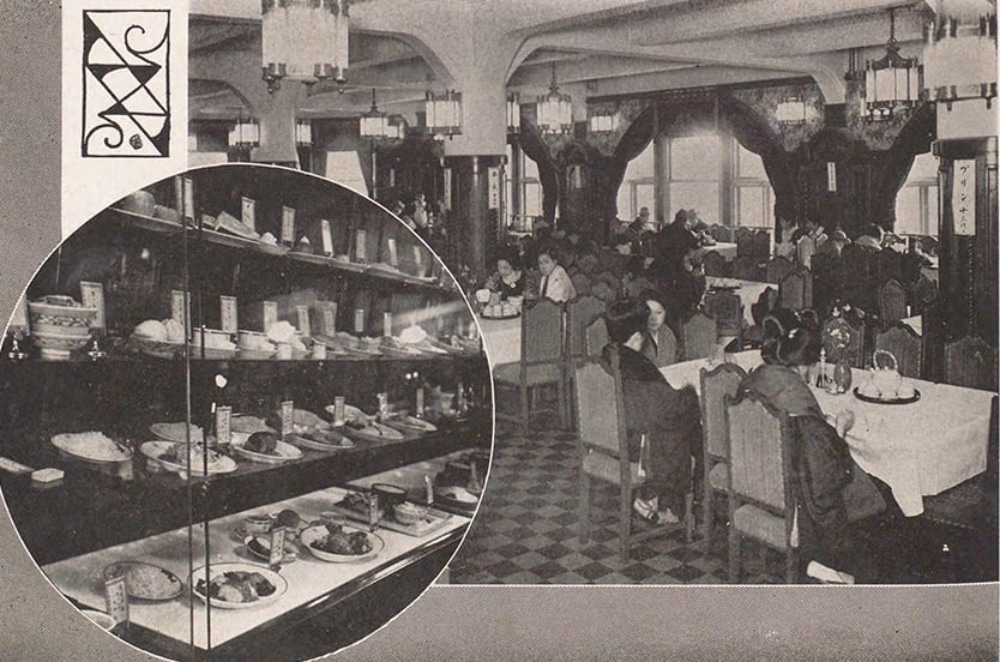
Western cuisine restaurant in a department store during the Showa Period – Photo Credit: Tokyo Shashincho [1930] from the Collection of the National Diet Library
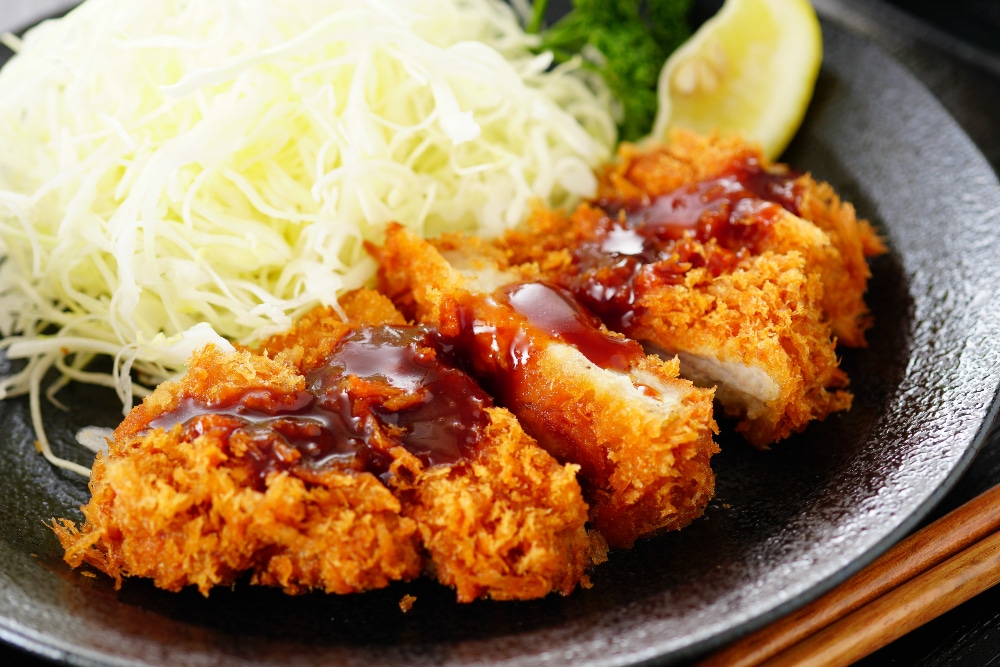
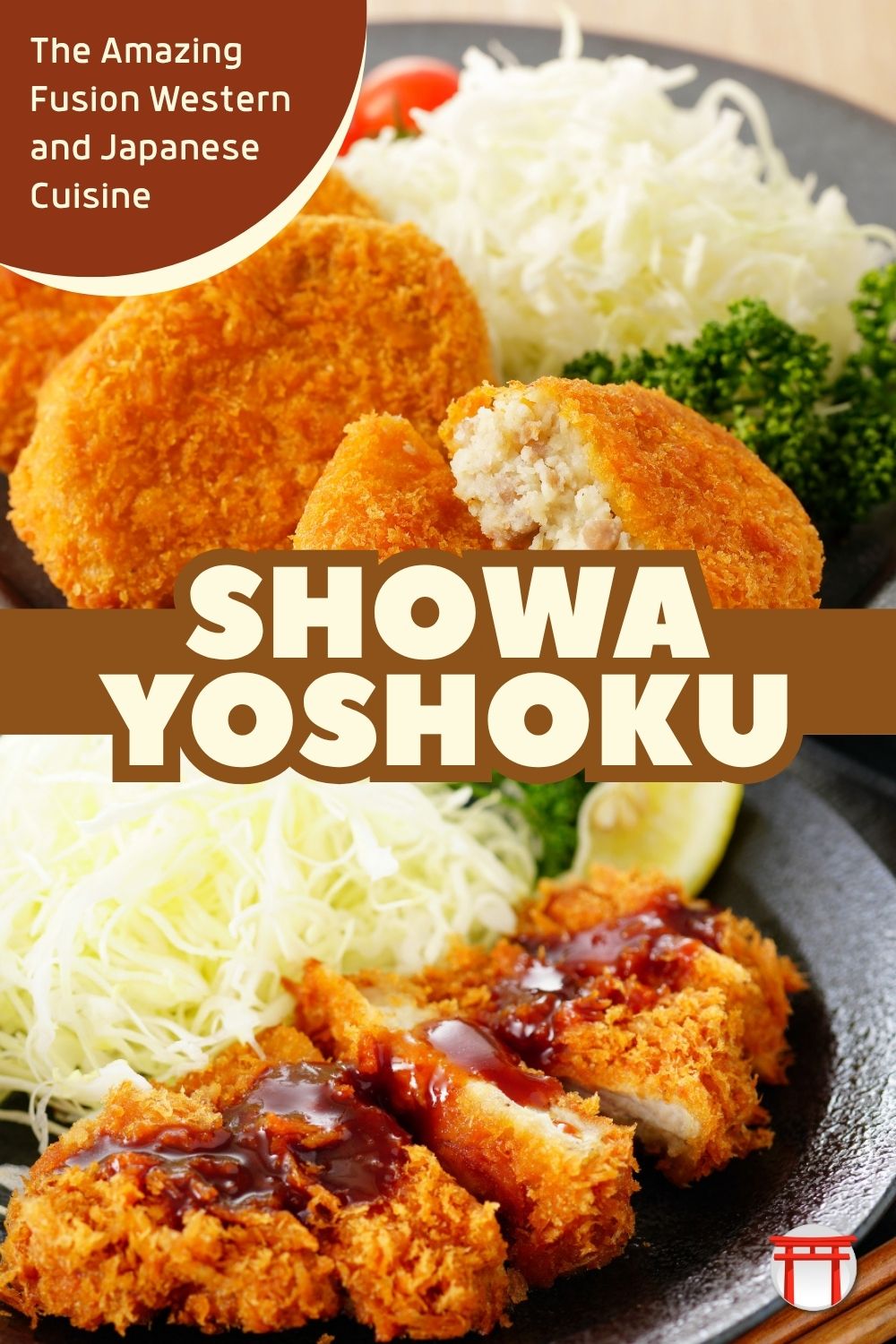
Tonkatsu – Photo Credit: K
Tonkatsu is a breaded and fried pork cutlet. Ton means pork in Japanese, while katsu originated from the French word côtelette. The first establishment to serve this dish was Rengutei in Ginza, Tokyo. Originally a French restaurant that served veal côtelette, Rengutei found that local customers struggled with the heavy taste and difficulty of digestion.
To better fit the Japanese dining style, the owner substituted beef with pork, replaced the cheese in the batter with a simple egg wash, and deep-fried the cutlet in the style of tempura. While originally paired with bread, customers soon requested rice instead. This evolved into the familiar presentation we know today: served with Worcester-style sauce, finely sliced cabbage, and a side of white rice.
Rengutei
Hours: 11:00 – 14:30, 17:30 – 21:00 (Closed on Sunday)
Address: 3 Chome-5-16 Ginza, Chuo City, Tokyo

Kare raisu – Photo Credit: taa22
The first iteration of curry Japan encountered was Indian-style curry brought over by the British. Though not an immediate success, it became one of Japan’s most consumed dishes after being modified to local tastes. The widespread acceptance of curry is closely linked to the agricultural development of Hokkaido.
Due to the climatic differences between Honshu and Hokkaido, the Sapporo Agricultural School introduced various foreign crops, including onions, carrots, and potatoes. To promote these three new vegetables, they were added to the curry base. This eventually became the signature of Japanese curry and its primary point of distinction from Indian versions.
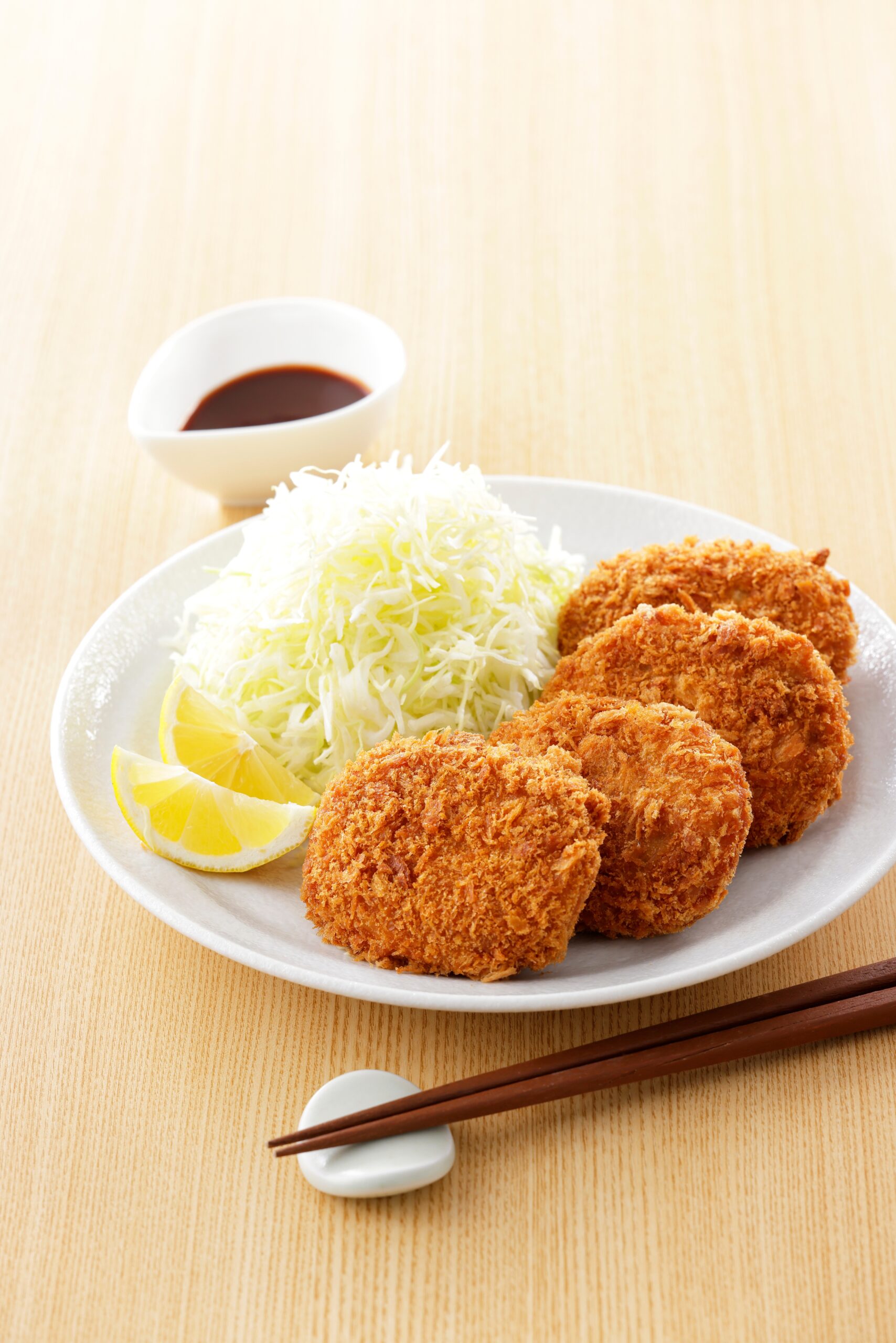
Japanese Beef and Potato Croquette (Korokke) – Photo Credit: Nishihama
Korokke derives its name from the French croquette, a delicacy dating back to the 18th century. It made its first official appearance in a Japanese Western-style cookbook in 1888. Early recipes suggested forming meat pie ingredients into circular or oval patties, coating them in flour, egg wash, and breadcrumbs before deep-frying.
During the Meiji Period, korokke was strictly fine-dining fare. By the Taisho Period, however, Western cooking became more accessible at home, turning the dish into a common household staple. One of the earliest shops to sell korokke was Cyoushiya in Ginza, which sourced lard and meat from a nearby butcher. Like tonkatsu, it is typically enjoyed with Worcester sauce.
Cyoushiya
Hours: Tuesday – Thursday (11:00 – 14:00, 16:00 – 18:00)
Address: 銚子ビル, 3 Chome−11−6 Ginza, Chuo City, Tokyo

Omuraisu – Photo Credit: uckyo
Inspired by the French omelette, omuraisu replaces the traditional filling of mushrooms, cheese, and ham with ketchup-seasoned fried rice (usually featuring chicken). There are two primary styles: the “rugby ball” and the “soft scrambled.”
Rengatei is credited with creating the rugby ball shape; it began as a quick meal for the restaurant staff, but became a permanent menu item after repeated customer requests. Another pioneer is Hokkyokusei in Osaka. Legend has it that a regular customer with digestive issues always ordered a plain omelette with rice. To give him more variety, the owner created a dish where tomato fried rice with mushrooms and onions was neatly wrapped in an egg.
The “soft scrambled” style, where a creamy omelette is sliced open over a bed of rice, gained fame through the Japanese film Tampopo and was popularized by the restaurant Taimeiken.
Hokkyokusei
Hours: 11:30 – 21:30
Address: 2 Chome-7-27 Nishishinsaibashi, Chuo Ward, Osaka
Taimeiken
Hours: Sunday (11:00 – 20:00), Tuesday – Saturday (11:00 – 21:00), Closed on Monday
Address: 1 Chome-8-6 Nihonbashimuromachi, Chuo City, Tokyo
Most of the early Western influence on Japanese food was French-led, eventually becoming the official choice for hosting foreign dignitaries in the late 19th century. Through the creativity of local chefs who adapted these foreign flavors, Japan developed a unique fusion culture. If you have the chance to visit, be sure to try these signature yoshoku dishes to experience how they have evolved into a culinary tradition all their own!
Featured Photo Credit: sasazawa
Discover the rich and varied flavors of Japanese cuisine! Join us on one of our exciting Food Tours to embark on a delicious journey through this culinary landscape. Your adventure awaits!
PIN THIS FOR LATER