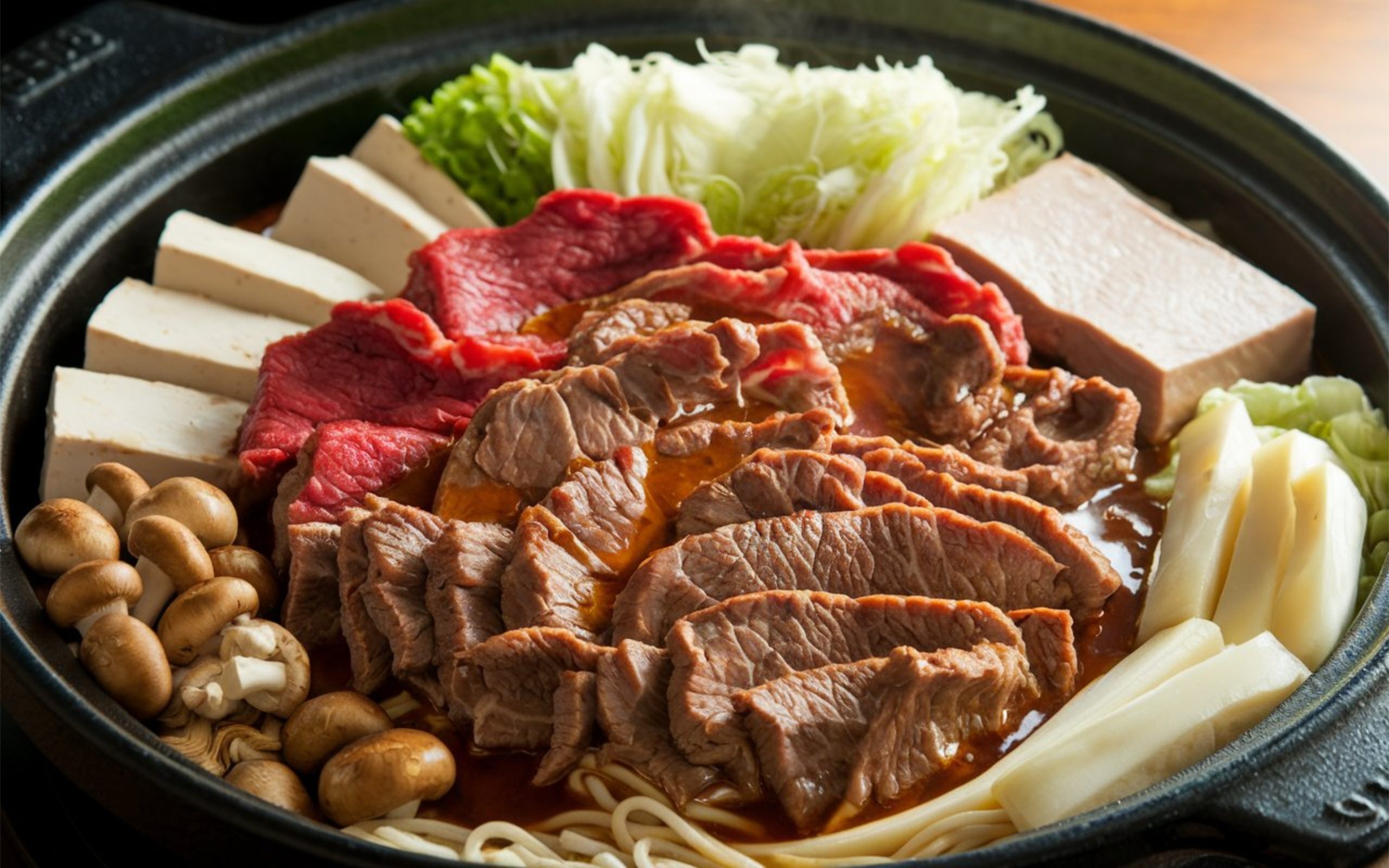
A cold night on the brightly lit streets of Osaka.
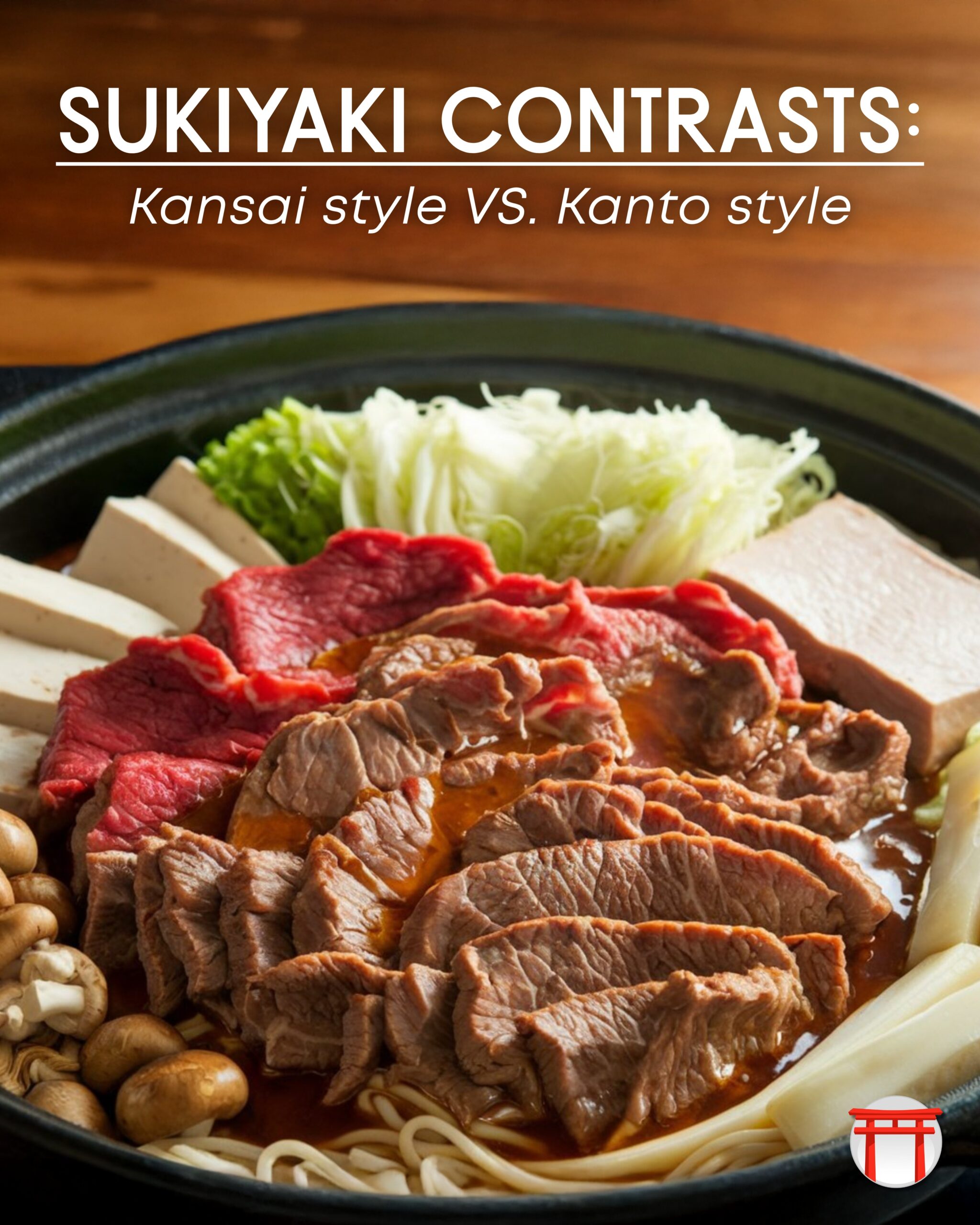
There you are, sitting in a restaurant surrounded by a sweet, caramelized aroma. You take a slice of marbled beef and slowly dip it into the raw egg, and the contrast surprises you. The meat, seared just seconds ago, glistens under the light: soft, sweet, and so tender it melts into the egg like butter.
A week later, you’re in Tokyo. You repeat the same act, but something has changed. The broth has a deeper color, and vegetables float alongside the beef. The flavor, though familiar, feels gentler. Both dishes are called sukiyaki, but you’ve realized it’s no longer just about how they’re prepared; there’s something beyond that, something that makes them different despite their similarities.
In today’s blog, we’ll explore the differences between Kanto (Tokyo) and Kansai (Osaka) sukiyaki. Will you join me?
A Quick Look Back
The story begins in the late 19th century, when eating beef was still new in Japan. After centuries of Buddhist restrictions, the Meiji Restoration encouraged meat consumption as a sign of modernization. Tokyo’s gyūnabe, literally “beef pot”, became the rage among Western-minded diners. It used a soy-based broth similar to what we now call warishita.
Meanwhile, in the merchant city of Osaka, cooks were experimenting with beef in their own way. They preferred to grill and glaze the meat directly, a method rooted in the Kansai love for precision and balance. This was sukiyaki as Kansai knew it: a dry-seared, gently sweet dish where the flavor of the beef defined the whole experience.
After the Great Kanto Earthquake of 1923 destroyed many restaurants in Tokyo, Kansai chefs who moved east helped popularize their sukiyaki, and the Kansai word itself replaced gyūnabe nationwide. Ironically, as the name spread, the Tokyo version survived with its warishita broth, while Kansai kept its minimalist style.
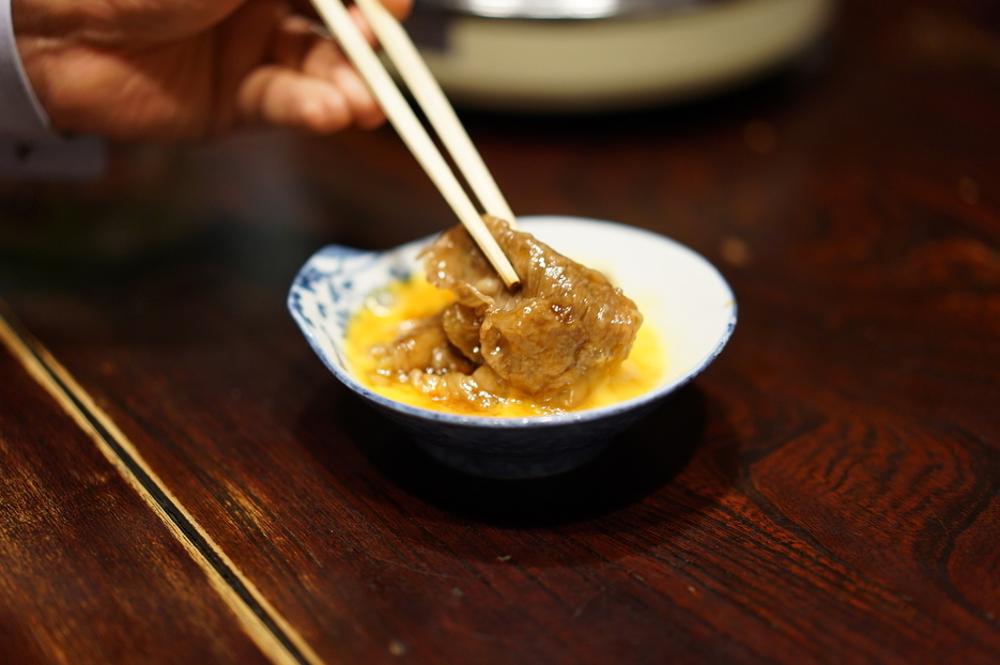
Dipping the tasty meat into the raw egg – Photo Credit: うどんが主食 on Tabelog
Two Regions, Two Flavors
Although both are called sukiyaki, Kansai and Kanto versions differ in key ways, from cooking sequence to flavor and texture.
In Kansai-style sukiyaki, the process begins with searing. The beef is cooked first in a lightly greased pan until it browns and releases its aroma. Sugar, soy sauce, and sake are then added directly to the meat, creating a caramelized glaze. Once the flavor base is formed, vegetables such as tofu, leeks, and mushrooms are added in stages, each absorbing the sauce and beef fat. The result is a dish with deep, layered sweetness and a slightly smoky edge.
In Kanto-style sukiyaki, the order is reversed. A sauce called warishita, a mixture of soy sauce, sugar, sake, and mirin, is prepared first. Then, all ingredients are simmered together in this broth from the beginning. The taste is gentler and more unified, with every element sharing the same sweet-salty balance. It’s closer to a stew than a grill.
Both styles share one final step: the raw egg dip. After cooking, the hot beef or vegetables are briefly dipped into beaten egg before eating. In Kansai, this step cools the seared meat and adds a creamy coating. In Kanto, it softens the broth’s sweetness and gives each bite a smooth, rich texture. Simple but essential, it’s what completes the sukiyaki experience.
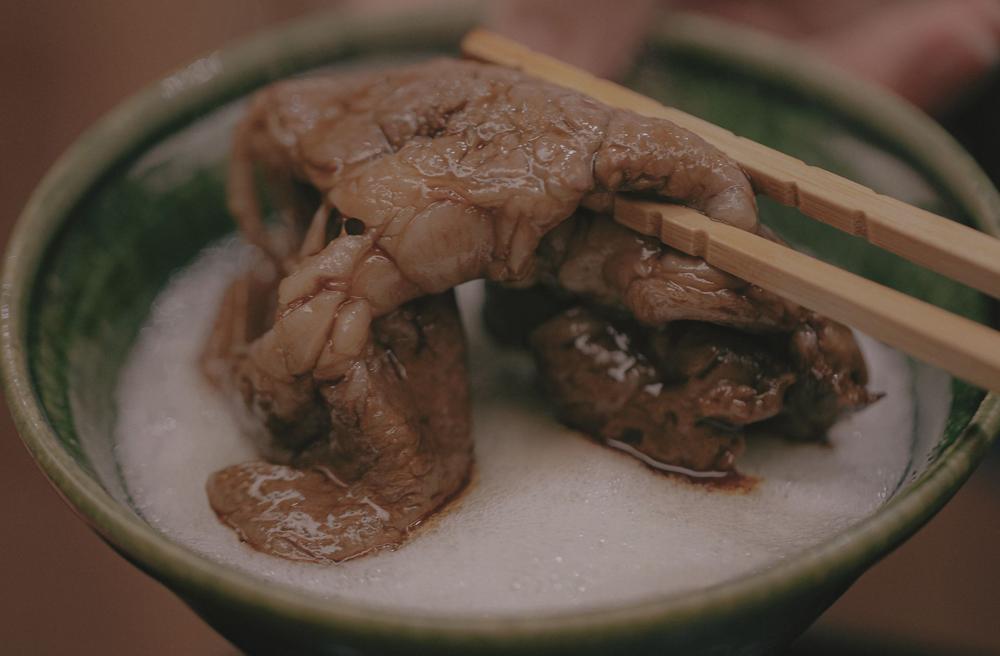
Delicious sukiyaki wagyu dipped into special meringue-like beaten egg – Photo Credit: Sukiyaki Asai
Beyond Technique
The contrast between Kansai and Kanto sukiyaki reflects more than regional taste; it represents two different culinary philosophies in Japan.
Kansai cuisine values clarity and contrast. Each ingredient is treated separately, so its natural flavor stands out. Kanto cuisine, by contrast, values depth and harmony, blending elements together into a cohesive whole.
In that sense, Kansai sukiyaki is about expression: bold, immediate, and focused on the flavor of the beef. Kanto sukiyaki is about integration: balance, mellowness, and comfort.
Yet both share the same spirit: warmth, togetherness, and the joy of sharing a meal around a steaming pot.
Where to Eat
Two Tokyo restaurants have earned a place in the Michelin Guide, each showcasing a different take on tradition. One serves Kanto-style sukiyaki, rich and harmonious, while the other offers Kansai-style sukiyaki, bold and refined. Which one would you try?
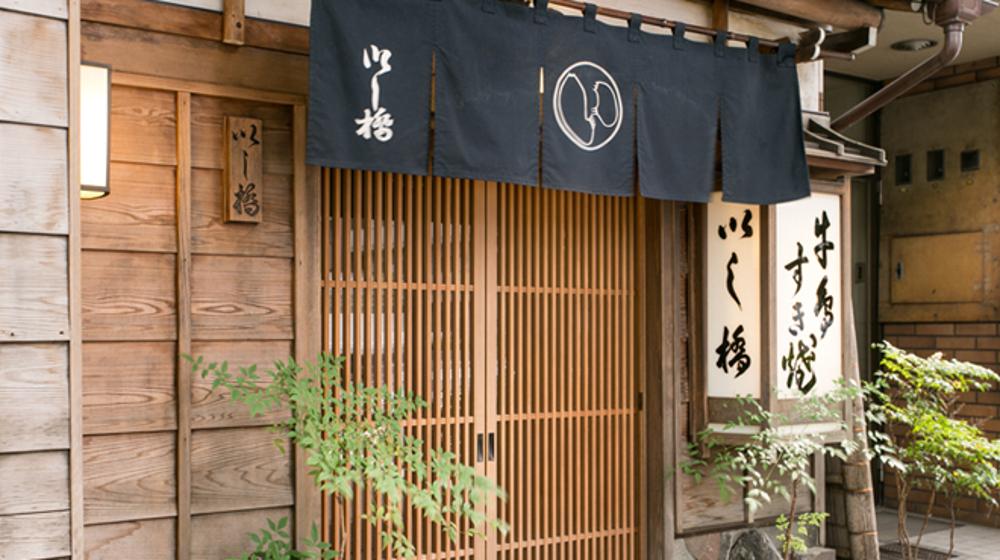
The front of Ishibashi – Photo Credit: Ishibashi on Tabelog
Ishibashi
Ishibashi traces its roots back to the early Meiji era, when it first opened as a humble butcher shop. Alongside it stood a small sukiyaki restaurant, where the family’s signature flavors were born and have been carefully preserved for generations. Today, under the fifth-generation owner-chef, only the finest wagyu beef is selected, chosen for its perfect marbling and the richness of its red meat. Guests dine on tatami mats, while a single hostess prepares each meal right before them. The experience concludes with a comforting bowl of ojiya, rice simmered with broth and fluffy egg, a traditional finale that perfectly captures the restaurant’s timeless charm.

Sukiyaki at Ishibashi – 目黒のルーヴル on Tabelog
Opening hours: 17:00 – 21:30 (Closed on Weekends and Holidays)
Price: ¥15,000 – ¥20,000
Location: 3 Chome-6-8 Sotokanda, Chiyoda City, Tokyo 101-0021
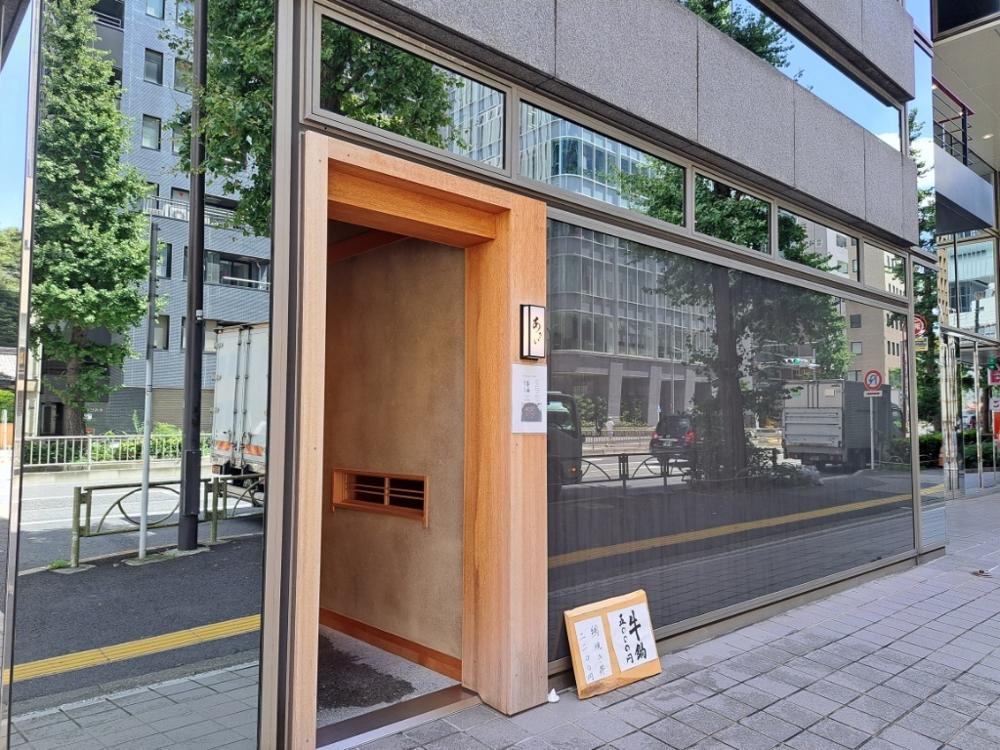
The front of Sukiyaki Asai – Photo Credit: あきとん(・・) on Tabelog
Sukiyaki Asai
Enjoy a true sukiyaki experience right at the counter. Across from you, the chef skillfully cooks alternating slices of premium beef and fresh vegetables to perfection. The beef, sourced from a renowned butcher in Shiga Prefecture (Kansai), is served in various cuts and thicknesses to highlight its quality.
Guests can choose from different course options, such as the Omakase Course, featuring a selection chosen by the chef; the Kamisukiyaki Course, which combines thick fillet and loin cuts; and the seasonal Matsutake Course, available in autumn and showcasing Japan’s prized mushrooms.
Accompanying the meal are two signature dips: a light, fluffy beaten egg and a rich egg yolk blended with Tosa vinegar. To finish, delicate shirataki noodles are stir-fried in warishita sauce and beef fat, absorbing every last bit of flavor. Each course is crafted to delight both the eye and the palate.

Kansai-style sukiyaki in Tokyo – Photo Credit: Sukiyaki Asai on Tabelog
Website: https://www.sukiyaki-asai.com/en/
Opening hours: 11:30 – 15:00 / 17:30 – 23:00 (Closed on Sundays)
*Lunch is not available on Wednesdays and public holidays.
*Reservations are required. Click here
Price: ¥20,000 – ¥33,000
Location: 〒105-0001 Tokyo, Minato City, Toranomon, 3 Chome−11−15 SVAX TT, 1階
If you’d like a more budget-friendly option in Tokyo, check out our other sukiyaki blog, where we dive deeper into this delicious dish and share another great spot to enjoy it.
Featured Photo Credit: Sham Clicks
If you are planning a trip to Japan this winter and want to try a variety of delicious Japanese cuisine, check out our Winter Tour Recommendations and connect with our experts!
PIN THIS FOR LATER