We’ve all seen or heard about sumo, a fascinating sport that combines strength, tradition, and ritual. But have you ever wondered what happens beyond what you see during a match, when the lights go down, and the spectacle ends? Sumo is much more than a competition: it is a practice deeply connected to the tradition of Shinto, where every gesture carries meaning. Behind the ring lies a world of discipline, respect, and intense training that is rarely seen by the public. Ready to go beyond the surface? Join us in today’s blog and uncover the hidden world of sumo.
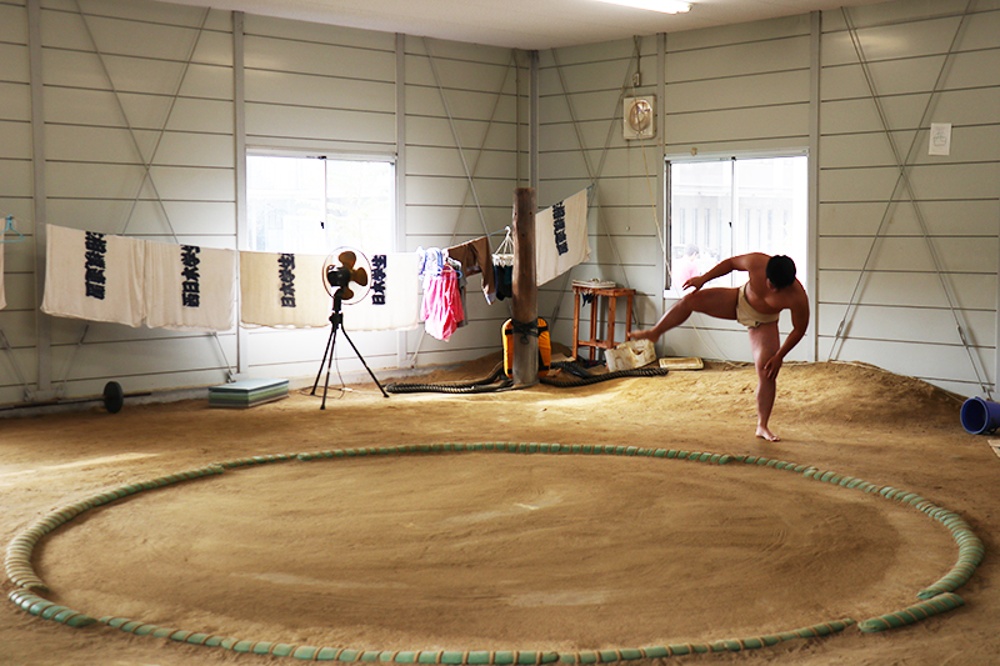
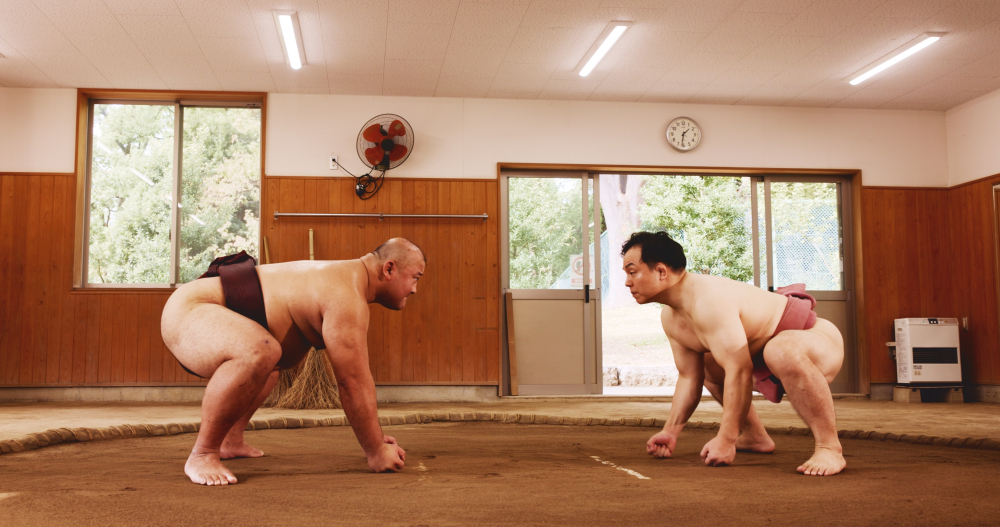
Sumo wrestler practicing inside a stable – Photo Credit: That’s Kyōta
Sumo Stables: What Are They?
A heya (sumo stable) is so much more than a gym. It’s a living community, a blend of temple, dormitory, dojo, and family home. Every professional rikishi (sumo wrestler) belongs to one for life, eating, sleeping, and training under the same roof under the eye of their oyakata (stablemaster), who is typically a retired champion.
Sumo stables date back to Japan’s Edo period (1603-1868), when former samurai began organizing fighters into formal groups called heya (rooms). Over time, these evolved into institutions bound by strict hierarchy and ritual, part monastery, part military academy. To this day, wrestlers from the same stable can’t face one another in official tournaments, preserving the bond between “brothers” of the same house. There are around 45 active stables, each belonging to one of five ichimon (clans). These clans act as extended families, ensuring sumo’s traditions survive across generations.
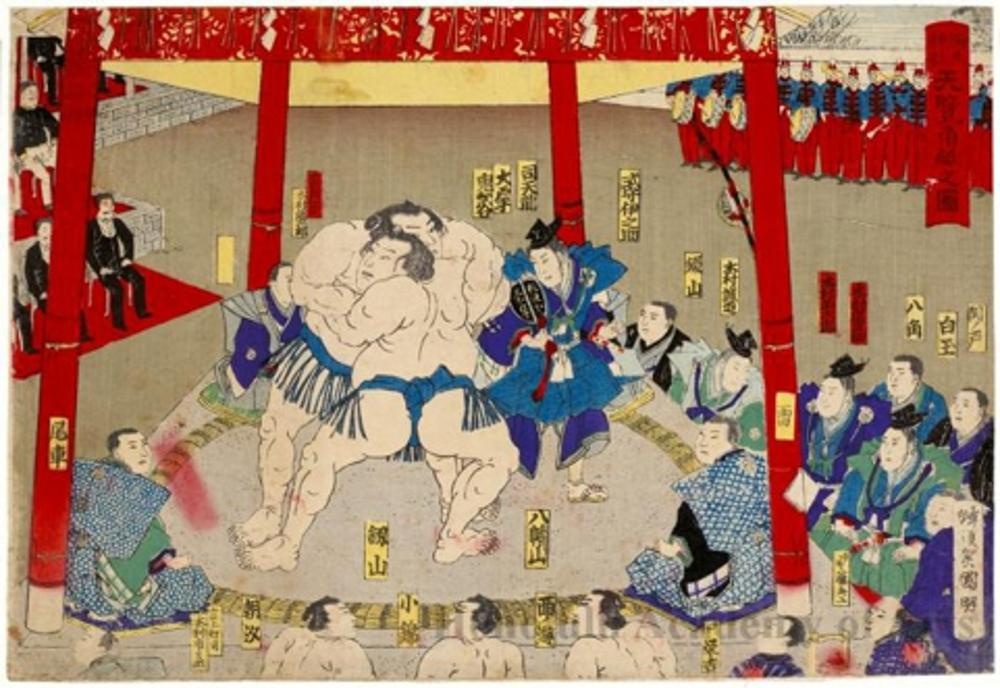
“Sumo Match Held in the Presence of The Emperor and Empress at Yayoi Shrine” by Utagawa Kuniaki – Photo Credit: Ukiyo-e
A Quick Look Back at Sumo
Sumo’s history stretches back over 1,500 years, with its earliest roots in ancient Japan as part of agricultural and religious ceremonies linked to Shinto. These early contests were performed at shrines to entertain the gods and pray for abundant harvests, blending physical strength with spiritual purpose. By the 8th century, sumo had become part of the imperial court, where it was performed during festivals and official events. Wrestlers competed in front of the emperor, and the practice began to develop more formal rules and rituals.
During the Edo period, sumo transformed into a professional sport. Public tournaments were organized, ranking systems were introduced, and the foundations of modern sumo were established. It was during this time that the dohyo (ring), referee system, and many ceremonial elements became standardized.
Today, sumo remains a unique blend of sport and tradition. While it has evolved into a professional competition, it still preserves many of its ancient rituals, maintaining a direct connection to its ceremonial and cultural origins.
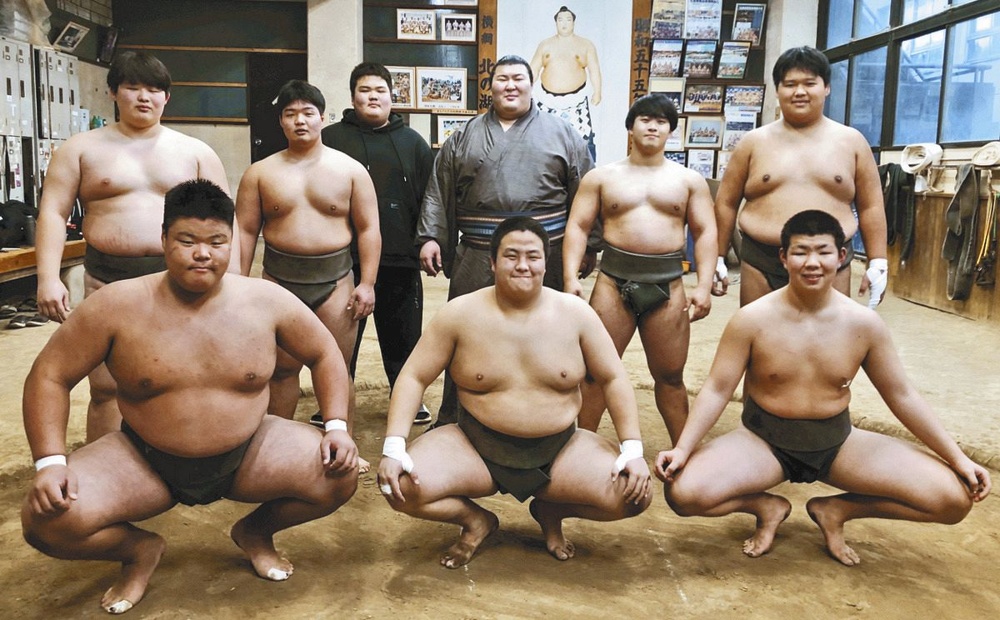
Atamifuji Sakutaro (third from the right, back row) visits his former high school and takes a photo with its sumo club – Photo Credit: Chunichi
The Hierarchy of Sumo Wrestlers
Life inside a sumo stable follows a clear order where rank means everything. It determines who trains first, who eats first, and even who speaks. The youngest and lowest-ranked wrestlers wake up the earliest and take care of daily chores, cleaning the training ring, cooking, serving meals, and helping their seniors get ready.
It may seem strict, but this system is also how wrestlers learn and grow. In return for their effort and respect, juniors receive guidance, training, and support from those above them. As they improve, they gradually move up the ranks, building not only strength but also patience and discipline. Overseeing it all is the oyakata, the stable master, who acts as a mentor, teaching, guiding, and making sure everything runs smoothly.
Even eating follows rank. The oyakata and senior wrestlers dine first, while juniors serve and then eat what remains. It’s a lesson in humility and unity. Afterward, naps are compulsory. Rest and weight gain are part of the training cycle.
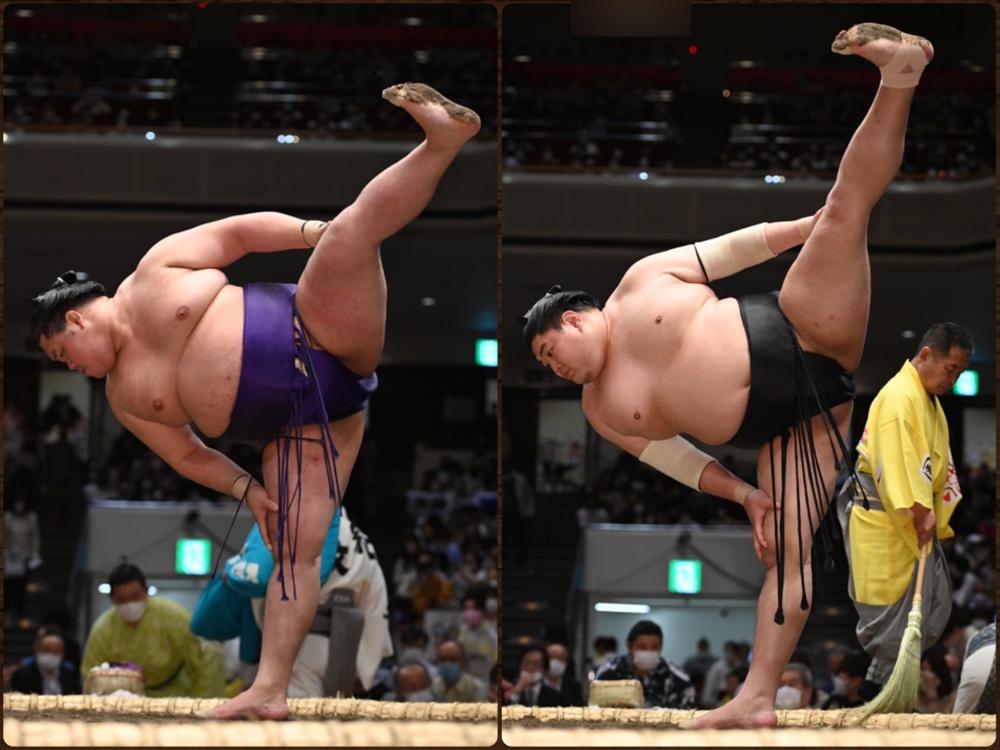
Two sumo wrestlers performing shiko – Photo Credit: Ōzumō Fan
The Morning Routine
Step through the wooden doors of a heya before sunrise, and you enter a different world. Everything feels quiet but focused, filled with tradition. At the center is the dohyo, a clay ring where the wrestlers train. It’s considered sacred. No one is allowed to step on it casually or treat it without respect.
By 5 a.m., the youngest wrestlers, teenagers fresh from recruitment, begin the day. They perform traditional warm-up exercises like shiko (powerful leg stomps to build balance and drive away evil spirits), teppo (repetitive strikes against a post to strengthen arms and timing), and suriashi (gliding footwork for stability and grace).
As the oyakata enters, the atmosphere becomes more intense. The wrestlers begin keiko, or practice matches. It’s not about winning, but about improving, building endurance, and showing determination. The sounds fill the room: the shuffle of feet, bodies colliding, and the coach’s instructions. Watching this isn’t just seeing training; it’s witnessing a tradition that has been passed down for centuries.
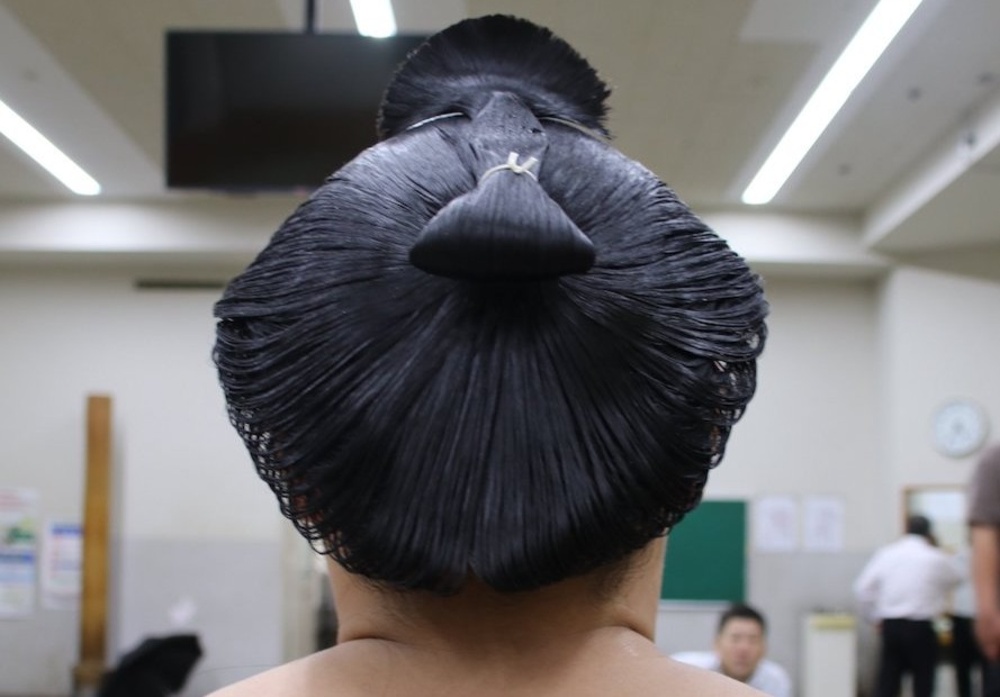
Chonmage topknot – Photo Credit: Japan Sumo Association Official Website
Rituals Rooted in Shinto
As mentioned earlier, sumo has a strong connection to Shinto, and every part of training reflects these traditions. Before stepping onto the dohyo, wrestlers throw salt to purify the space, and each bow at the beginning and end of practice shows respect to the ring, to each other, and to the spirits believed to be present.
Even their appearance carries meaning. The traditional chonmage topknot (their popular hairstyle), inspired by samurai customs, is carefully styled each day by a professional hairdresser known as a tokoyama.
Many stables also include a small shrine, where wrestlers offer prayers for strength and protection. In this way, training is more than just physical effort. It becomes a daily practice of focus, respect, and spiritual discipline.
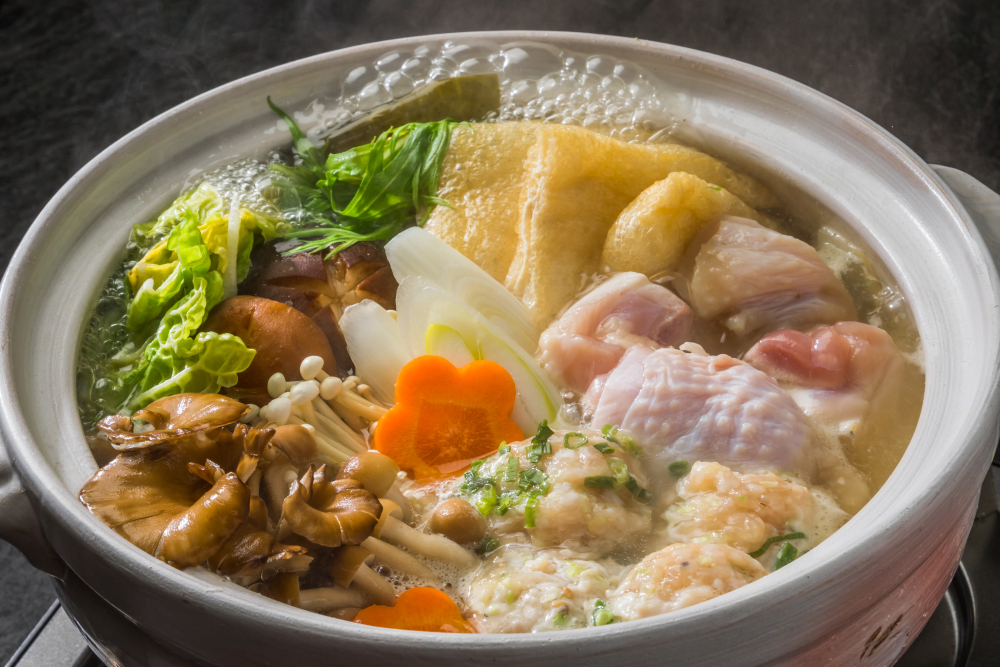
Chanko nabe, the staple dish of sumo wrestlers – Photo Credit: norikko
What They Eat
Have you ever wondered what sumo wrestlers eat to maintain their size and body fat? Just two words: chanko nabe. After hours of exhausting training, another ritual begins: mealtime. Wrestlers gather to cook and eat this famous high-protein stew together, turning food into a shared experience as much as fuel. Chanko nabe is a soul-warming mix of chicken, fish, tofu, and vegetables simmered in a rich broth, designed to deliver both nutrition and calories. The dish can vary widely depending on the stable, often reflecting secret recipes passed down through generations, making each version a point of pride as well as tradition.
But the key to their size isn’t just the stew. It’s the volume. A single bowl of chanko nabe can range from roughly 400 to over 1,000 calories, and wrestlers don’t stop at one. They eat multiple large bowls, then pile on calorie-dense sides like huge portions of rice, noodles, fried dishes, and eggs to push a single meal into the 2,000-4,000+ calorie range.
In the world of sumo, wrestlers typically eat just two massive meals a day, often totaling 5,000 to 7,000 calories, and sometimes far more for larger competitors. To maximize weight gain, they follow a very specific routine: train intensely in the morning (often on an empty stomach), eat an enormous meal, and then nap afterward, encouraging the body to store those calories as mass.
So while chanko nabe is the cultural and nutritional centerpiece, it’s really the combination of huge portions, calorie-heavy sides like rice and noodles, and a deliberate eat-then-rest routine that helps sumo wrestlers build and maintain their iconic size.
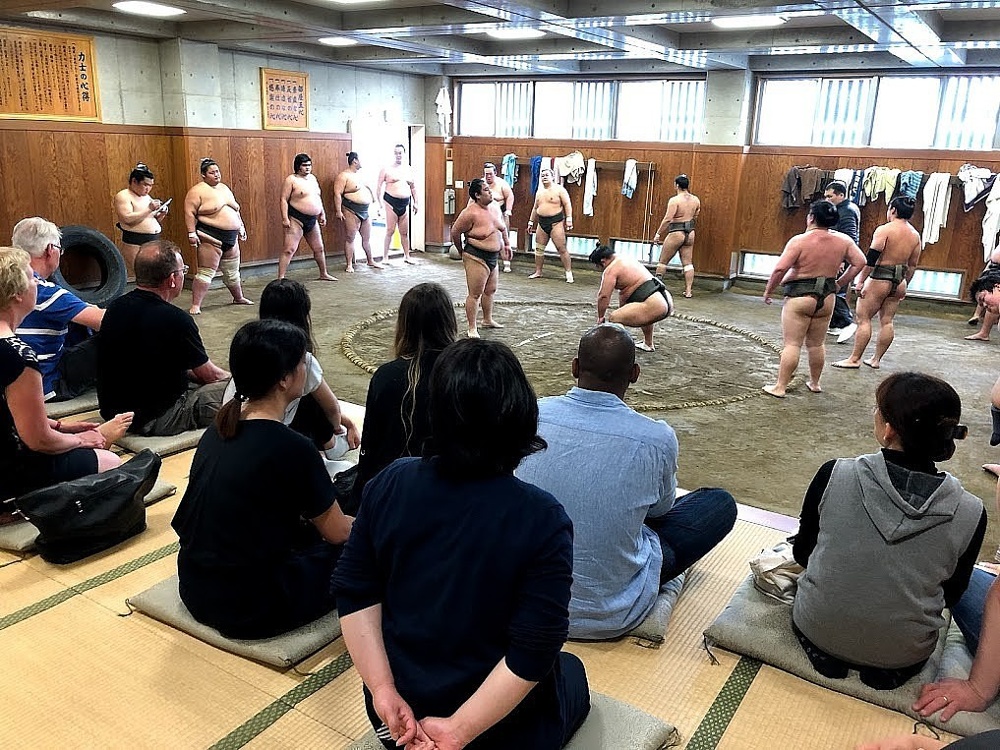
Visitors enjoying a sumo morning practice viewing – Photo Credit: Arigato Travel
If you’re drawn to see this living tradition in person, you can join a morning practice viewing with us. It’s a family-friendly and deeply cultural experience guided by local professionals who help you understand each moment’s significance. To learn more, check out this page and contact our Travel Experts to arrange your visit!
Sumo isn’t just a sport. It’s a window into Japan’s soul. Inside a stable, every movement, meal, and moment of silence tells a story of respect, strength, and tradition. Watching the wrestlers train is like stepping back in time and seeing centuries of culture come alive before your eyes. It’s powerful, peaceful, and unforgettable, a true taste of Japan’s living heritage.
Featured Photo Credit: PeopleImages