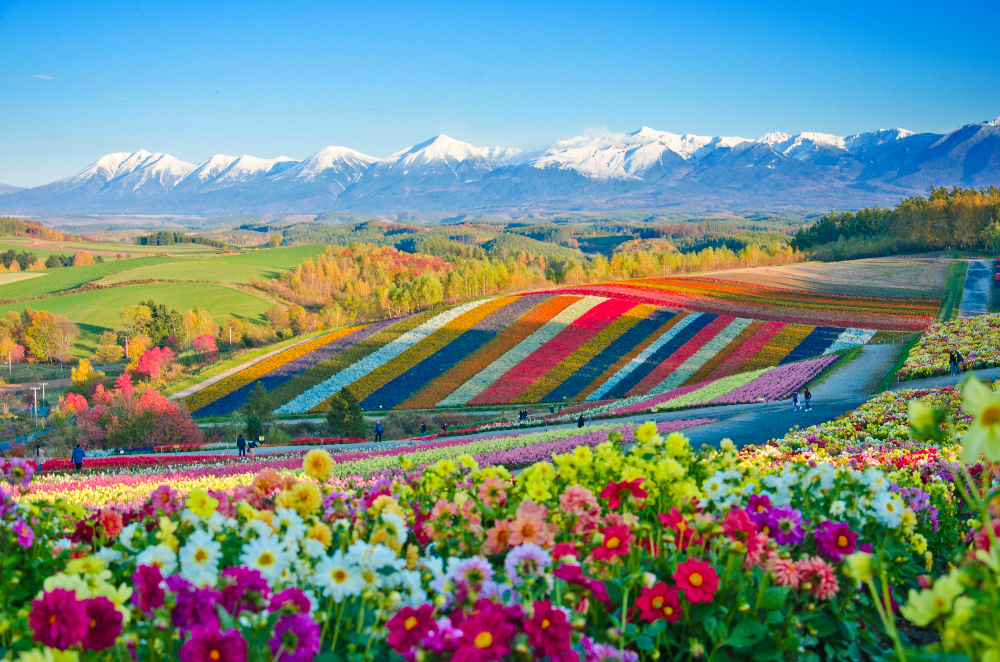
Japan is a country that truly celebrates the changing of seasons, and nothing reflects this more beautifully than its flowers. From cherry blossoms in spring to bright chrysanthemums in autumn, each season has its own floral charm. Whether you’re visiting gardens, temples, or just strolling through city streets, you’ll always find a bloom that represents the spirit of the time. Here’s a guide to the flowers you can enjoy during the year, along with recommended spots to see them.
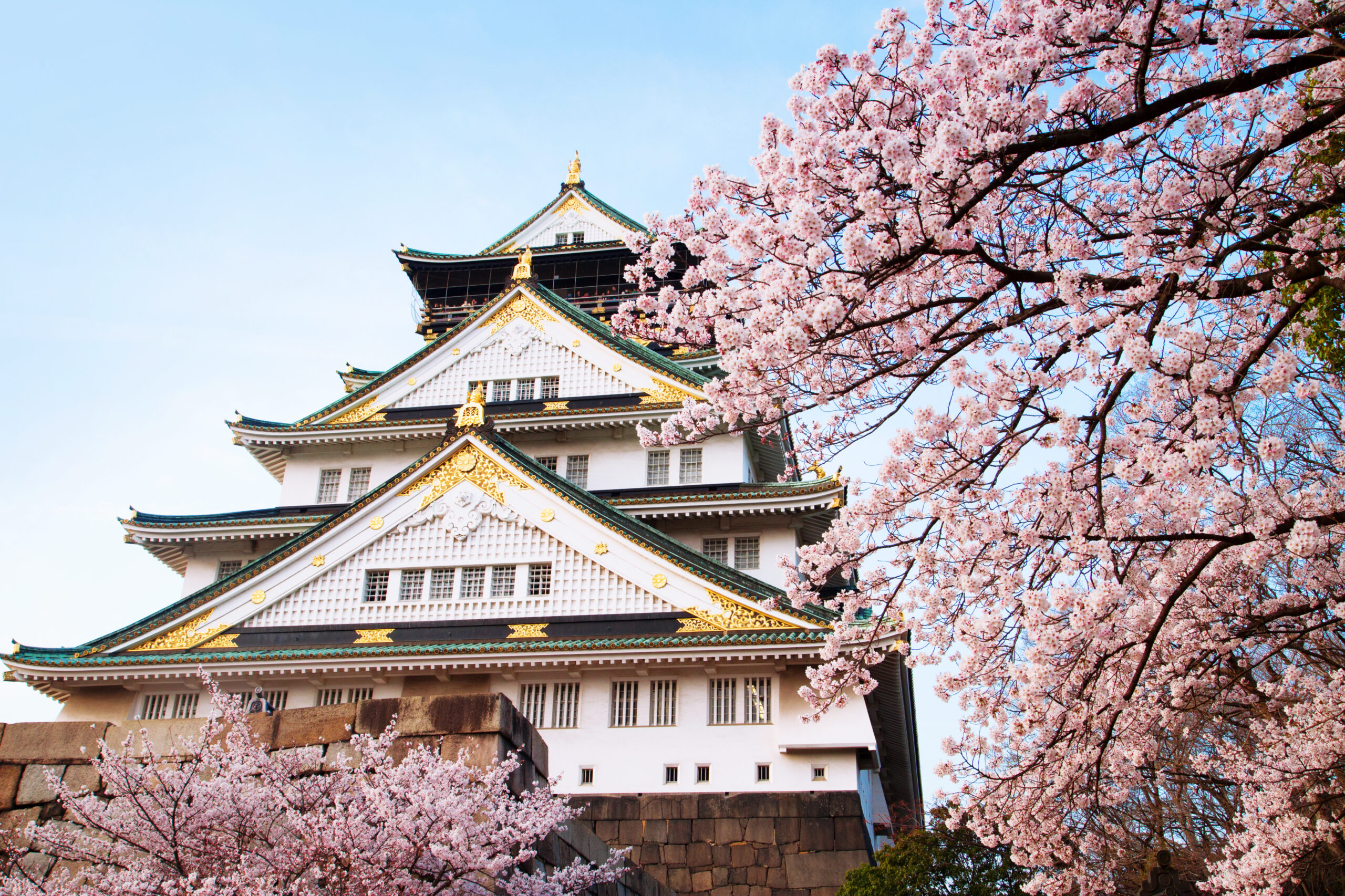
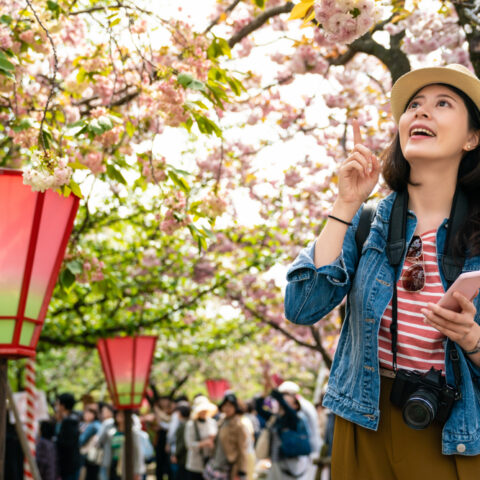
Osaka Castle close-up with cherry blossom – Photo Credit: MoustacheGirl
Spring: Cherry Blossoms and Wisteria
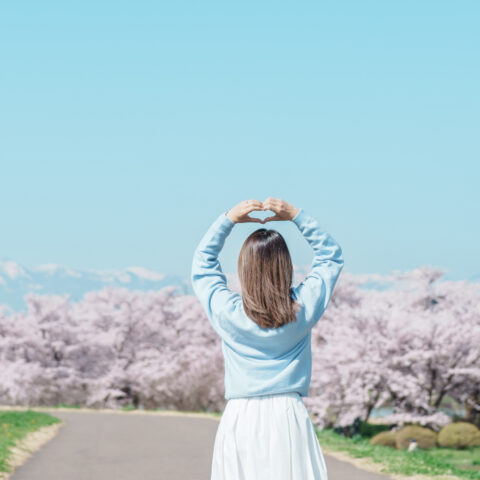
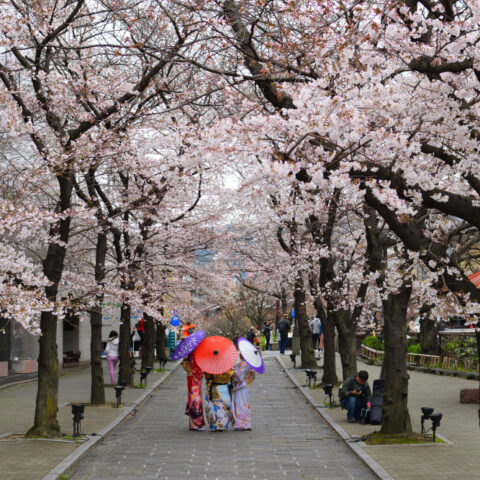
Spring is undoubtedly the most famous flower season in Japan. Parks and streets transform into soft pink and purple landscapes, drawing crowds for hanami (flower viewing) and seasonal festivals.
Cherry Blossoms (Sakura): These pink and white petals bloom between late March and early April, drawing crowds from all over the world. Popular viewing spots include Ueno Park (Tokyo), Maruyama Park (Kyoto), and Osaka Castle. Sakura season is more than just a visual delight; it’s a cultural moment marked by hanami picnics, seasonal treats, and a shared sense of fleeting beauty.
Locations:
Ueno Park – Uenokoen, Taito City, Tokyo 110-0007
Maruyama Park – Maruyamacho, Higashiyama Ward, Kyoto, 605-0071
Osaka Castle – 1-1 Osakajo, Chuo Ward, Osaka, 540-0002
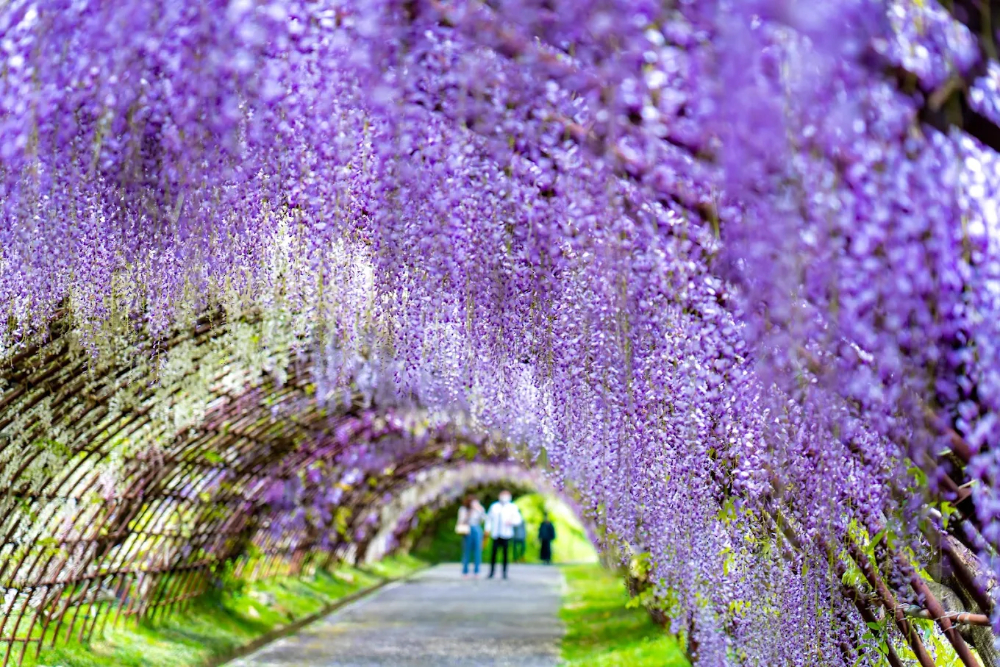
Tunnel decorated with purple wisteria flowers – Photo Credit: Kawachi Fujien
Wisteria (Fuji): After the sakura season fades, wisteria cascades down in shades of purple, pink, and white. The Kawachi Fujien Wisteria Garden in Fukuoka and the Ashikaga Flower Park in Tochigi are must-sees with dreamy wisteria tunnels. Their delicate fragrance and graceful draping create an almost otherworldly atmosphere, perfect for strolls and quiet reflection.
Locations:
Kawachi Fujien Wisteria Garden – 2 Chome-2-48 Kawachi, Yahatahigashi Ward, Kitakyushu, Fukuoka 805-0045
Ashikaga Flower Park – 607 Hasamacho, Ashikaga, Tochigi 329-4216
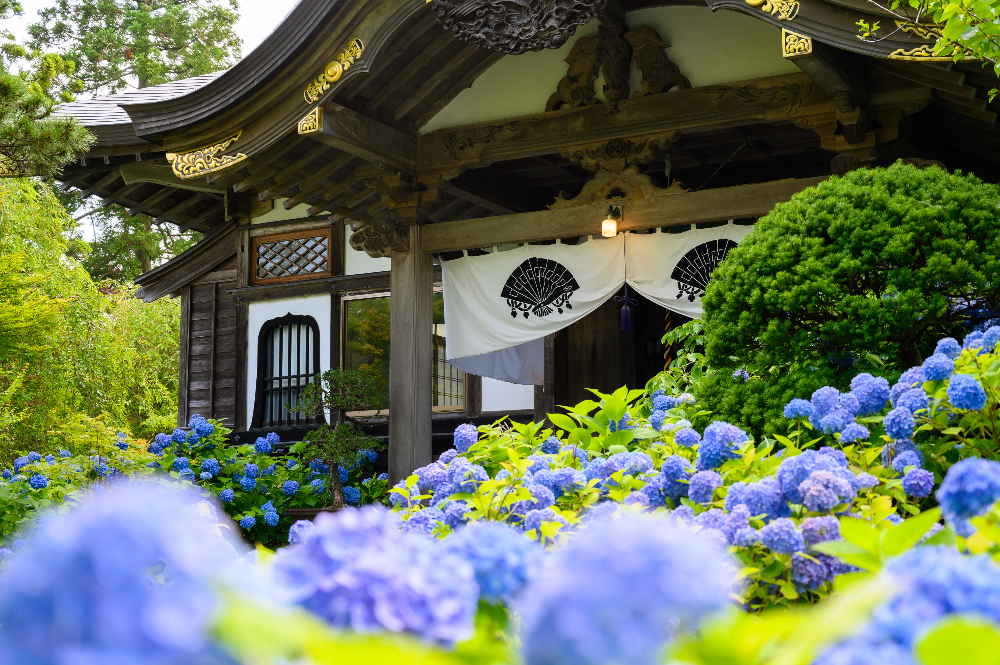
Blue hydrangeas bloom around a quiet temple path – Photo Credit: Structuresxx
Summer: Hydrangeas, Irises, and Sunflowers
Summer brings vibrant colors and lush gardens. Temple paths and countryside trails burst with bold hues, offering a refreshing escape from the heat.
Hydrangeas (Ajisai): These clusters of purple, blue, and pink flowers bloom in June, often during the rainy season. The Meigetsu-in Temple in Kamakura is known as the “Hydrangea Temple.” Their colors shift with soil acidity, adding a layer of natural magic to temple paths and garden walks. Other must-visit places include Hasedera Temple in Kamakura, Hakone Tozan Railway, where the tracks are lined with hydrangeas, and Mimuroto-ji Temple in Kyoto, which features thousands of blossoms in its vast gardens.
Locations:
Meigetsu-in Temple – 189 Yamanouchi, Kamakura, Kanagawa 247-0062
Hasedera Temple – 3 Chome-11-2 Hase, Kamakura, Kanagawa 248-0016
Mimuroto-ji Temple – Shigatani-21 Todo, Uji, Kyoto 611-0013
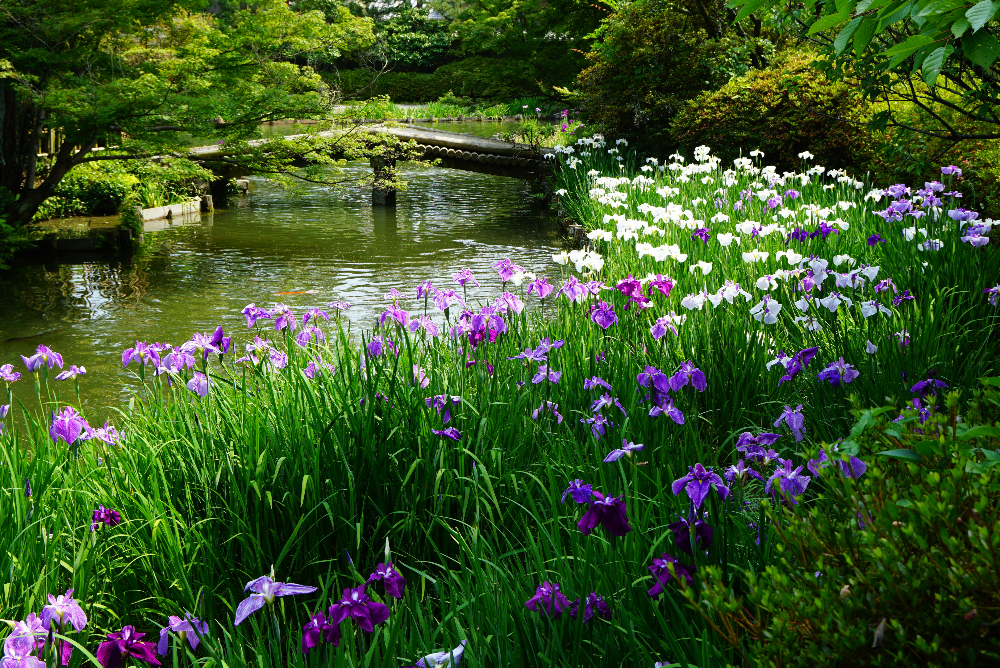
Irises bloom beside a quiet water path – Photo Credit: SONIC501
Irises (Shobu): With their elegant purple and white petals, irises bloom in June. The Meiji Jingu Inner Garden in Tokyo and the Horikiri Iris Garden are classic spots. Often found near water, irises evoke a sense of calm and grace, complementing the early summer greenery.
Locations:
Meiji Jingu Inner Garden – 1-1 Yoyogikamizonocho, Shibuya, Tokyo 151-8557
Horikiri Iris Garden – 2 Chome-19-1 Horikiri, Katsushika City, Tokyo 124-0006
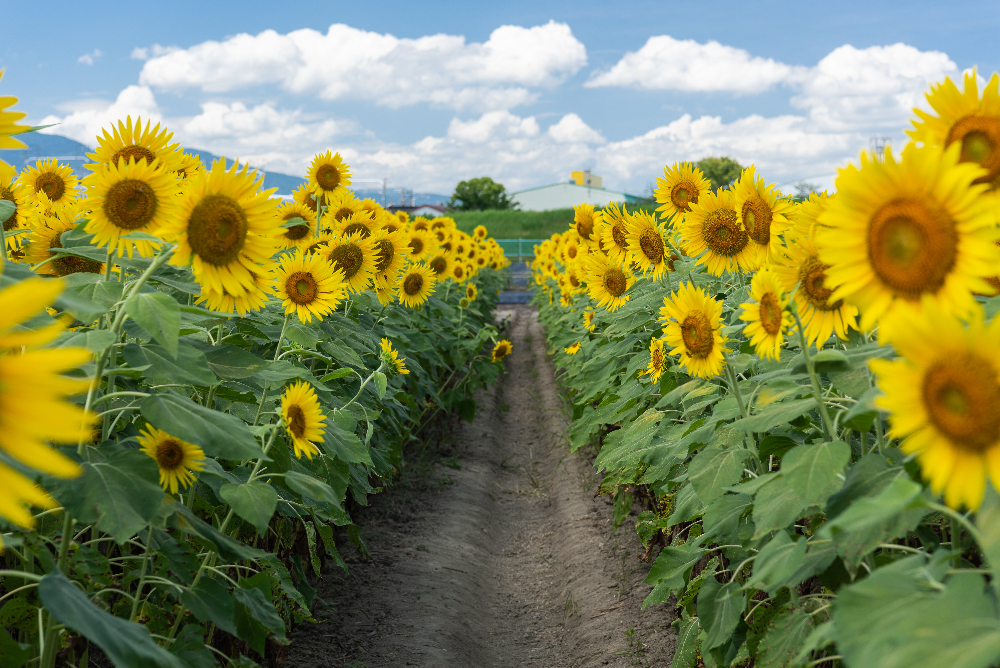
A small farm road surrounded by blooming sunflowers – Photo Credit: Kazuhiro Hayashi
Sunflowers (Himawari): Bright yellow fields of sunflowers bloom from July to August. The Hokuryu Sunflower Village in Hokkaido and the Zama Sunflower Field in Kanagawa offer breathtaking views. These cheerful blooms follow the sun, creating golden landscapes that feel both energizing and joyful.
Locations:
Hokuryu Sunflower Village – 〒078-2511 Hokkaido, Uryu District, Hokuryu, Itaya, ひまわりの里
Zama Sunflower Field – Shindenjuku, Zama, Kanagawa 252-0026
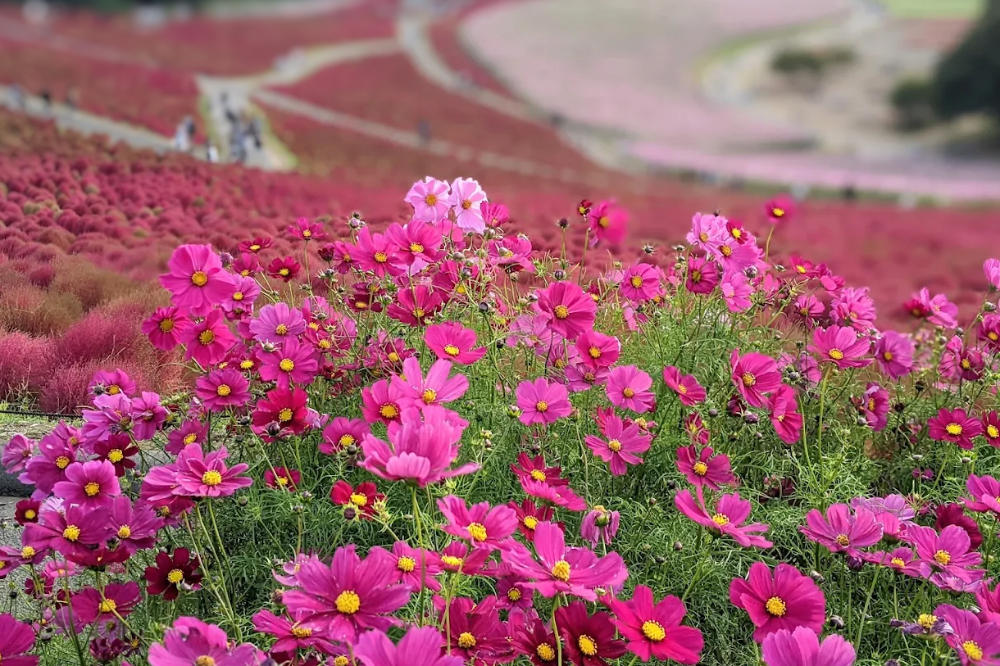
Pink cosmos sweep across a winding hillside trail – Photo Credit: Hitachi Seaside Park
Autumn: Cosmos, Spider Lilies, and Chrysanthemums
As the weather cools, warm-colored flowers take center stage. Their golden tones mirror the changing leaves, creating a serene and nostalgic atmosphere.
Cosmos: These daisy-like flowers bloom from September to October, often in large fields that create a sea of pink and white. The Showa Kinen Park in Tokyo and Hitachi Seaside Park in Ibaraki are perfect for cosmos viewing. In Hokkaido, the famous Shikisai-no-Oka in Biei offers sweeping hills covered in cosmos, blending beautifully with the rolling countryside landscapes. Their light, airy petals sway gently in the autumn breeze, adding softness to the season’s crisp air.
Locations:
Showa Kinen Park – 3173 Midoricho, Tachikawa, Tokyo 190-0014
Hitachi Seaside Park – 〒312-0012 Ibaraki, Hitachinaka, Mawatari, 字大沼605-4
Shikisai-no-Oka in Biei – 〒071-0473 Hokkaido, Kamikawa District, Biei, Shinsei, 第3
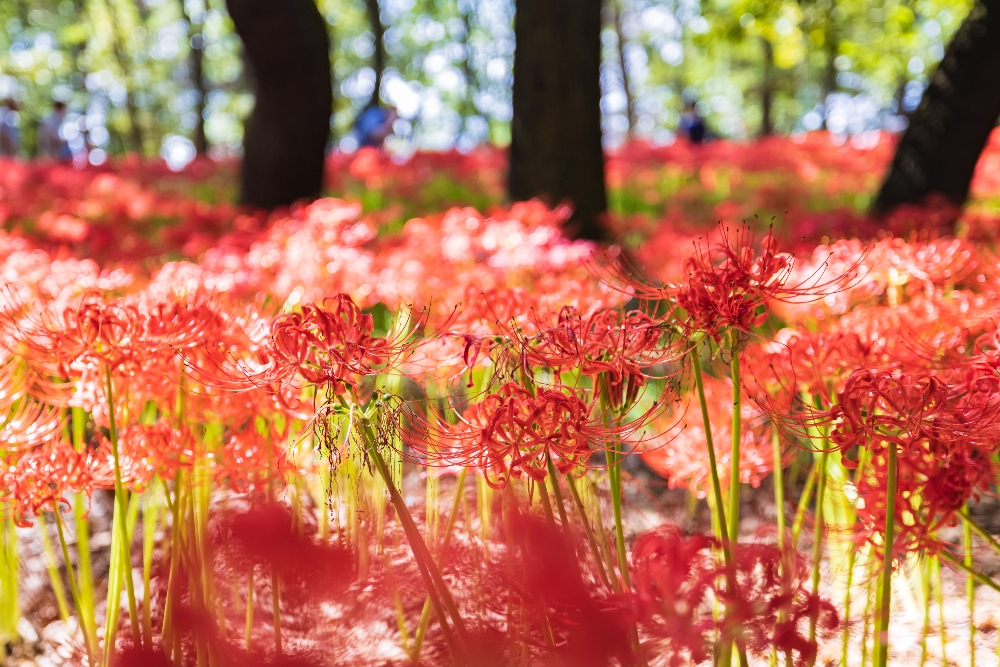
Spider lily blooming under a tree garden – Photo Credit: WeiChan
Spider Lilies (Higanbana): Blooming in mid-to-late September, spider lilies are famous for their fiery red petals that line rice paddies, riversides, and temple paths. They often bloom around the autumn equinox and are deeply tied to Japanese folklore, symbolizing both parting and remembrance. One popular spot is Kinchakuda Manjushage Park in Saitama, where millions of spider lilies create a breathtaking red carpet.
Location:
Kinchakuda Manjushage Park – 92-125-2 Komahongo, Hidaka, Saitama 350-1251
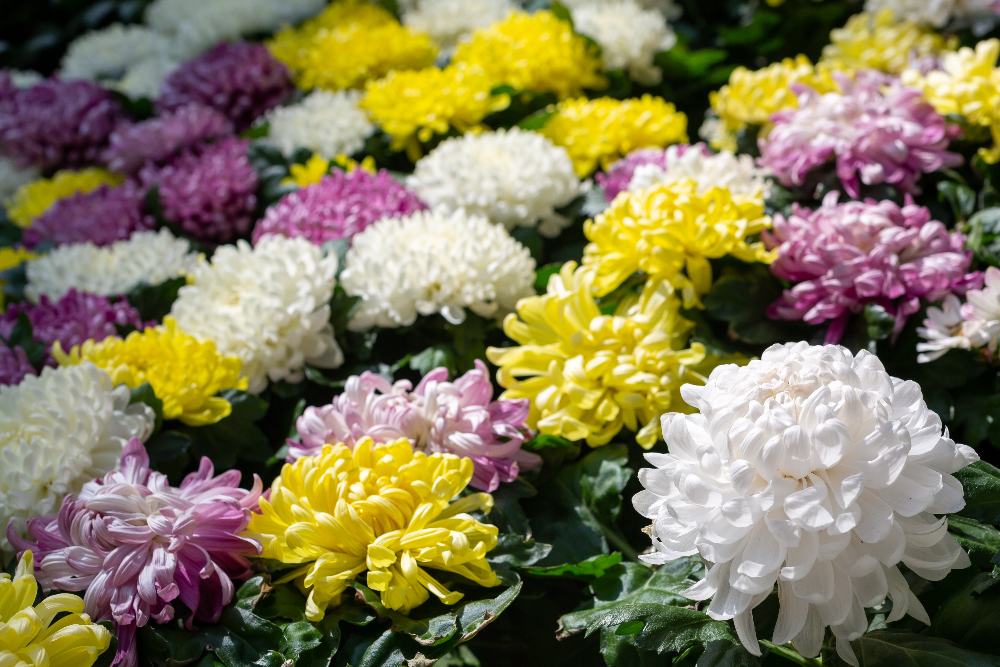
A close-up of blooming chrysanthemums – Photo Credit: Alena Rain
Chrysanthemums (Kiku): Considered Japan’s national flower of autumn, chrysanthemums symbolize longevity and rebirth. You can enjoy them in Shinjuku Gyoen National Garden in Tokyo, as well as in special chrysanthemum festivals at shrines and temples. Carefully cultivated and artistically arranged, they reflect both seasonal beauty and cultural reverence.
Location:
Shinjuku Gyoen National Garden – 11 Naitomachi, Shinjuku City, Tokyo 160-0014
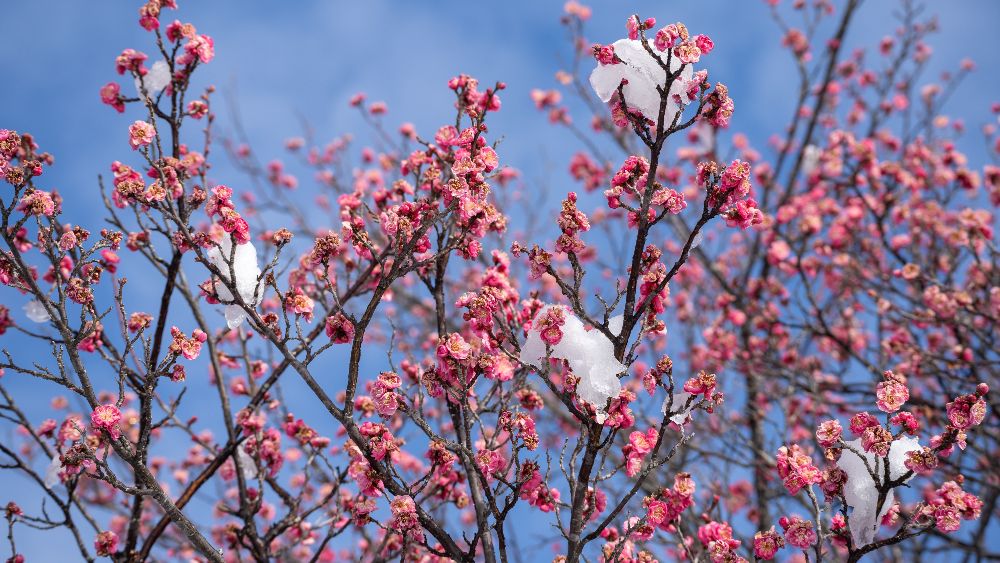
Plum blossoms bloom through patches of snow – Photo Credit: Aomas
Winter: Plum Blossoms and Camellias
Even in the colder months, Japan’s gardens bloom with charm. These resilient flowers offer quiet beauty and hint at the coming spring.
Plum Blossoms (Ume): Blooming in February and March, ume are often mistaken for cherry blossoms but bloom earlier with a stronger fragrance. The Kairakuen Garden in Mito and the Kitano Tenmangu Shrine in Kyoto are famous for plum trees. Their bold pinks and whites signal the end of winter and the quiet anticipation of spring.
Locations:
Kairakuen Garden – 1 Chome-3-3 Tokiwacho, Mito, Ibaraki 310-0033
Kitano Tenmangu Shrine – Bakurocho, Kamigyo Ward, Kyoto, 602-8386
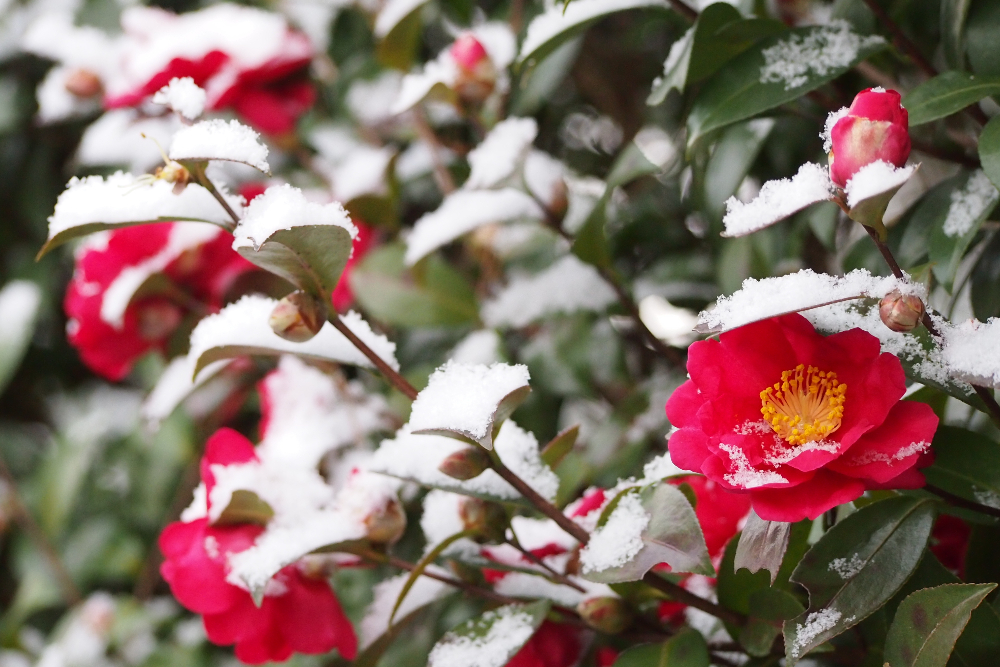
Red camellias bloom through snow – Photo Credit: Lily-sakura
Camellias (Tsubaki): These winter flowers bloom from December to April, adding pops of red and white against the frosty backdrop. Yuushien Garden in Shimane and Komuroyama Park in Shizuoka are known for camellia viewing. Their glossy leaves and rich colors bring warmth to cold landscapes, often featured in traditional art and poetry.
Locations:
Yuushien Garden – 1260-2 Yatsukacho Hanyu, Matsue, Shimane 690-1404
Komuroyama Park – 1260-1 Kawana, Itō, Shizuoka 414-0044
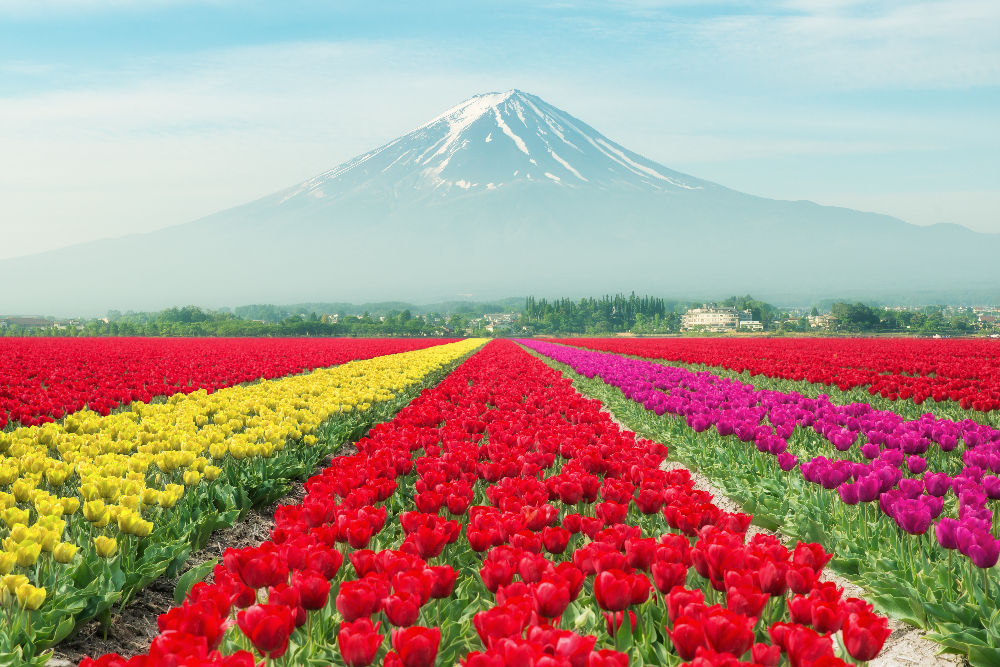
Mt. Fuji overlooking a field of flowers – Photo Credit: Ake1150
Enjoy the seasons through flowers
Japan’s flowers aren’t just about beauty; they’re tied to culture, festivals, and seasonal traditions. No matter when you visit, there’s always something blooming that captures the essence of that moment in time. If you want to experience Japan like the locals, plan your trip around flower seasons and enjoy the gardens, parks, and temples where nature and culture come together.
Featured Photo Credit: Tanya
Ibaraki is a beautiful destination in Japan, famous for flower viewing. Visit our Ibaraki Page to explore the unique flora, culture, and cuisine of the region!
PIN THIS FOR LATER