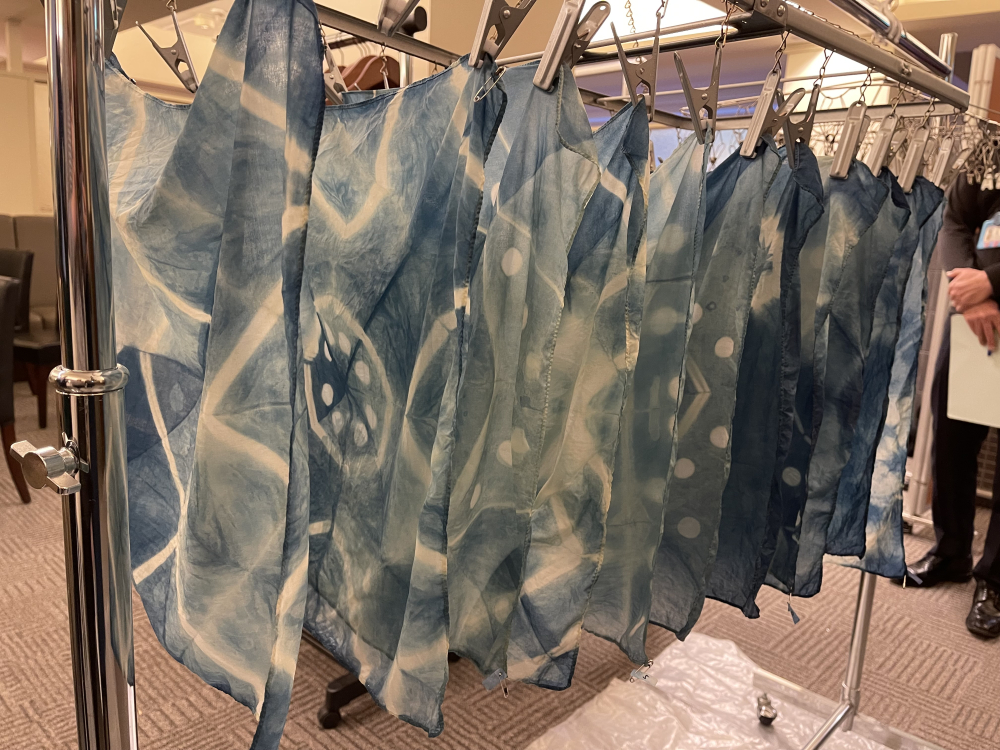
Indigo blue and the dyeing process (Aizome) are such an instrumental part of traditional Japanese culture that I never once doubted that they originated in the country. However, I later learned that Japan actually learnt it from China in the 7th century, and that it had actually started in India long before that. And never ever thought it was related to American blue jeans, through West Africa, where they also learned how to dye from India. Never thought the beautiful colors were loved by Africans, in addition to the Japanese, Chinese, and Indians. And never thought the desire for blue jeans has been shared by youngsters in Europe, like Eastern Germany and Bulgaria. So you can learn how it is impacted globally by Indigo dying, Aizome in Japanese.
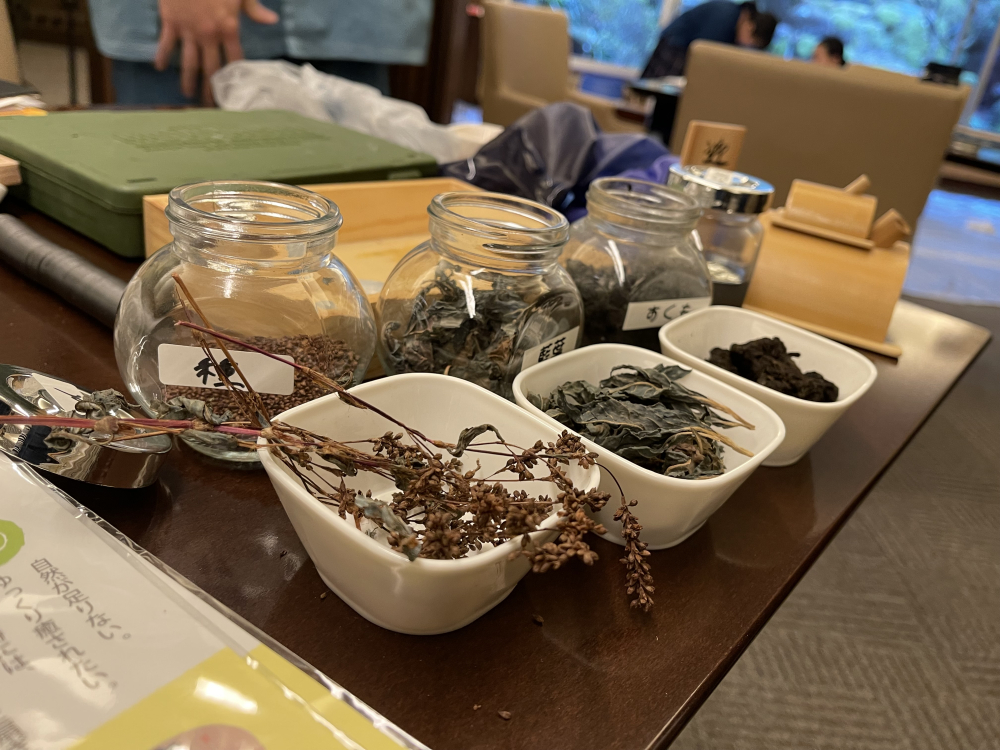
Indigo dyeing plant at various stages – Image Credit: Jessica Iragne
History of Indigo Dyeing
The name Indigo came from the Ancient Greek term for “Indian dye”, more than 5000 years ago. Indian indigo uses Indigofera tinctoria, a species of plant from the bean family, native to India and West Africa. A historian found that during the Discovery Ages, the 15th to the 17th century, the indigo dyeing culture was rooted in India, where the finished product was used as a currency, trading one length of cloth in exchange for one human body. One thing I found interesting is how the enslaved West Africans carried their indigo dyeing knowledge to the United States in the 1700s. Here, they continued the practice and ultimately resulted in what we can consider today as the blue jeans culture. Due to this recorded history, I suspect Chinese indigo history also came from India, just like Buddhism.
Surprisingly enough, the process of making Indigo sediment powder and how to dye fabrics is very similar to each other. Although the plants are different, the pigments in the plants and the dyeing mechanism are the same. Indican, the component that is the source of indigo, is not an uncommon ingredient and is found in a relatively wide variety of plants. Even though the process is complicated and can vary from culture to culture, it’s not hard to produce a masterpiece through strong training and practice.
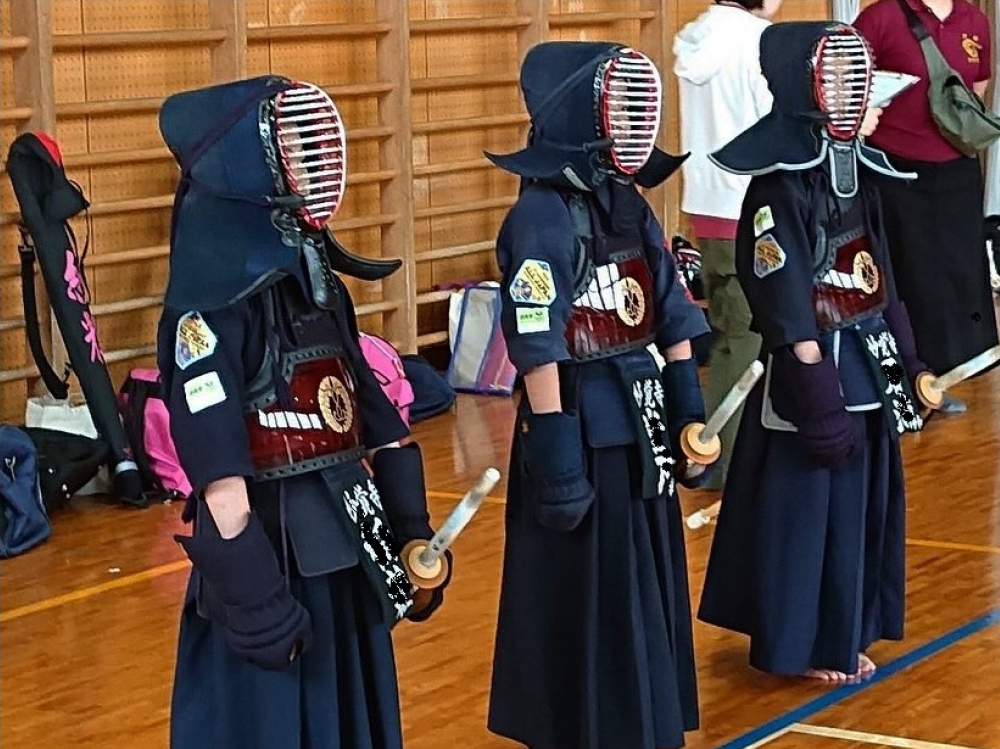
Kendo Uniform – Landmark of Kanda:- Image Credit: Myokakuji-Temple
Indigo History in Japan and Me
At Kyoto Uji, it is common that children under 6th grade learn Kendo if you are a boy, and Shodo if you are a girl, at the closest temple. I am talking about my generation in the 70s, so it should be different now since kids are different, temples are not as active as before, and there are probably fewer Kendo trainers. Going to Kendo was kind of special for me since we wore skirts like Hakama, which are dyed using aizome. It was due to the recognizable outfit, my friends always knew where I was going, just by simply looking at my Hakama.
Because it was always so prominent in my everyday life, I never thought about where indigo dyeing came from, simply presuming that it was strictly a Japanese practice. But now I know that our history with the craft came from China since we use Persicaria Indigo, which was introduced to the country in 7 BC. Its common name is Chinese Indigo, and it is native to Southern China and Vietnam.
In fact, there is a famous saying about indigo dying, written by Xunzi, a Chinese philosopher who lived during the third century BC. It goes 藍は青より出でて藍より青し, which translates in English to “Although Blue Dye comes from the Indigo plant, it is bluer than Indigo.” This represents how, after learning as much as he can, the student has overcome the master, a belief that has persisted throughout many generations, cultures and practices
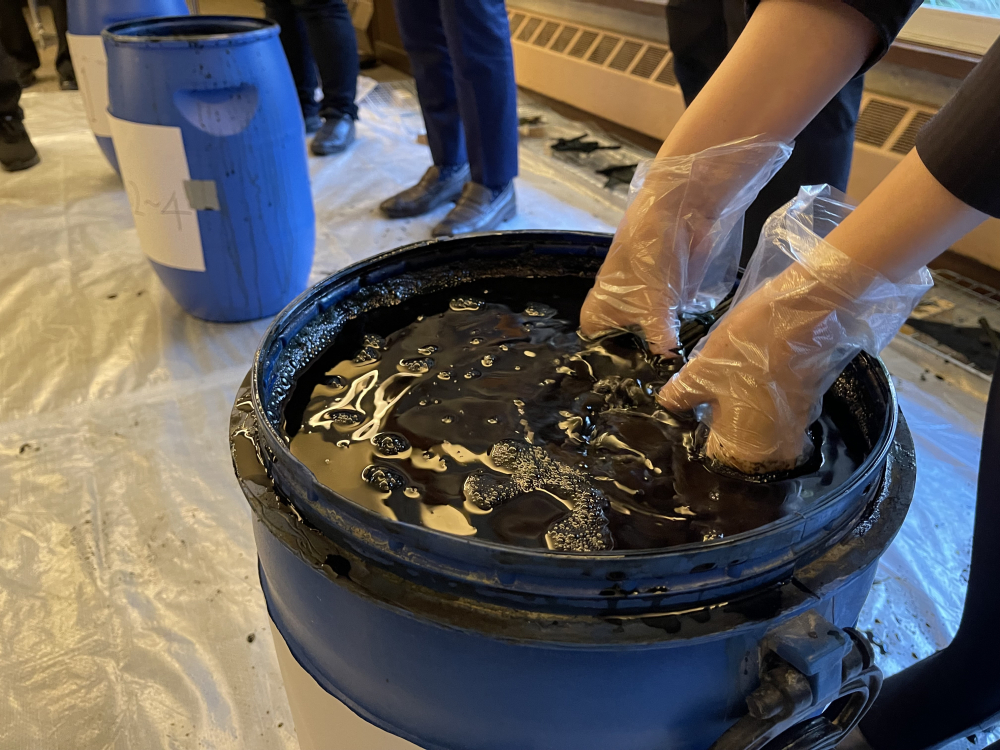
Dyeing the fabric – Image Credit: Jessica Iragne
Process
Whilst certainly not easy, there is always a step-by-step process that each craftsman follows when it comes to Aizome dyeing:
Harvest Leaves
Harvest the fully grown Indigofera tinctoria from the farms. Gather the leaves and immerse them in a water tank to soak.
Fermentation
After soaking is complete, remove the leaves and separate the water into a different tank to allow it to oxidize, with sediment forming at the bottom of the tank. Interestingly enough, in India, this sediment is typically dried out so it can be used in cooking cakes.
Preparing Dye Solution
Dissolve the mix once again in water and add an alkaline solution to create the dye.
Dyeing
Choose your fabric and immerse it in the dye, and leave it to soak for a certain period of time. This can vary depending on the size and color intensity desired.
Oxidation
Remove the fabric and hang it out in the open air for it to oxidize, causing the parts that have soaked up the dye to dry and turn blue.
Washing
Wash the fabric to remove any extra dye or sediment.
Drying
Dry your fabric one more time and enjoy your newly dyed piece.
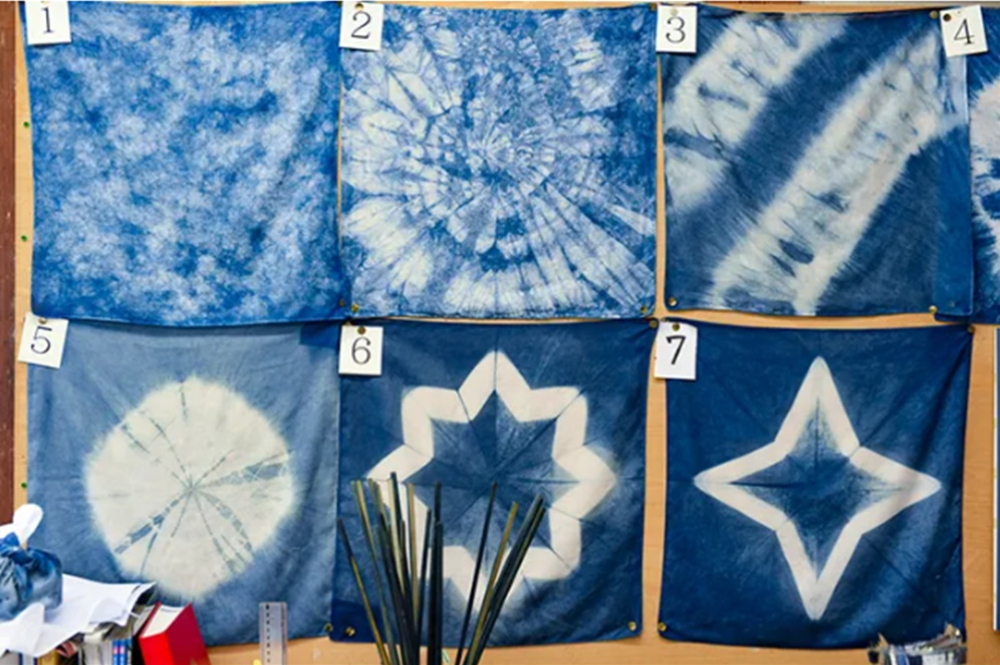
Dyeing Pattern – Image Credit: Japan National Tourism Organization
Indigo Dying Pattern
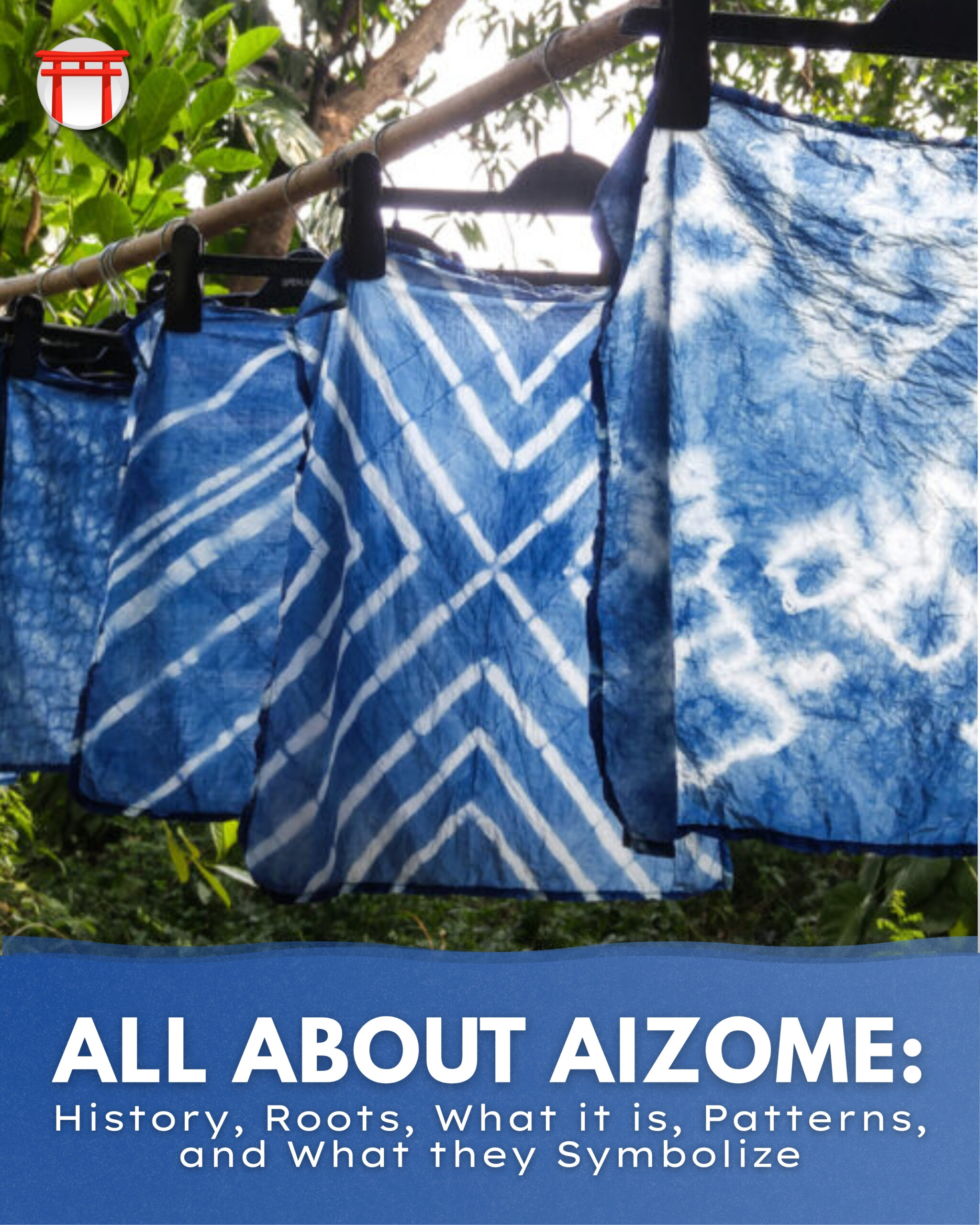
Indigo dyeing also has a technique for creating a pattern on the fabric and ensuring that certain parts of the material don’t turn blue. Many different patterns can be created, such as stars, spirals, and circles, just to name a few, and are also shown in the above photo. Clothes and fabric pieces with white circular patterns are created by protecting specific parts of the piece with wax or shibori, preventing them from being dyed. Patterns made through this process are very common in Japanese kimonos, as well as in many Indian clothes. Other popular methods often involve how the fabric is meticulously folded and tied with bands before being submerged in the dye.
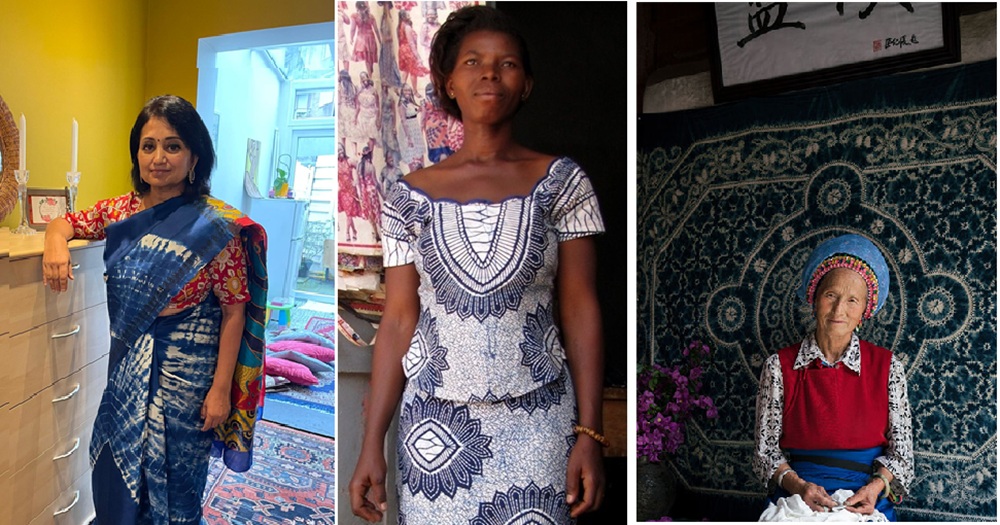
Saree Indian, African Wax Print, Indigo in China – Image Credits: Shyama Ghosh, Bolgatanga, Ghana Magie Relph, Algirdas Bakas fabrics-store.com
Indigo Dying Global Influence
With it being such a vibrant and beautiful color that is popular in many different cultures, the knowledge of dyeing has always quickly caught on, being taught widely throughout the world, expanding far beyond the original countries of India, West Africa, China, and Japan. Every single one of these countries adds its own twists and identities to the process, allowing this unique craft to become more individualised and a vital part of so many cultures. And it’s certainly not going to disappear anytime soon, as even with the introduction of chemical dyes, indigo dyeing is still spreading far and wide, especially among those with a passion for naturally made products.
One particular instance of this is blue jeans fashion, which originated in the United States but is now celebrated, loved, and worn across the globe, especially in Japan, East Germany, China, and Russia, which already have their own strong fashion sense and traditions. I even read an interesting article that talked about how Germany and Eastern European people loved to wear jeans as they were a symbol of American movie stars, particularly during the fall of the Berlin Wall in 1989.
Personally, for me, my father, who had never worn jeans before the age of 70, brought his first pair when he finally retired from his job in the 1990s. I think he had wanted to wear them since he was young due to the popularity, again, of American movies. However, since he had grown up during World War 2, American culture was regarded as the enemy, so he was never allowed. I still to this day remember the big smile on his face when he was able to wear jeans for the first time.
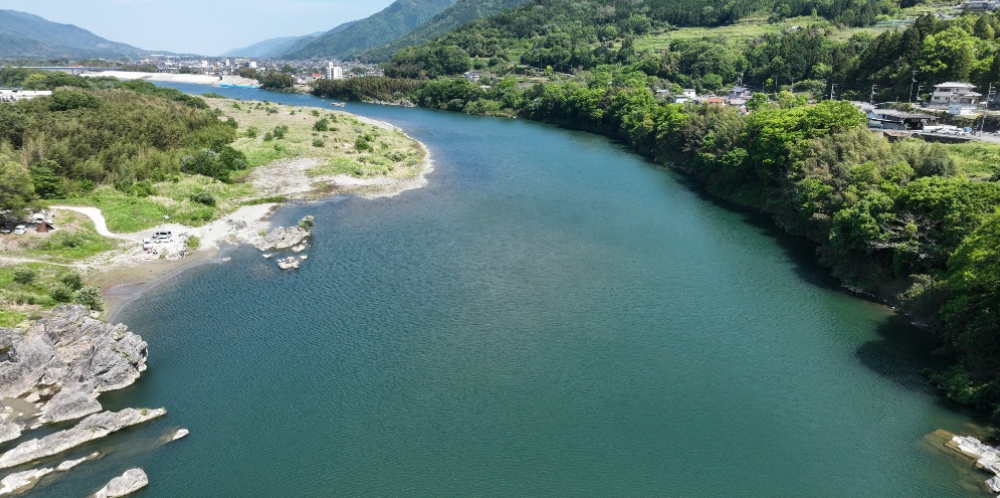
Yoshino River – Image Credit: Shikoku Tourism
Tokushima, the Largest Indigo Dyeing Location in Japan
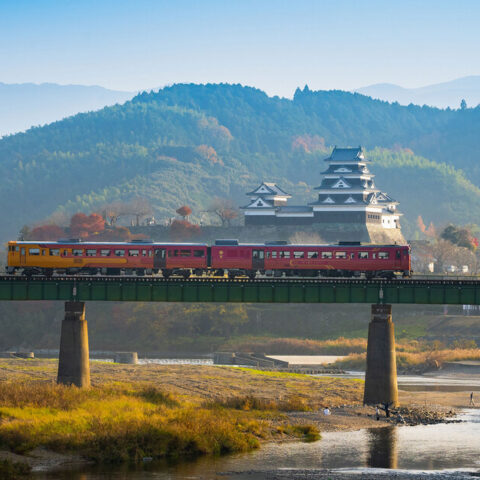
Tokushima is renowned for having the largest indigo dyeing business in Japan, with a history dating back to the 15th century. The species Persicaria Indigo has been planted along the Yoshino River bank, which is famous for its beautiful and clear water, providing a perfect environment for growing crops. The area itself is located on the eastern side of the island of Shikoku, just south of Honshu and northeast of Kyushu, and is about a total of about 3 hours by bus from Shin-Osaka.
The main reason why Tokushima holds this title is due to the Yoshino River being prone to overflooding, creating fertile soil that is ideal for farming the indigo plants. So this region became the center of the indigo-producing regions across Japan. And in the 15th to 16th centuries, Samurai began dyeing their garments worn under their armor a deep, dark indigo, which is the same as my Kendo’s Hakama. This particular color is called Kachiiro in Japan and is considered the color of victory, causing it to become highly valued as a symbol of good fortune for warriors.
Shikoku itself literally means “4 countries”, representing the four prefectures that make up the island, Tokushima, Ehime, Kochi, and Kagawa. These areas are also famous for their production of wheat, and some of Japan’s famous noodles, Udon and Somen. I also heard that Shikoku’s governors had recommended getting more involved with high-value crops and products, which can be another reason why they have remained such a big producer of indigo dyeing within the country. However, despite the region’s success, after the 19th century, the import of far less expensive “Indian indigo cakes” and “synthetic indigo” has led to a decline in the domestic indigo industry.
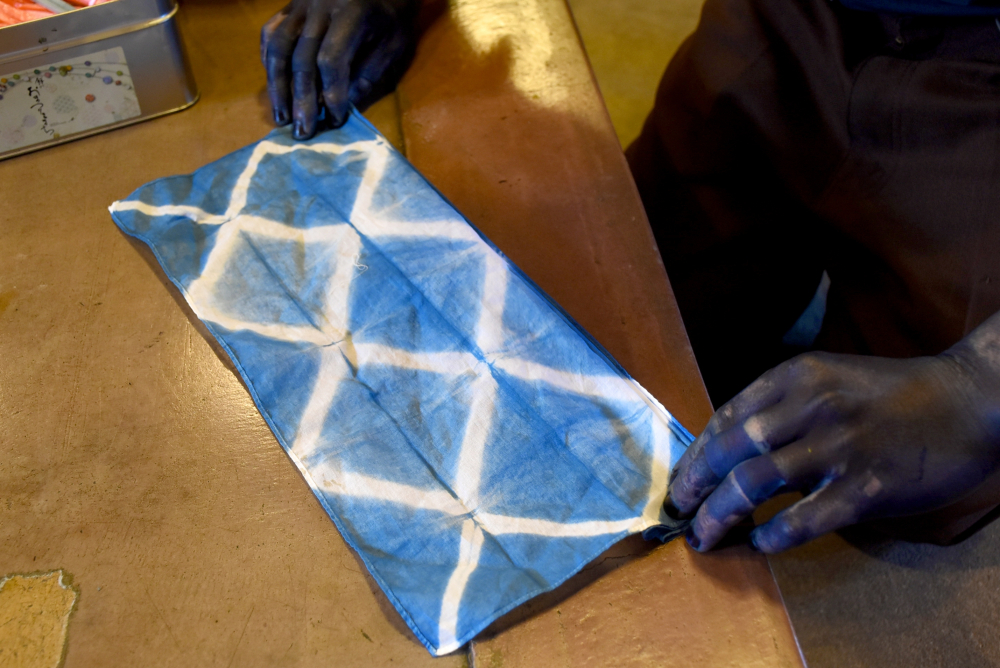
Craftsmen unfolding finished fabric and revealing pattern – Image Credit: Kozaru
All Things Together
I started to look into the history of Aizome due to its strong connection with my Kendo practice in Kyoto. The deep blue color has become such a central part of our culture that it is very traditional, and reminds me, along with many others, of martial arts. Due to how difficult it is to create the colour as well as the dyeing process in general, the industry has become highly valued throughout the world. In Africa in particular, indigo-dyed clothes have been able to financially empower many women, but I believe this is not just true for Africa, but also India, China, Japan, and many more. Learning all this, I became so curious about how the knowledge craft has spread so far. Was it shared in textbooks, or did somebody help spread these techniques across the world? I’m also fascinated by the technology used to synthesize indigo dye, which was actually invented and patented by BASF, which is a German company, in 1897. It’s thanks to this that the world of indigo has widened even further, becoming a popular item for casual fashion just like the US blue jeans.
As I mentioned, it was the dream to wear the cool, stylish Levi’s jeans that motivated thousands of Eastern German people to travel to the West following the fall of the Berlin Wall, showing just how culturally significant these clothing items have become. And Germany isn’t alone in this, as I came across a similar story from Bulgaria, where young people were desperate to get their hands on the jeans that, at the time, were unavailable due to the communist economy in the 80s. Then there’s my father, who, as I mentioned before, was unable to wear jeans due to them being forbidden during WWII, but now loves wearing these pants in his 70s. At first, I didn’t understand my father’s feelings about this clothing culture, but when I returned from the US, arriving at Narita airport wearing blue jeans, carrying an acoustic guitar, and speaking English, I could see it written on his face. After just one year studying abroad, I had adopted all of the American fashion, bringing it home and reigniting my father’s imagination a couple of years before he brought his first pair.
Why Not Try Indigo Dyeing
Indigo Dyeing is not just a vital part of our cultural heritage; in many ways, it also connects us with the world through the art’s longstanding history. Today, it is not only traditionally used for Kendo uniforms, but also in women’s clothing and to create unique patterns on clothes, not only in Japan but in countries across the world. In a more modern form, synthetic indigo dye has led to the creation of jeans and the fast and prominent spread of this new fashion culture internationally. But it’s not all about the finished product; if you try indigo dyeing for yourself, it brings a time of traditions, fun, and surprises, such as watching the magic of how the dark brown color transforms to bright blue when squeezing the clothes in the water. And when you see the final piece dried, you can experience firsthand just how beautiful and natural this blue color is on the fabric. Not to mention it makes for the perfect souvenir to bring home from your trip! So why not try an Indigo Dyeing Workshop on your next trip to Japan? I promise you will leave with a better understanding and connection to the country’s culture!
Featured Photo Credit: Jessica Iragne
Ready to sign up for an Indigo Dyeing Experience on your next trip to Japan? Our team of travel experts is more than happy to craft you an itinerary including this amazing art and much more, all tailored to your personal interests!
PIN THIS FOR LATER