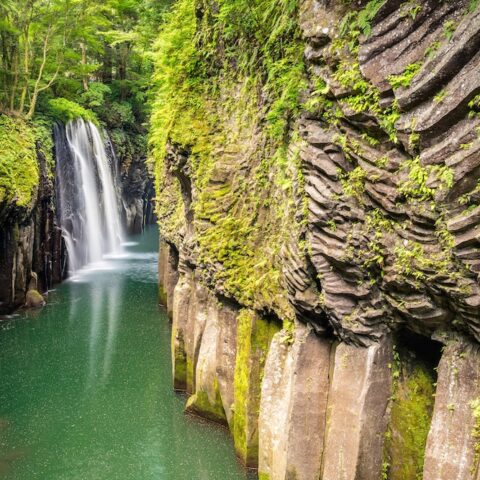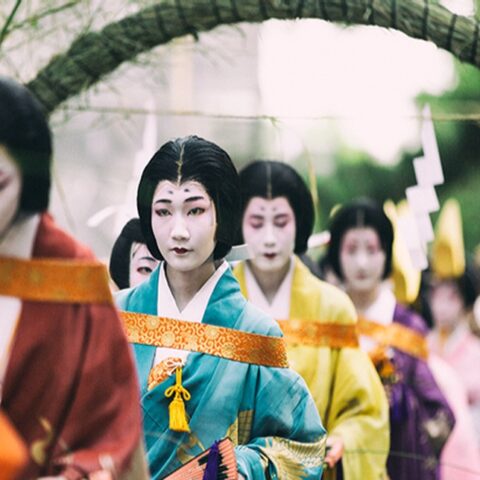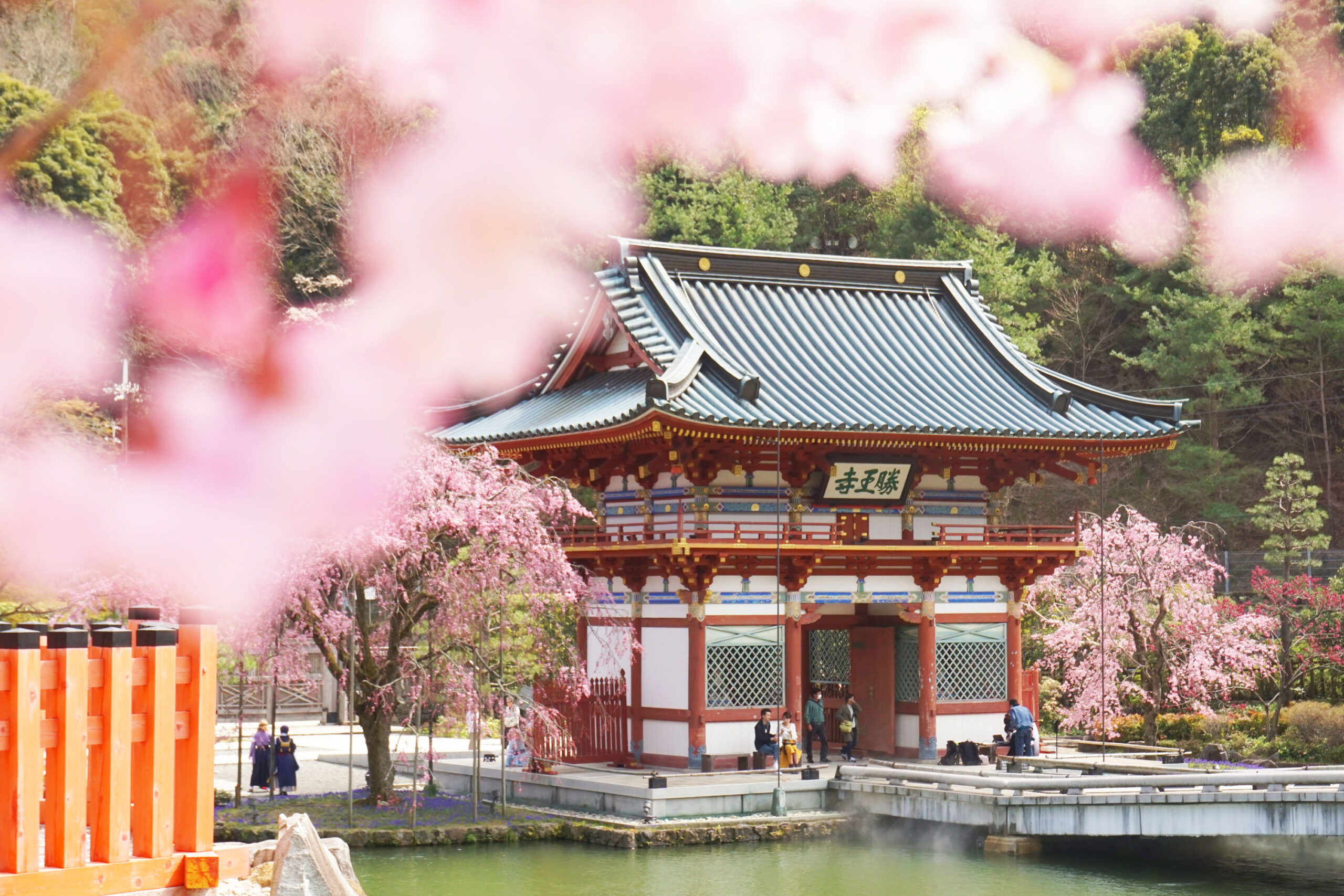
It is not surprising that cities like Tokyo, Kyoto, and Osaka are constantly filled with tourists and travelers arriving to experience Japanese culture firsthand. Many visitors come to these top destinations to see the wonders of traditional Japanese architecture and world-renowned gastronomy with their own eyes.
Although these major hubs represent the various essences of Japan, there are many other incredible spots that are relatively close to the “Big Three” cities. One such place is Katsuo-ji Temple in Minoh, Osaka, where history, culture, and natural beauty converge. Often referred to as the “Temple of Victory,” this site has inspired hope and determination in its visitors for over a thousand years.
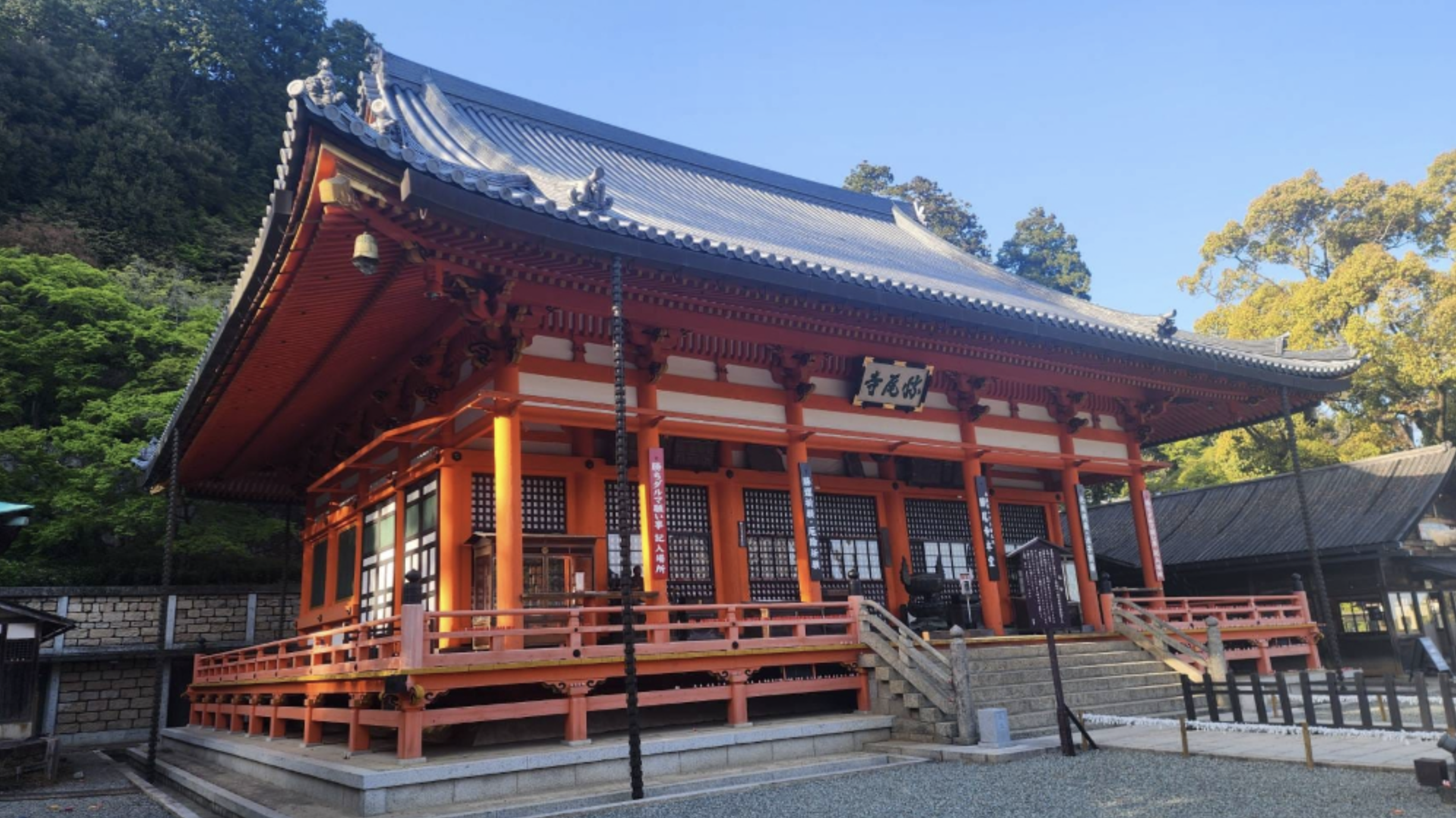
Katsuo-ji Temple – Photo Credit: María Díaz
The History of the Temple
This temple has a fascinating history that dates back to 727 AD, during the Nara period. It began as a small hut established by two brothers (Zenchu and Zentan) as part of their vow to copy Buddhist scripture, Daihannya-kyo. Over time, the temple gained prominence when Prince Osabe, son of Emperor Kōnin, became a monk there and helped establish it as a center of Buddhist scripture. It was initially named Miroku-ji (Temple of Maitreya).
During the Heian period (794-1185), the temple flourished under the influence of Ennin, a prominent Tendai monk, who introduced unique spiritual practices. Emperor Seiwa elevated its status by praying at the temple for blessings and renaming it Katsuo-ji after his prayers were answered. Later, the temple became a refuge for monks during the Mappō era. However, it was destroyed during the Genpei War.
Rebuilt after the war, Katsuo-ji regained prominence as a place of worship and spiritual strength. It became a destination for monks and pilgrims, including Hōnen, the founder of the Jōdo sect. The temple played a role in national prayers during the Mongol invasions, solidifying its identity as the “Temple of Victory”.
Nowadays, Katsuo-ji continues to be a symbol of triumph and perseverance. It remains a place for those seeking the blessings of success and victory, drawing visitors from all walks of life.
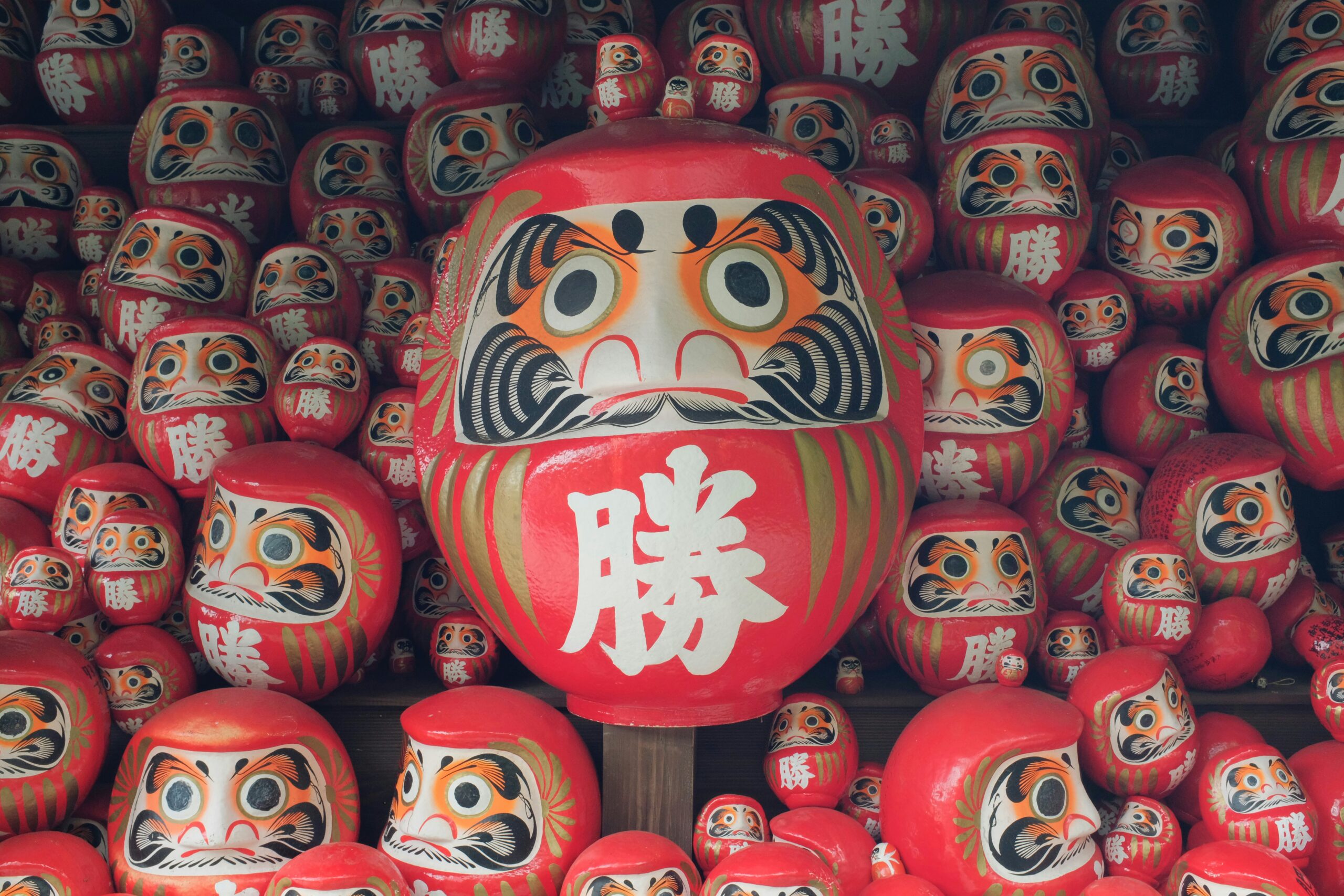
Kachi-Daruma at Katsuo-ji Temple – Photo Credit: Firdan As Sahab on Unsplash
The Symbolism of Daruma
One of the most captivating aspects of Katsuo-ji is its association with Daruma dolls. These traditional Japanese talismans symbolize perseverance and resilience.
Visitors to the temple can participate in a meaningful ritual with these dolls called Kachi-Daruma (Victory Daruma). Upon purchasing a Daruma (there are different sizes and prices to choose from), write your immediate goal on its back and an overall life goal on its base. After offering incense and prayers, fill in the doll’s right eye, symbolizing your commitment to achieving the goal. Once accomplished, fill in the left eye and return the doll to the temple as a testament of your success.
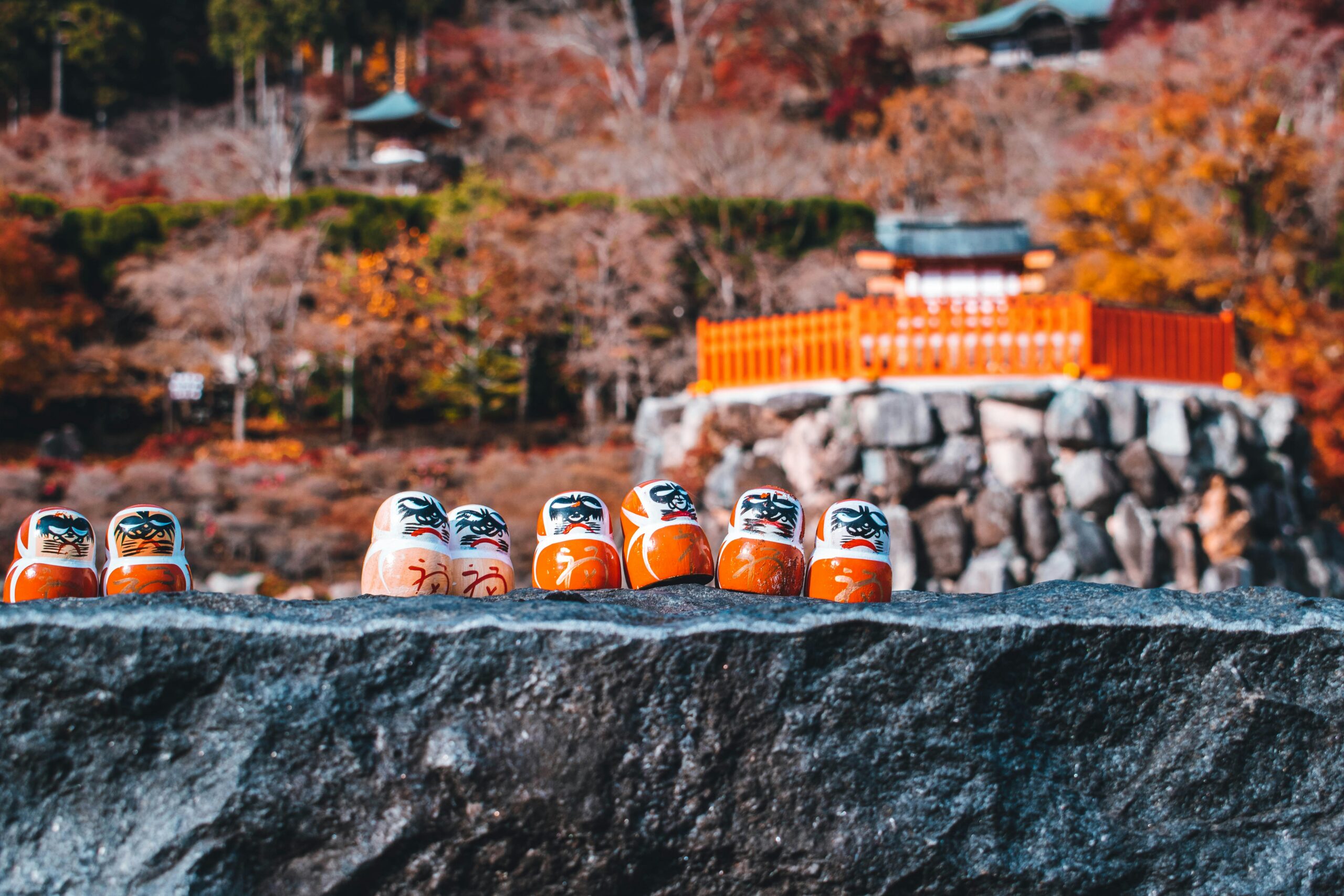
Randomly placed fortune-telling darumas at Katsuoji Temple – Photo Credit: Roméo A. on Unsplash
Fortune Telling in the Temple
64 Oracle Daruma Mikuji (64 Trigrams Daruma Fortune Slip) is a special type of fortune-telling inspired by the ancient Chinese system of the Yi Jing. Instead of just labeling fortunes as “good” or “bad,” this method provides thoughtful guidance to help you reflect on your life.
Here is how it works:
The system is based on 64 unique patterns, each representing a different life situation or piece of advice. When you draw a fortune, it offers insights related to your question or concern (like work, love, sports, health, etc.). It’s not about predicting your future, but about helping you think more deeply and make better decisions.
How to participate:
Select a Daruma while thinking of one thing you want to know. Every single Daruma has a mikuji written on it. When you finish reading the mikuji, leave the daruma anywhere in the temple or take it home. For this reason, it is very likely that on your next visit to this temple, you will find hundreds of Daruma scattered everywhere, and even some hidden in out-of-the-way spots to ensure that temple workers don’t find them.
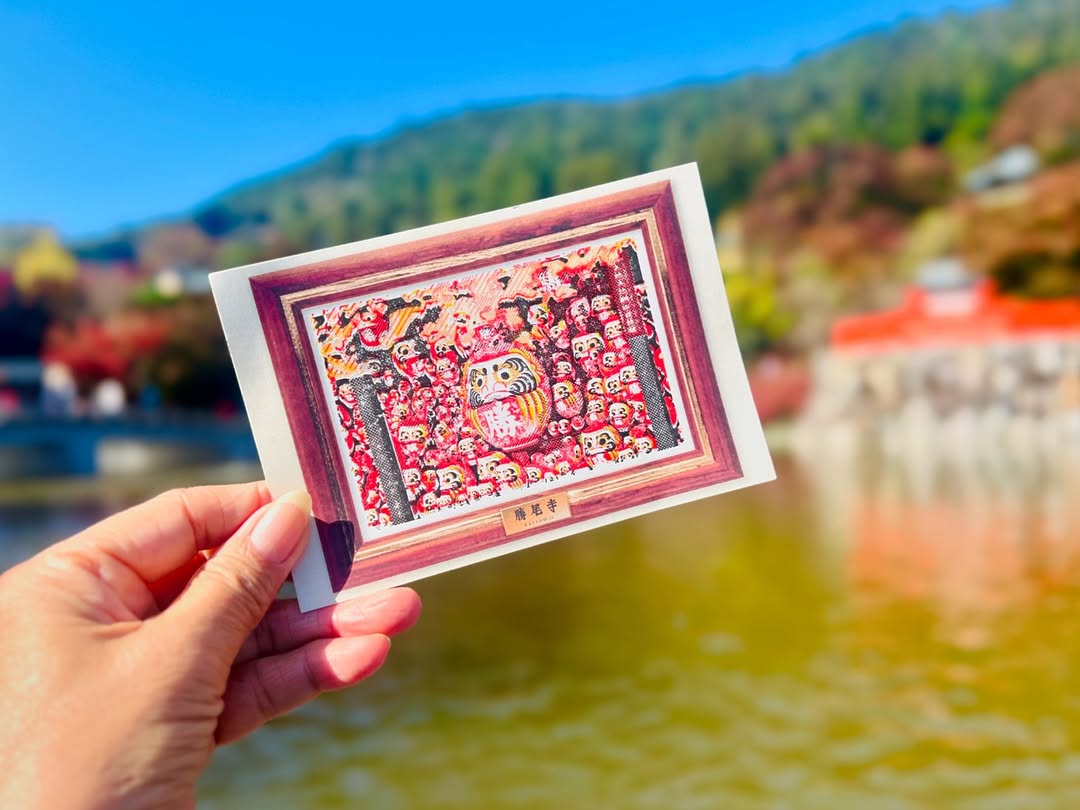
Katsuo-ji Stamp Card – Photo Credit: m._.ebichan on Instagram
A Special Memory
A year ago, Katsuo-ji Temple began offering Daruma Stamp Cards, where visitors collect six unique Daruma-themed stamps around the temple. Once complete, you can create personalized postcards as a keepsake. This fun activity connects you to the temple’s spirit of perseverance and good fortune.
How to get there:
- From Umeda Station: Take the Hankyu-Senri Line to Kita-Senri Station or the Midosuji Subway Line to Senri-Chuo Station, then board Hankyu Bus 29 to the temple (30-35 minutes)
- From Shin-Osaka Station: Take the Hankyu-Minoo Line to Minoo Station, then a 15-minute taxi ride
- From Kansai Airport: Take the Nankai Airport Line to Namba, switch to the Midosuji Line to Senri-Chuo, and take Hankyu Bus 29
Address: 2914-1 Aomatani, Minoh, Osaka 562-8508
Hours: Open year-round, 8:00 – 17:00 on weekdays, extending to 17:30 on Saturdays, and 18:00 on Sundays and holidays
Admission fee: ¥500 for adults, ¥400 for elementary and junior high school students, and ¥100 for preschoolers
Katsuo-ji Temple offers a serene escape where tradition meets inspiration. From the countless Daruma dolls symbolizing personal victory, to its peaceful mountain setting, the temple invites reflection and growth. A visit here leaves you with cherished memories and renewed motivation to face life’s challenges. So if you have some extra time in Osaka, don’t hesitate to visit this temple. You won’t regret it!
Featured Photo Credit: Pampalinda