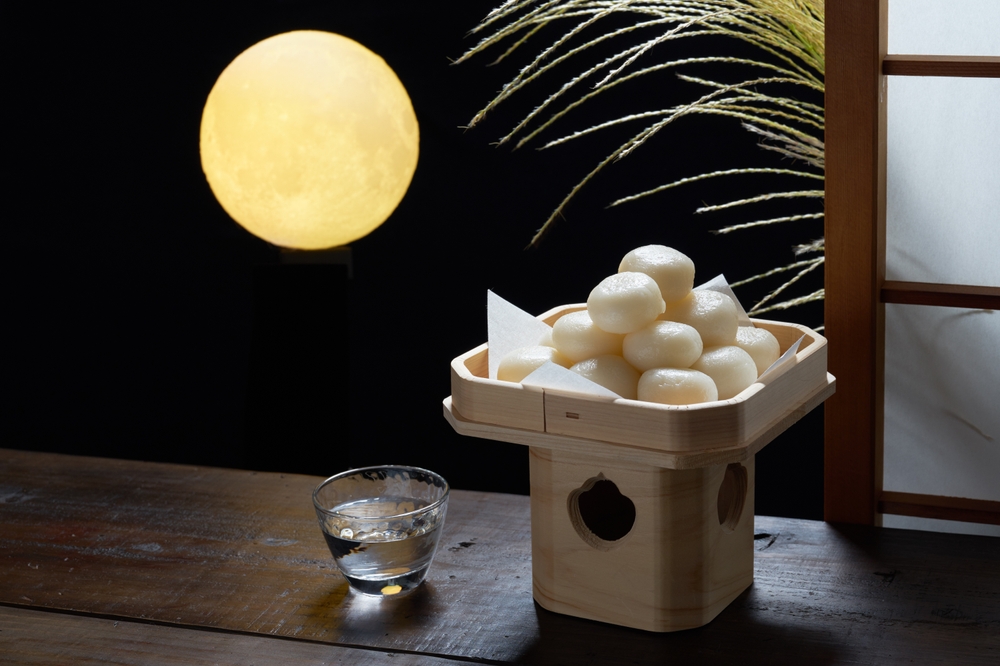
If you’ve ever visited Japan in the autumn, you may have noticed people pausing to admire the full moon, often with a tray of round rice dumplings nearby. This is Tsukimi (月見), Japan’s traditional moon-viewing festival, a beautiful celebration of the harvest moon and the changing seasons. But what exactly is this celebration? Today, we’ll take a deep dive into Tsukimi and explore everything this amazing part of Japanese culture is all about!
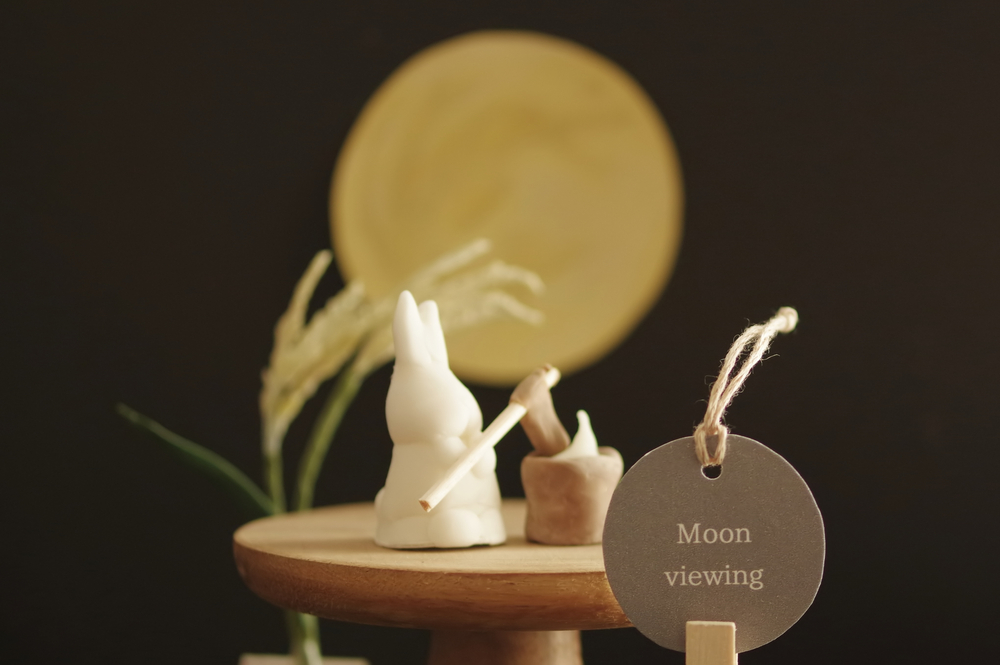
Rabbit figurine making mochi – Photo Credit: rumo777
What is Tsukimi?
Tsukimi literally means “moon viewing,” and it is celebrated in mid-September to early October, when the autumn full moon is at its brightest. The festival has roots in Heian-period Japan and was influenced by the Chinese Mid-Autumn Festival. Traditionally, Tsukimi is a time to give thanks for a good harvest, pray for prosperity, and enjoy the beauty of the night sky with friends and family.
The practice of admiring the moon began among aristocrats of the Heian court (794–1185), who would compose poetry and play music under the full moon. Over time, the tradition spread among farmers and common people, becoming a way to honor the rice harvest and the natural cycles of the season. This blend of refined courtly ritual and agricultural gratitude is what shaped Tsukimi into the holiday it is today.
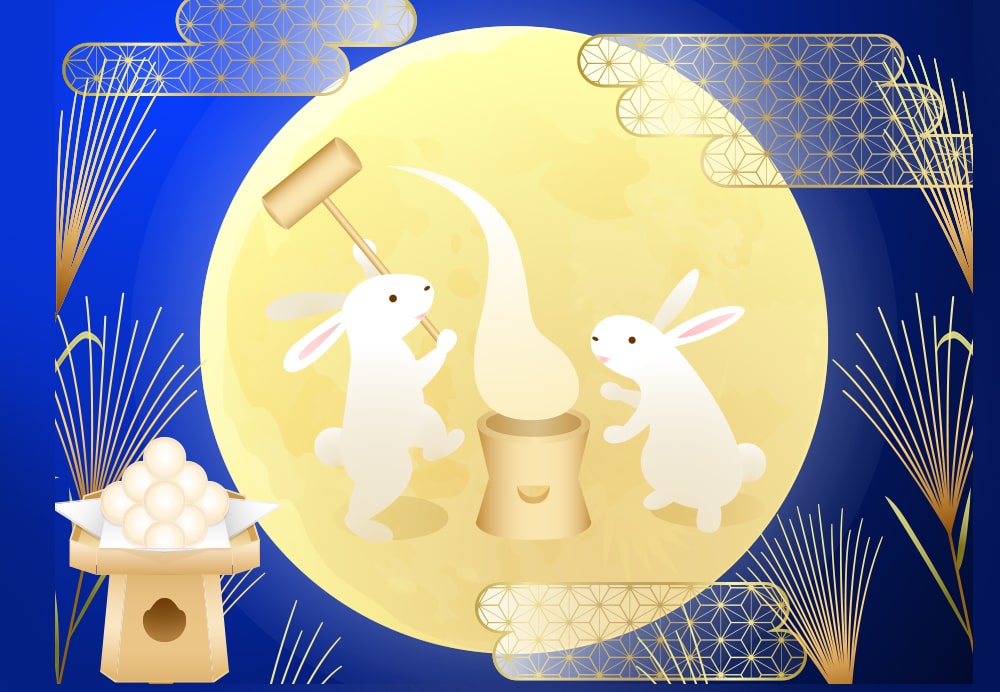
Photo Credit: PublicDomainQ
One of the most famous legends tied to Tsukimi is the story of the rabbit on the moon. According to Japanese folklore, a selfless rabbit offered its own body as food to a hungry traveler, who revealed himself to be a deity. Moved by its sacrifice, the deity sent the rabbit to the moon, where it can still be seen pounding mochi (rice cakes).
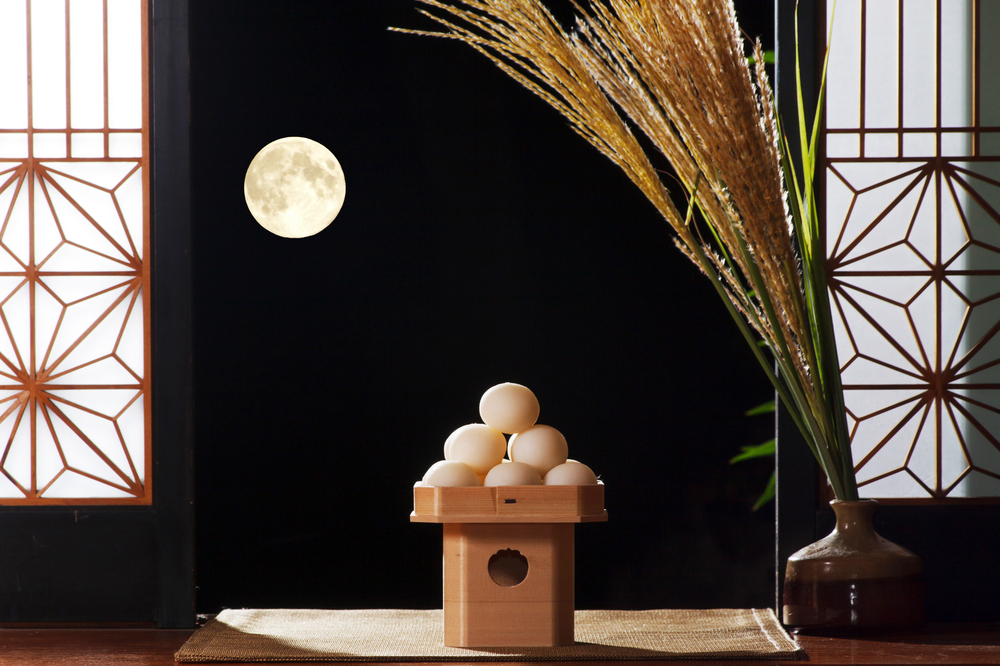
Tsukimi dango – Photo Credit: sasazawa
Traditional Foods: Tsukimi Dango and Seasonal Treats
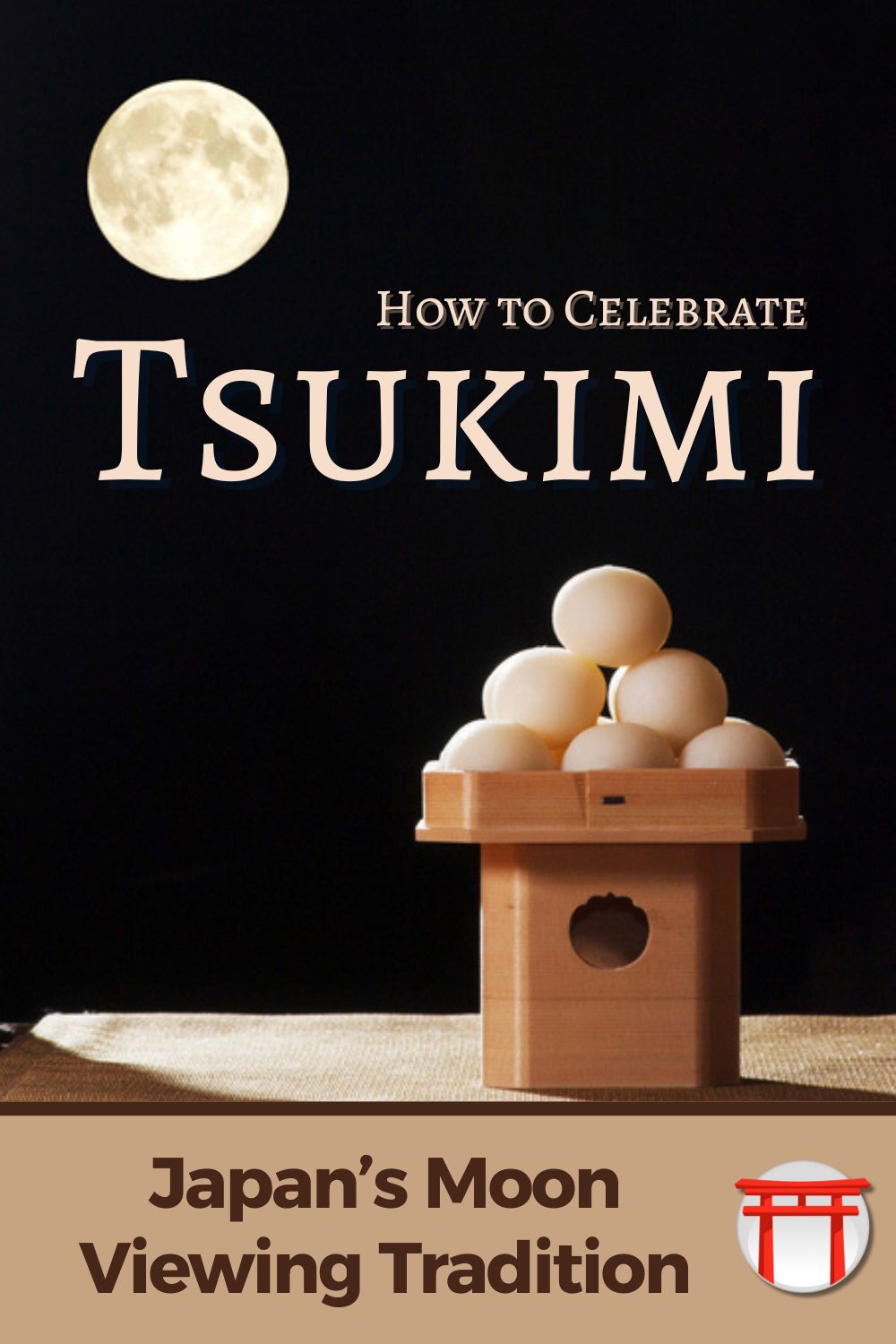
A Tsukimi celebration is never complete without tsukimi dango, small, round rice dumplings that symbolize the full moon. These are often stacked in a pyramid shape and placed on an altar or offering table alongside pampas grass (susuki), which represents resilience and a bountiful harvest.
Other popular seasonal foods include:
- Tsukimi soba or udon: Noodles topped with a raw egg, symbolizing the moon.
- Seasonal chestnuts and sweet potatoes: Celebrating autumn flavors.
- Moon-themed desserts: Cakes or sweets shaped like moons, available in many Japanese patisseries during this season.

Photo Credits: McDonald’s Japan
Even fast food chains join in the fun. For example, McDonald’s Japan releases a special “Tsukimi Burger” each year, featuring a fried egg to represent the moon. Other chains like Mos Burger, KFC, Lotteria, and Sukiya often throw their hat in the mix as well, among many others! Convenience stores and bakeries also roll out moon-themed sweets and limited-edition seasonal snacks, showing how the holiday continues to evolve in modern times while keeping its symbolic ties to the harvest moon.
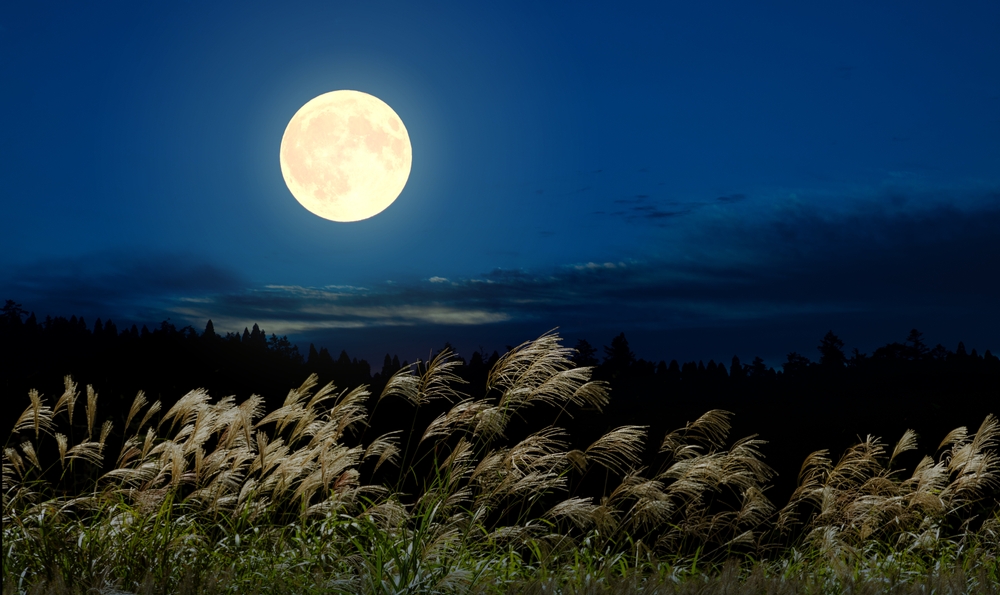
Full moon and pampas grass – Photo Credit: 1059SHU
Where to Experience Moon Viewing
Whether you’re in Kyoto, Tokyo, or elsewhere in Japan, there are plenty of spots to enjoy the festival.
- Temples and Shrines: Many Kyoto temples, like Daikaku-ji, hold special Tsukimi events with evening lanterns and moon-viewing decks.
- Gardens: Traditional Japanese gardens, such as Koishikawa Korakuen in Tokyo, offer serene settings for admiring the moon reflected in ponds.
- Rooftops and Cafes: Urban moon-viewing has become popular, too. Look for rooftop gardens or cafes offering Tsukimi-themed drinks and desserts with a view of the night sky.
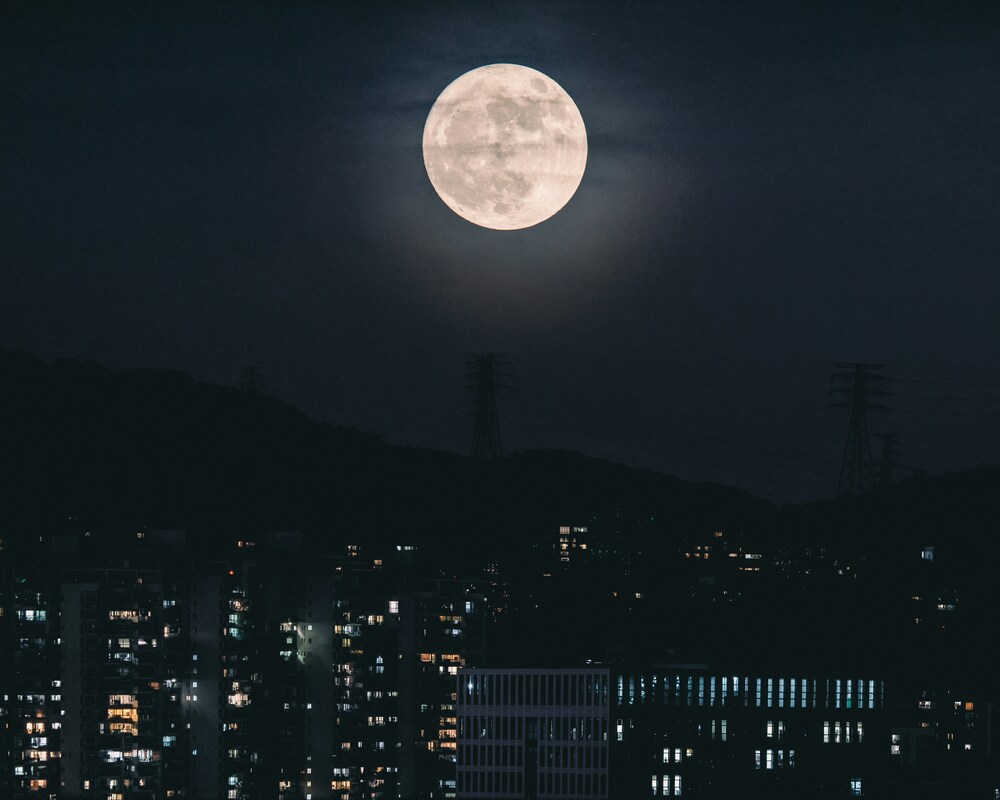
Full moon rises over a city at night – Photo Credit: DL314 Lin
Tips for Celebrating Tsukimi
- Check the lunar calendar to catch the full moon night, known as Jūgoya.
- Bring a blanket and snacks if you’re enjoying outdoor viewing.
- Try making your own tsukimi dango. It is a fun and rewarding way to connect with the tradition.
- Dress warmly. Autumn evenings can be chilly, especially in Kyoto.
Tsukimi is a quiet, reflective festival that celebrates nature, family, and the simple joy of gazing at a moonlit sky. The combination of ancient folklore, seasonal food traditions, and even playful modern spins like the Tsukimi Burger makes this holiday both timeless and accessible. It’s a reminder that sometimes the most meaningful celebrations come from simply looking up at the night sky together. Whether you join a traditional event or enjoy a modern urban twist, it is a magical way to experience Japan in autumn. So grab your Tsukimi Dango, pick that perfect spot, and take part in this magical tradition that truly encapsulates Japanese culture. Trust us, you won’t regret it!
Featured Photo Credit: manbo-photo
Not sure where to start when planning your own Tsukimi adventure? Let our team of travel experts help you craft a perfect itinerary tailored just to you!
PIN THIS FOR LATER