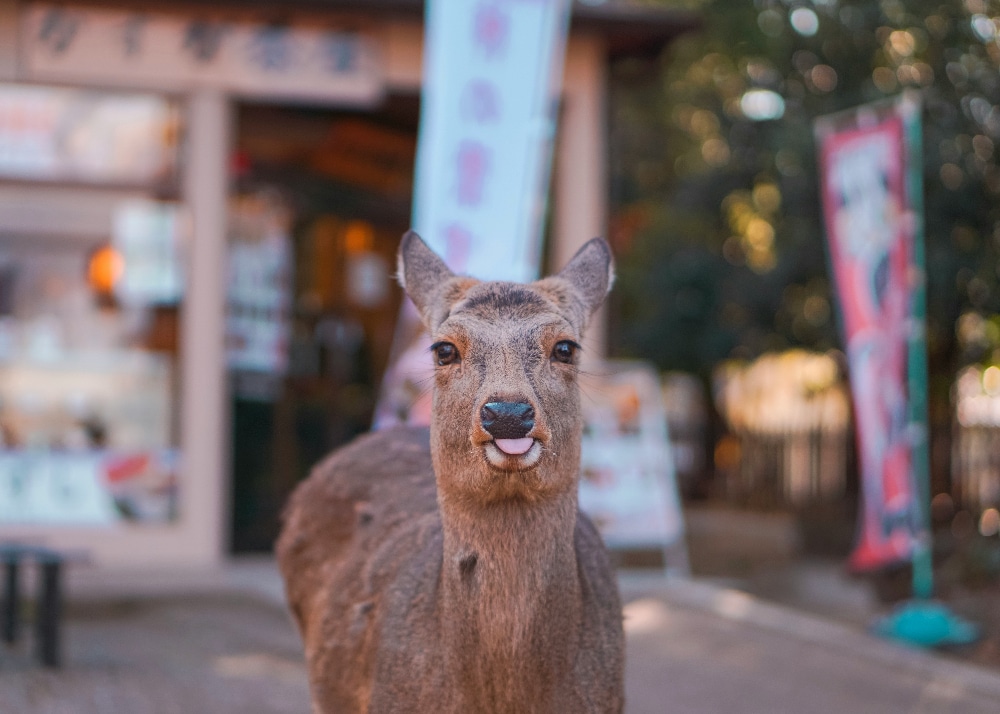
Nara is a city steeped in history, culture, and a profound connection to its majestic deer population. Located in the heart of Japan, it is celebrated for its picturesque landscapes, ancient temples, and the endearing presence of hundreds of freely roaming residents. These deer, ‘Shika’ in Japanese, hold a sacred place in the city’s lore. Join us as we uncover the enchanting world of Nara’s four-legged inhabitants, delving into their origins, cultural significance, and the fascination they evoke among visitors and locals alike.
About Nara’s deer
Legend has it that the sacred deer of Nara owe their revered status to a divine encounter with Takemikazuchi, one of the gods of Kasuga Grand Shrine. He is said to have travelled from Kashima Shrine and arrived on Mount Mikasa riding a white deer. This celestial arrival rendered the creatures divine symbols of both Kasuga Grand Shrine and Kōfuku-ji. Their protection was once absolute…until 1637, harming one was considered a capital offence.
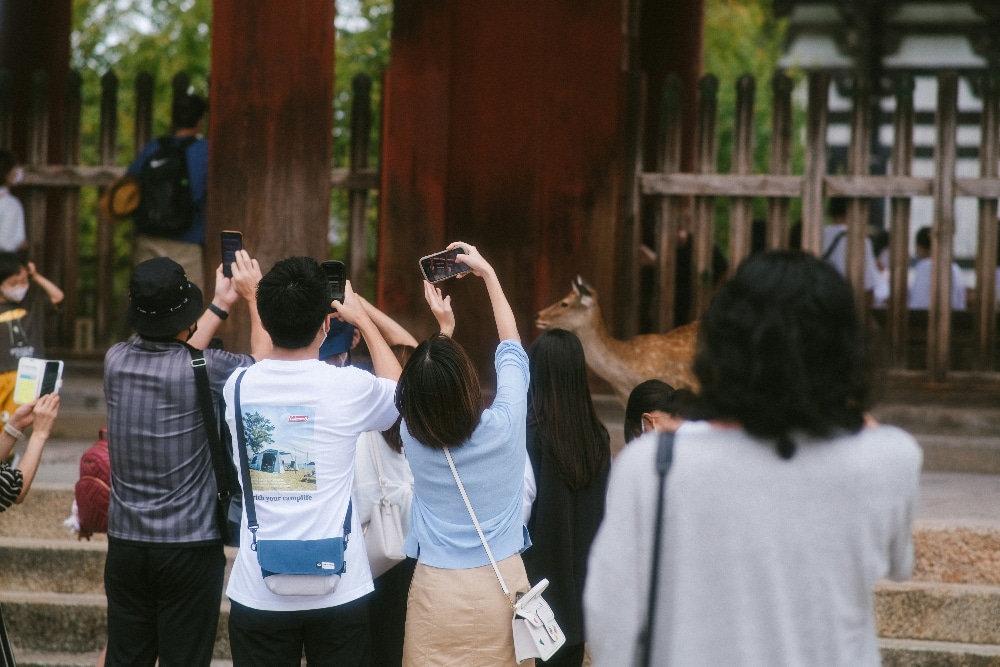
Travellers capturing images of a deer – Photo Credit: Maria Cosmen
Today, these animals continue to hold a prominent place in Nara’s identity, blending seamlessly into the rhythm of daily life. These treasured creatures can be spotted leisurely wandering through temples, gardens, and wooded groves, offering a glimpse into Japan’s natural beauty. While most are concentrated in Nara Park, it is not uncommon to encounter them throughout the wider city. Both tourists and residents enjoy the opportunity to interact with these gentle beings, whether by offering special crackers, capturing photos (respectfully, of course), or simply enjoying their tranquil company.
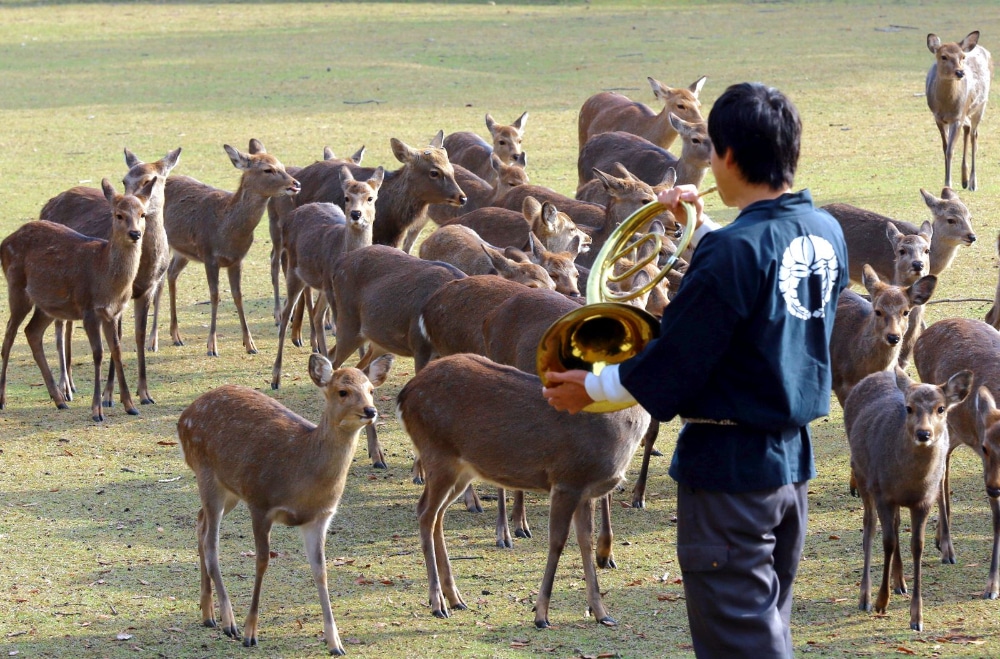
Annual Deer Calling Event – Photo Credit: Japan Forward
Annual events
Each year, Nara hosts unique celebrations dedicated to its wildlife. One such highlight is the Deer’s Call, a tradition dating back to the park’s opening in 1862. During this event, a horn is blown at Tobihino, near Kasuga Taisha Shrine, to gather the herd together.
Another vital custom is the Antler Cutting ceremony, which originated during the Edo Period to ensure the safety of both the trees and the public. While removing a buck’s antlers may seem sad, the ritual is performed to foster a peaceful coexistence between the animals and the community.
For more details on these traditions, feel free to visit visitnara.jp or narashikanko. Keep in mind that the deer calling typically occurs around December, while the antler-cutting ceremony is held in October. If you are visiting during these months, don’t miss the chance to witness these historic spectacles!
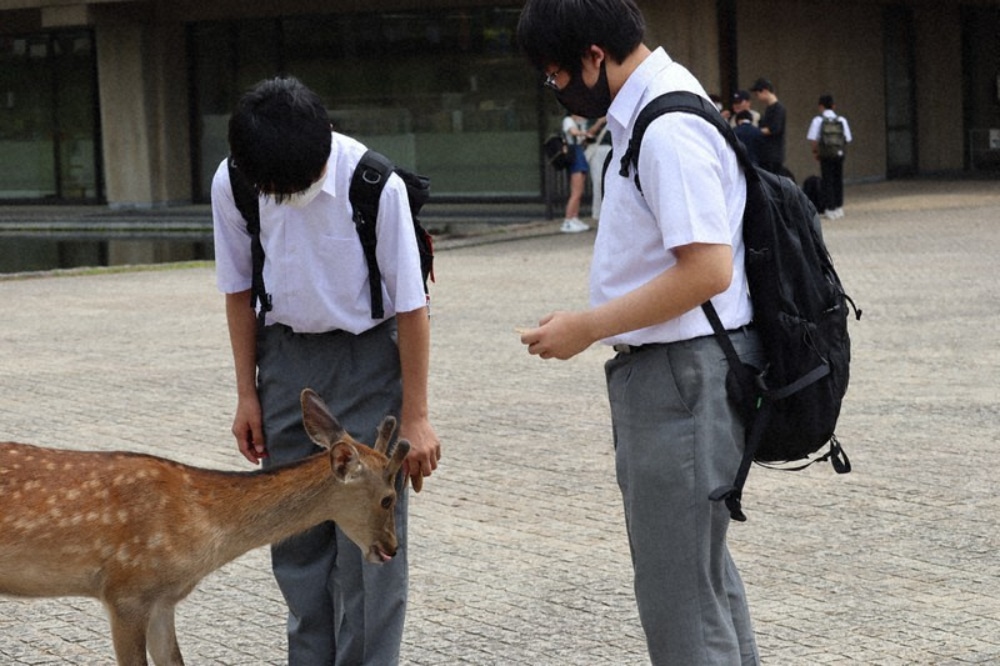
Bowing deer with students – Photo Credit: Mainichi
Internet sensation
Nara’s deer have become global internet sensations thanks to their charming behaviour. They are famous for “bowing” to visitors and even appearing to follow traffic rules, often waiting patiently at pedestrian crossings. This surprising intelligence and polite demeanour have captured hearts worldwide, making them iconic symbols of Japanese travel.
However, with such popularity comes the responsibility of proper etiquette. The relationship between humans and wildlife here is a delicate balance. Unlike wild animals elsewhere in Japan, Nara’s deer live in close proximity to people. This requires extra mindfulness to maintain harmony.
Road safety: Drivers must exercise extreme caution, as deer may dart into traffic without warning.
Dietary care: While feeding them is a highlight for many, they should only eat designated deer crackers. Human food can cause serious health risks and disrupt their natural diet.
Waste management: Litter, particularly plastic bags, can be fatal if ingested. Visitors are encouraged to use the litter bins conveniently placed throughout the city.
By adhering to park rules and respecting their natural behaviour, we can ensure these “sacred messengers” remain healthy and safe for generations to come.
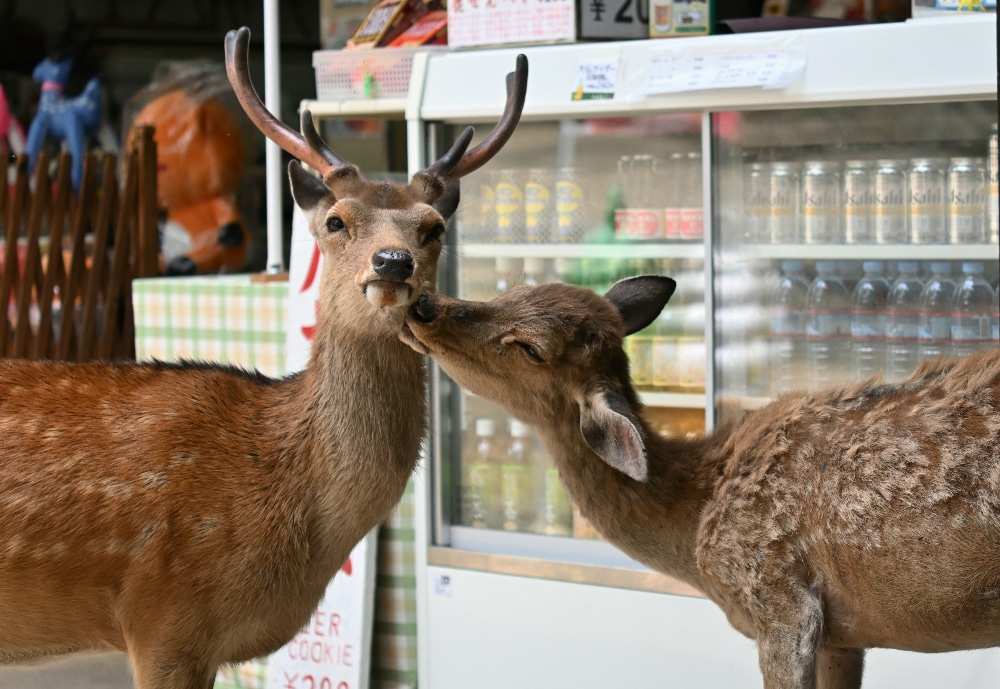
Two loving deer outside a vendor in Nara – Photo Credit: Nagara Oyodo
In summary, a trip to Nara is incomplete without spending time with its deer. These gentle creatures represent a unique bridge between Japan’s rich history and its natural world. Whether you’re seeking a peaceful escape, a cultural deep-dive, or a truly memorable encounter, Nara offers an experience like no other.
Featured Photo Credit: Erin Song