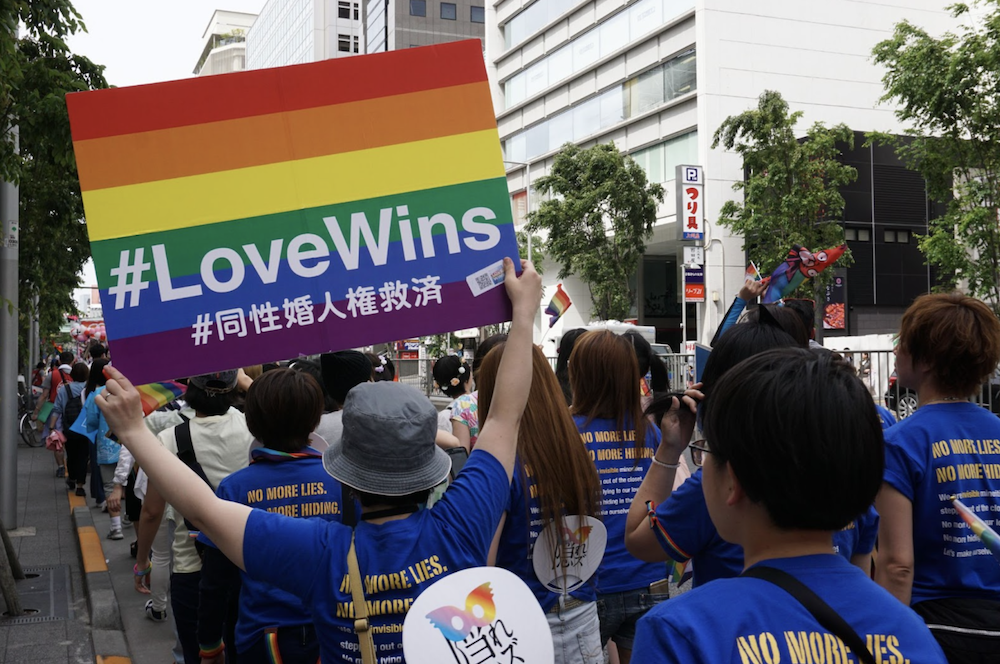
Japan, a country often characterized by its deep-seated traditions and public reserve, is quietly, and loudly, undergoing a Rainbow Renaissance. On the streets of Shinjuku Nichome, and increasingly across mainstream media, LGBTQ+ life is visible and celebrated. We sat down with some of Japan’s most influential queer voices, creators who share their intimate, cross-cultural, and daily experiences with millions, to understand how they navigate this unique landscape. The journeys of their lives will serve as an essential guide to the unfiltered reality of being queer in Japan. Let’s hear their stories of Japan’s LGBTQ+ community, beyond Nichome.
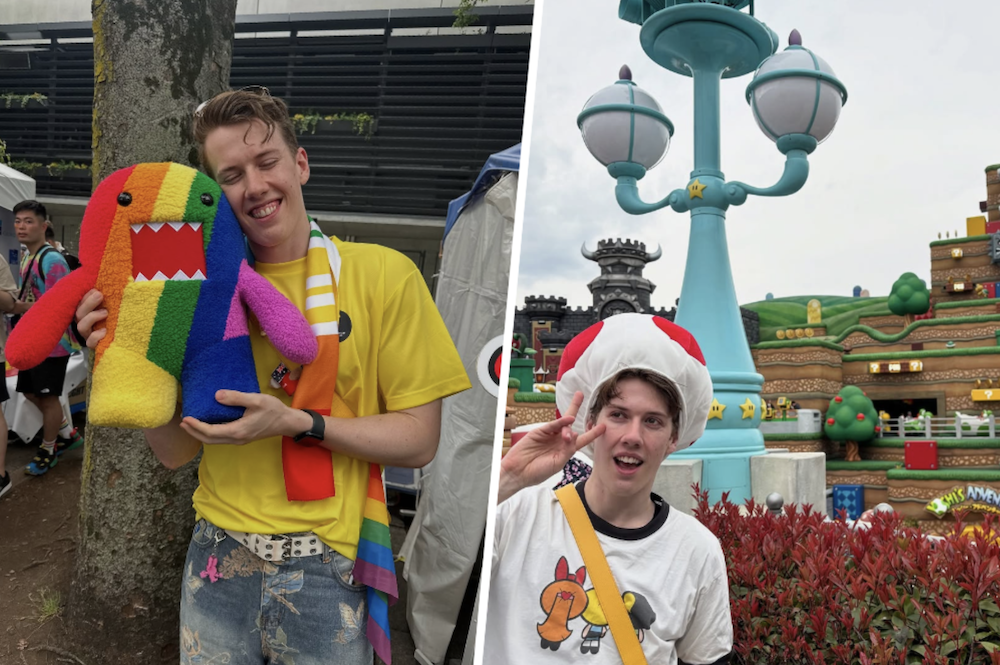
Will Bennett – Photo Credit: Will Bennett’s Instagram
Will Bennett
My name is Will Bennett, originally born and raised in Sydney, Australia. I’m currently working in digital marketing in Tokyo, and I do some itty bitty viddies on the side.
Can you share the initial story of what brought you to Japan, and what was the single biggest cultural or social shock you experienced when you first started navigating Tokyo as an openly gay person?
I first came to Japan with my parents as most Aussies do… to ski and then since I was learning it in High School, I came back on exchange to Kagoshima for 3 months, which gave me the goal of coming back here for university, but unfortunately, my uni time coincided with COVID, so my exchange got cancelled and then… life happened. I found myself a good job at Penguin Books Australia (check out their tiktok pre August 2024 for some Will x BookTok slay), a lovely boyfriend, and an apartment, so life was life-ing. The Japan bug was always there deep down, though, and when my boyfriend gave me the chance to come with him to Japan with his company, I didn’t hesitate. So in August 2024, I saw myself standing underneath Tokyo Tower, ready to start a new life in Tokyo with my boyfriend!
As an openly gay person in Tokyo, do you generally feel safe here?
SO SAFE. In Australia, the threat of violence or verbal abuse is very much prevalent, even though we’ve got things like Gay Marriage sorted, unlike Japan. On my first date with my boyfriend, actually, we were hugging underneath the harbour bridge (so romantic and so bloody Aussie), when some guys ON A BOAT driving by called us the F-slur… so yeah, that doesn’t really happen in Japan. I think, though, that the safety also comes from a general assumption that I’m straight in all contexts, even when I’m wearing a bright yellow shirt, big flared butterfly pants, and my signature yellow bag with a Chef Kawasaki attached to it, whilst dancing to XG’s Gala on top of Miyashita Park in Shibuya. In Australia, that = Gay, in Japan, this = futsuuuu. Guys can be cute here without being branded as gay, so I’m always curious whether, if I actually told every person I came into contact with that I’m gay, would I always get a positive reaction…
Your content is distinctively bilingual! Was this a strategic decision, and how does this bilingual approach help you connect the local Japanese community with the international audience, particularly on topics related to LGBTQ+ life?
SUCH A BIG COMPLIMENT that my content is being called ‘bilingual,’ I’m so happy. If I’m being honest, my Japanese skills are one of my biggest insecurities, but when I started making content here, I wanted to connect with people, Japanese people, people living in Japan, people who wanna come to Japan, and obviously, my own queer community’s people. So, in part, it’s a way for me to study, but in the end, it’s grown into this way for me to reach people that I never could when living in Australia. I thought I was worldly before, but every kind of person lives in Japan, and I’m so grateful to get to hear their stories. Queer people are greatly underrepresented in Japan, so if I can help push that along, even a little, I’ll be happy.
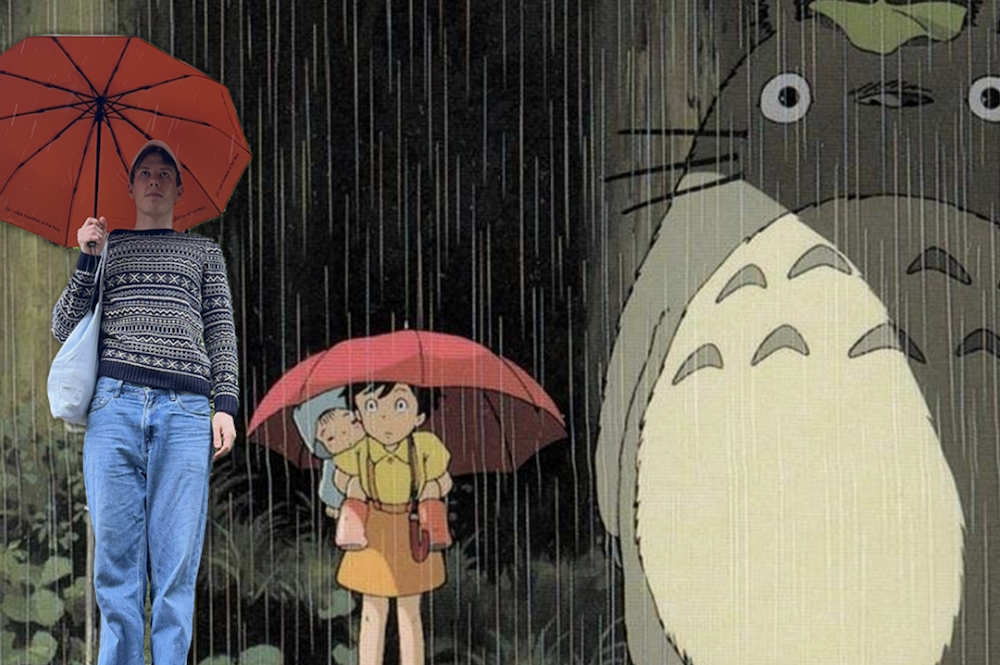
Will in the storybook world of My Neighbor Totoro – Photo Credit: Will Bennett
As a foreign creator, you often touch on the experience of being a Gaijin. What are the unique challenges and, conversely, the unexpected opportunities that come with discussing queer themes while existing on the outside of traditional Japanese society?
I will never ever fit in, in Japan, but I never really fit in in Australia either. So I feel like I’m uniquely equipped to navigate the struggles of being a Gaijin and Gayjin in Japan. My content comes truly from a place of turning things that sometimes frustrate me about living in Japan, and making them funny. I guess it’s become a sort of therapy, maybe, or a way to vent without making me more annoyed, but instead makes me see the light and absurdity of the situation that I’m in. On top of that, I want to make my life in Japan seem like a new form of ‘norm.’ A gay couple living and working in Tokyo, having fun, navigating the ups and downs, and all that jazz, I just want it to seem normal so that the next gay couple that moves to Japan has at least a little blueprint on what it could look like.
What is one piece of advice you would give to another queer person moving to Japan about navigating the social scene here, and how does the culture differ from what you might have experienced elsewhere?
If you’re queer and coming here alone or with a partner, you have the greatest opportunity to shape your own reality. I moved because I felt like I couldn’t become who I wanted to be, because I was surrounded by what I was. Take this opportunity to grow, to learn, to find people who will shape your worldview. There are no consequences here because your friends and family aren’t going to see you, so put yourself out there, go to Nichome, even if it’s by yourself, and just have a go at meeting people. Japan is a very lonely place, so you’d be surprised how open and receptive people are to you talking to them. You lose 100% of all opportunities you don’t take, so if you see a chance to go for it, then go for it! I’ve made friends through DMing people on Insta, through chatting with them at Gaijin FamilyMart at Shibuya, and through saying hi after one too many Lemon Sours. Go for it, Divas!!!
What is the most impactful or unforgettable piece of feedback or story you have received from the Japanese LGBTQ+ community through watching your videos?
For the longest time, I didn’t really think I was hitting the LGBTQ+ community in Japan at all, to be honest… like it’s hard to see or understand the real impact of your content from beyond the numbers on your screen because tangibly, in the end, that doesn’t really mean much. But when a young Japanese Twink stopped me in the streets of Shibuya and told me he loved my content and that it made him happy, as small as that interaction was, it really filled me with so much unbelievable joy. For me, that was such a motivating experience because it made me realise that I might actually be touching the community I love so much, more than I think. Even if it’s just a little bit, here and there. I hope that I’m giving people confidence and using my privilege as an out gay person for good.
When someone asks you for a recommendation for their trip to Tokyo, what are some of your absolute favorite LGBTQ-friendly places that you always suggest visiting?
Okay, obviouslyyyyyy, Shinjuku Nichome BUT this feels like ‘insider trading’ at this point ahaha because I work for their marketing team, but GENUINELY King Tokyo and Queen are nice places to go to meet queer folks in Japan. BUT if you love books, Loneliness Books in Higashi-Nakano is a LOVELY queer little book store, but you gotta learn Japanese before you go! 抹チョ Matcha Cafe is owned by a cute, gay, Japanese man, so if you love Matcha lattes, then this is the place for you.
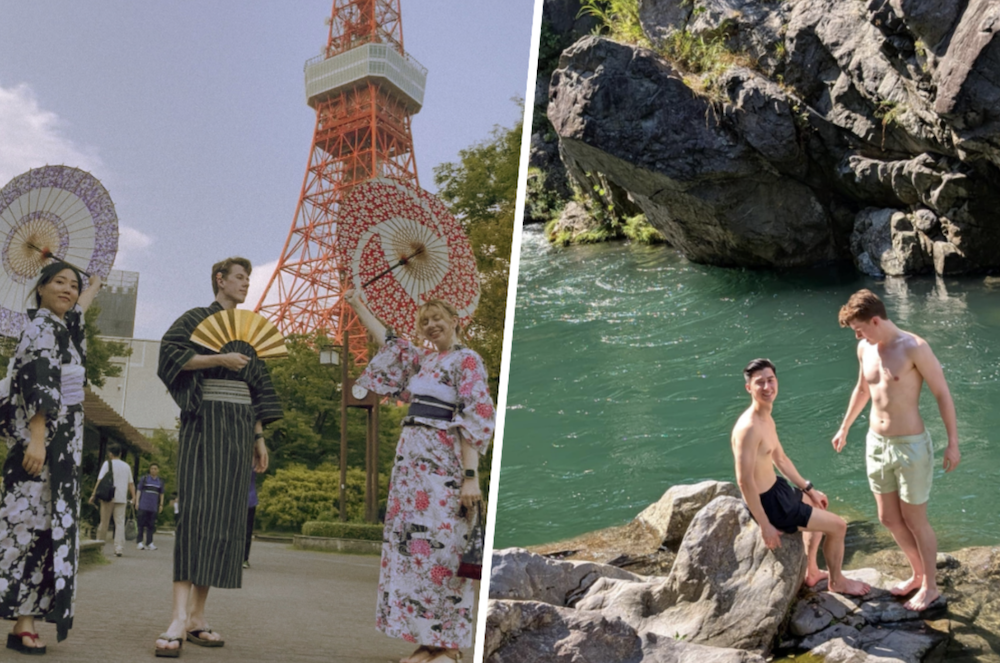
Will with friends – Photo Credit: Will Bennett
Looking ahead, what is the goal you hope to achieve with your content in Japan?
I want to connect with people in all honesty. I’m always SO SHOCKED when people come up to me and say they’ve seen my content! One girl at British Hub told me she loved my content, asked where my boyfriend was (He was at home sleeping), and then NAMPA-ed (picked up) ME! So, besides that, I love the opportunities that content has brought me, and I want to use that kind of influence to make people happy. Full stop. I love making people happy, I love making videos because I FIND MYSELF funny, as narcissistic as that may be, and I want to make videos for a living. That would bring me so much joy because it would mean I’m doing something hopefully positive for the world on my own terms.
Anything else you’d like to share with our audience?
Wherever YOU go, there YOU’ll be, so love YOUrself at any destination. LOVE WILL
You can follow more of Will’s work and connect with him here:
Instagram: https://www.instagram.com/willbennett2000/
YouTube: http://www.youtube.com/@willbennett2000
Tiktok: https://www.tiktok.com/@willbennett20258
X: https://x.com/willbennett2000
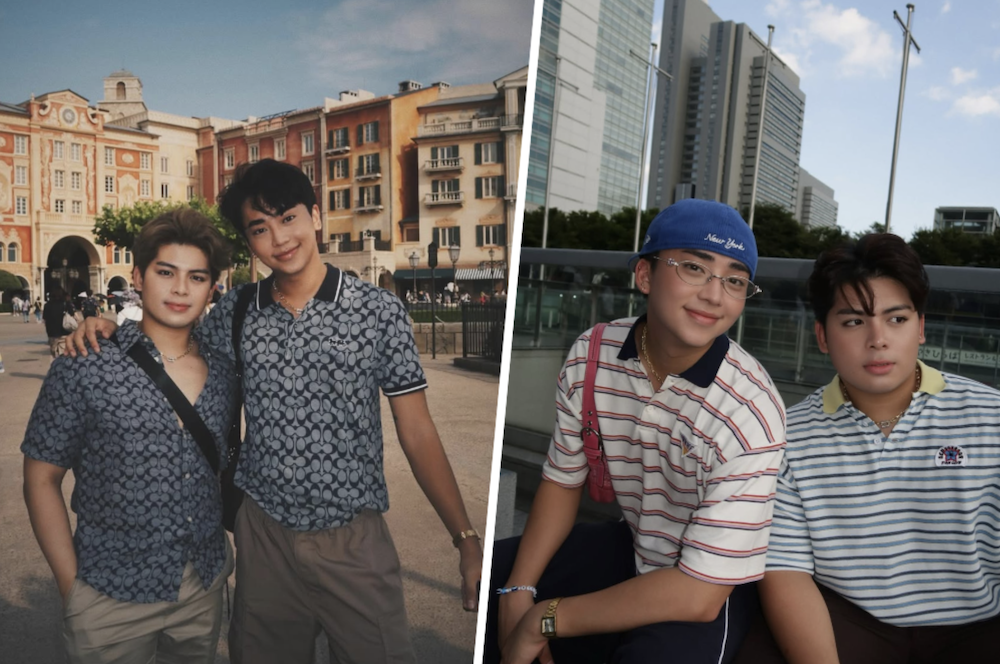
Stan and Merwel – Photo Credit: Stan’s Instagram & Mer’s Instagram
Stan Fukase (Worldofxtra) & Merwel Anthony
Stan: My name is Stan. I’m a Japan-born, half-Japanese, half-Filipino full-time social media content creator and clothing brand CEO and designer. I lived in the Philippines for most of my life, but it’s been 8 years since I moved back to Japan to go to university here.
Mer: Hello, my name is Mer, and I was born in the Philippines, but I moved to New York back in 2017. I am currently a media content creator, but back when I was still living in New York, I used to work at a physical therapy facility. I’ve also lived in the Philippines for most of my life, and I’ve been living in New York for almost 10 years, and now I live in Japan with my boyfriend.
Could you share the story of how you two first connected and eventually began dating? Mer, what were the deciding factors that convinced you to make Japan the place where you would build a relationship together?
Stan: Mer and I actually met on Instagram. He messaged me on Instagram after his sister and cousin introduced me to him. We weren’t even planning on dating or anything at first obviously, I just loved replying back to DMs, but I quickly learned we had a lot of things in common; we both speak Bisaya; we both left the Philippines in 2017; we’re both 1998 babies; we both listen to and love the same artists; we both play a lot of Pokemon, and so much more. We started texting everyday which progressed to daily FaceTimes for 3 months until Mer decided to fly to Tokyo to visit me. He’s always wanted to travel to Japan, but was always waiting around for his family to “get the plans out of the GC” hahaha, but I guess I gave him a reason to just come alone.
Mer: For me, Japan just felt right for us. I’ve always loved the culture, the food, and yes, anime too. But beyond that, it feels peaceful and grounding. Before meeting Stan, I never thought I could live here, but after meeting him, I just knew I wanted to be with him.
As an openly gay couple in Tokyo, do you generally feel safe here?
Honestly, yes and no. Obviously, when it comes to violent crimes, we do feel safe living in Tokyo. Japan does have one of the lowest violent crime rates in the world after all. However, the security kind of diminishes when it comes to our rights as a gay couple. We are still figuring out the visa situation, knowing that same-sex marriage is still not legal in Japan. We are pretty deep into our relationship, and that comes with planning our future together as well, and honestly, the gay marriage situation in Japan is making us having to consider a lot of other options.
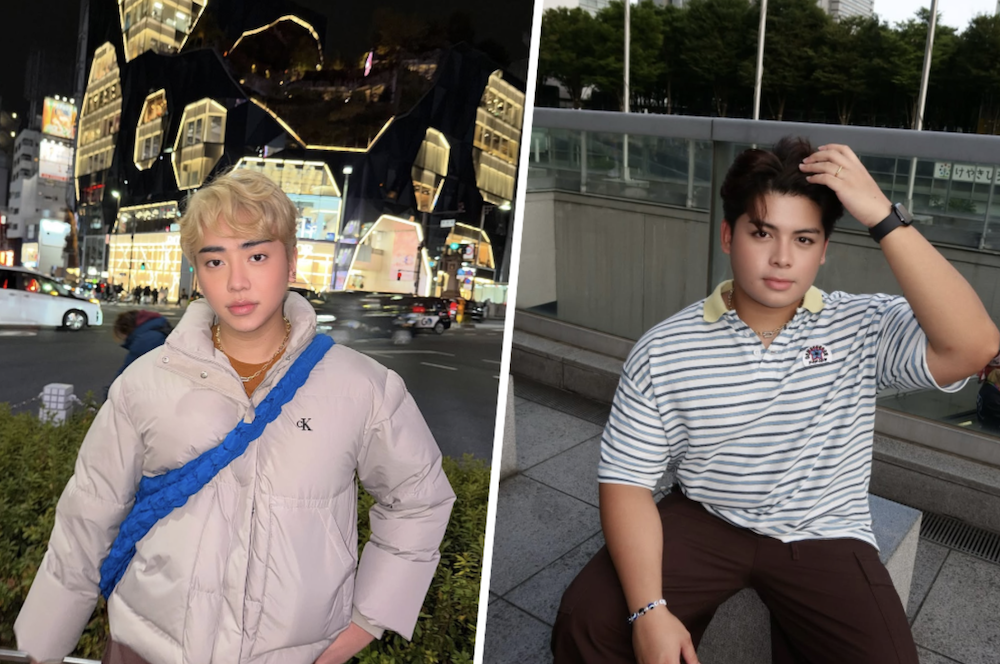
Stan and Merwel – Photo Credit: Stan’s Instagram & Mer’s Instagram
Your relationship brings together Japanese, Filipino, and LGBTQ+ identities. What are the most significant challenges and opportunities that arise from your diverse identities here in Japan as a couple?
Challenges? Honestly, not so much in real life, and I’m very grateful for that. Obviously, I can’t speak for everyone with diverse backgrounds in Japan because some might have horrible experiences. I’m gonna be honest, though, Japanese people can be pretty brutal online (very different from the front they put up in real life). I used to make a lot of content in Japanese, and the comments I got felt so unsafe. I would get comments about my sexuality, but more about me being a “HAFU” telling me to “go back to my country” or people like me “change the country too much.” On top of that, our “diversity” makes it difficult when it comes to the legal side of living in Japan. Mer is not Japanese, and he does not have a Japanese visa. Besides enrolling for school or getting a job in Japan, marrying would obviously be the easiest choice for international straight couples in Japan to obtain visa statuses, but that’s not an option for us. We do get a lot of opportunities, though. We get to do interviews like this, hopefully to shine more light on the existence of same-sex couples; we get to document our unique experiences online for other people to see; we get to work with companies that want to showcase diverse cultures in Japan, and more.
What is the most surprising or impactful piece of feedback or story you have received from the Japanese LGBTQ+ community through watching your videos?
Something that overwhelms us and we won’t get used to is people telling us that we “saved their lives” through our YouTube videos, because to us, we’re just doing what we enjoy, documenting our lives genuinely on a platform for other people to see. I guess we sometimes don’t realize what impact that has on someone who’s in the closet, afraid to be themselves, or afraid to date who they want.
You recently travelled to New York City. How do you find the LGBTQ+ scene different here in Japan and in the States?
New York City is known to be an epicenter of diversity and a melting pot of cultures. So much progress for the LGBTQ+ community came from New York City. However, we’ve only ever experienced anti-LGBTQ+ treatment in New York City. One moment was when we were walking in Koreatown, holding hands, when a man from behind overtook us to call us the F-slur. We were a little bit shaken by that experience. In terms of the “LGBTQ+ scene” itself, though, we haven’t experienced enough in the States to compare, but we do know about the huge ballroom scene in New York City, which we are dying to see one day.
When someone asks you for a recommendation for their trip to Tokyo, what are some of your absolute favorite LGBTQ-friendly places that you always suggest visiting?
Knowing the city itself is pretty friendly towards the LGBTQ+ (i.e., you won’t get kicked out of stores for being gay), don’t hold back on where you explore in the city. However, as basic as it sounds, I feel like Shinjuku Nichome is a place LGBTQ+ people should definitely check out. Not even to get wasted or to party, but to see how Japan does it. It’s interesting to see just how diverse people in Nichome can get when Japan is known to be conservative and quiet. You might see things you never thought to see in Japan. Also, definitely check out the Tokyo ballroom scene, I think that’s where you’ll really feel the diversity of the city.
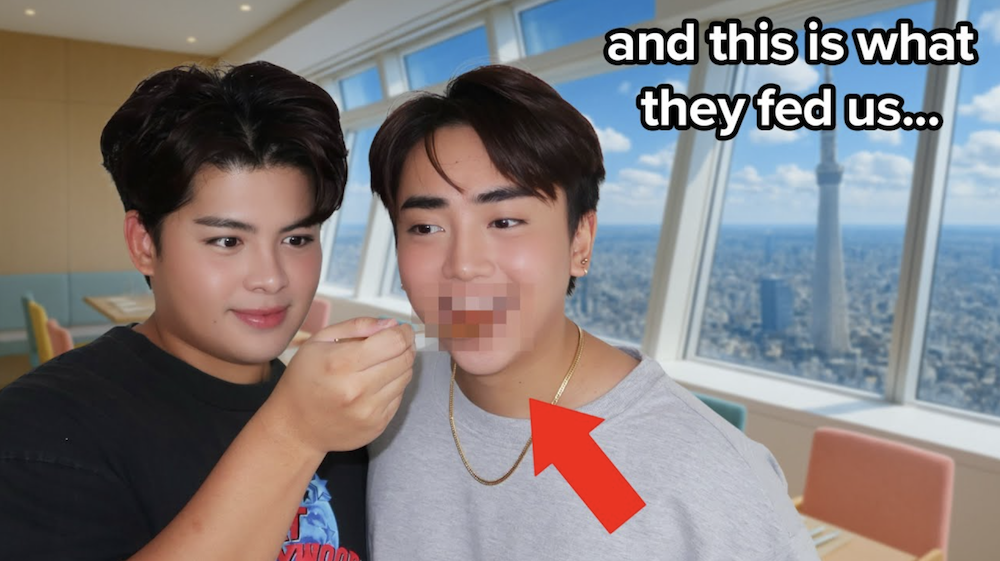
Stan & Mer’s YouTube video thumbnail with Arigato Travel – Photo Credit: Merwel’s YouTube channel
We loved your video with our guide, Wes, on the Asakusa Twilight Evening Food Tour! But since you both already know Tokyo so well, what was the most surprising or unforgettable discovery Wes showed you?
Even though we live in Tokyo, Wes showed us so many things we didn’t know. We loved learning about the history behind the places we visited, like the one he told us about the height of TOKYO SKYTREE, which is 634 meters, and can be read as ‘Musashi’ (6 = mu, 3 = sa, 4 = shi). And a fun discovery was Ramune. We thought it was just a cute soda, but it was actually Japan’s version of lemonade. Little details like that made the tour really special and memorable for us.
Anything else you’d like to share with our audience?
I really want people to see Japan as “just another country” with real people as well. It’s not just about the viral cafes you see on TikTok and the cute things you can buy recommended on Reels. As homogenous as Japanese people can be, there are still people with different backgrounds in Japan living unique lives. That’s one of the main reasons I love showcasing our lives online: to show what a “real life in Japan” can be, just a family who happens to live in Tokyo.
You can follow more of Stan and Mer’s work and connect with them here:
Stan Fukase:
Instagram: http://instagram.com/worldofxtra
YouTube: http://www.youtube.com/@worldofxtra
Tiktok: http://tiktok.com/@worldofxtra
Stan’s clothing brand: http://byxtra.com/
Merwel Anthony:
Instagram: https://www.instagram.com/merwelanthony
YouTube: http://www.youtube.com/@merwel
Tiktok: https://www.tiktok.com/@merwelanthony
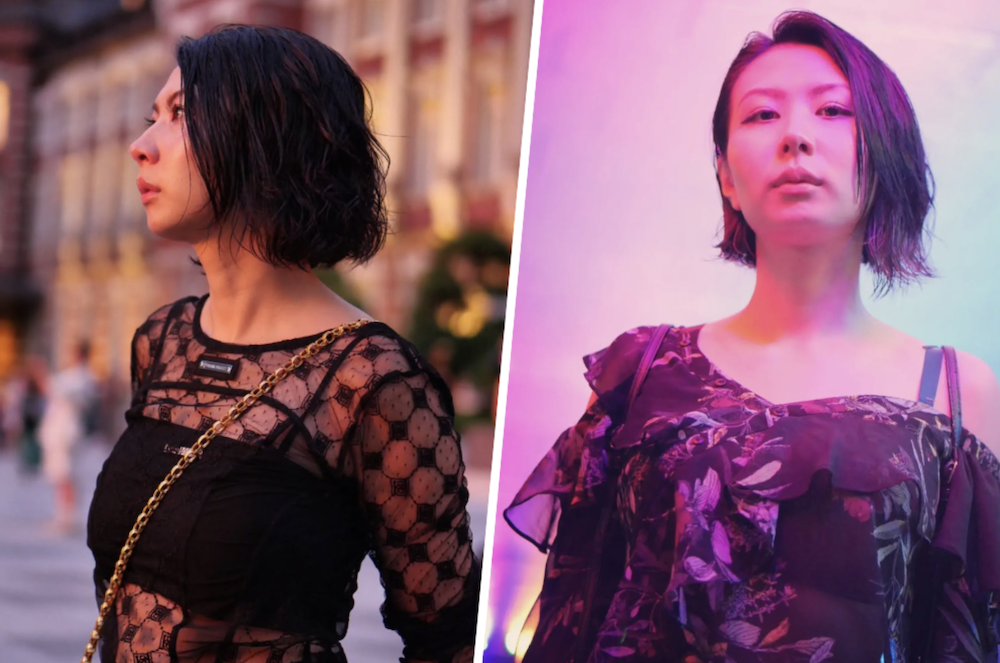
Mari Murakami – Photo Credit: Mari’s Instagram
Mari Murakami
Hi, my name is Mari Murakami. I was born in Japan, but I spent my formative years, from high school through university, in Ireland. After returning to Japan, I completed my Master’s at the University of Tokyo. My professional journey took me through two global consulting firms and a women’s health startup before I eventually founded my own company, Chocolate Inc, which I run today.
Can you share the initial story of what inspired you to create the @yesqueenchannel TikTok account to share your life and relationship?
I recognize that I am incredibly fortunate. I have an understanding family and supportive friends, and I’ve been out to my colleagues and clients since my very first job. In many ways, I’m a “walking rainbow.” However, I know that many in Japan don’t have that same safety net. As someone who loves books and film, I’ve always seen the power of representation, yet I noticed a void in Japan for “ordinary” queer role models, especially those who can bridge the gap between Japanese and global cultures in English. I realized that if I’m already living loudly and proudly, I should be the one to share that reality. I started my channel to show that a fulfilling, “normal” queer life isn’t just a dream; it’s possible right here.
You spent your formative years in Ireland and Brazil before returning to Japan. What was the biggest “culture shock” you experienced regarding LGBTQ+ visibility when you moved back to Japan?
The biggest shock was the hyper-fixation on specific roles within the community, particularly the “Tachi” (Top/Masculine) and “Neko” (Bottom/Feminine) labels. In Japan, there’s often a pressure to categorize yourself into these rigid boxes, which felt much more pronounced than what I experienced abroad.
Your TikTok beautifully highlights both your relationship moments with your partner in Croatia and your life as an entrepreneur in Japan. It really reflects the inclusive and welcoming space you’ve created! How do you balance being in a long-distance, cross-cultural relationship while sharing your life as an LGBT entrepreneur?
For me, my identity as an entrepreneur and my sexuality are separate, yet they coexist in my daily rhythm. Regarding the distance, communication is everything. We start and end our days together; she wakes me up with a morning call, and I do the same for her. We also message each other during the day when we have time, though not 24/7 since we both have careers to manage. Running a business can be stressful, but the moment I see her face on a video call at the end of the day, all that tension evaporates. No matter the thousands of miles between us, she is the home I return to every single night
You also conduct seminars for companies. How do you move the conversation for LGBTQ+ issues with the Japanese corporate world to understand inclusivity?
While I previously focused on LGBTQ+ advocacy with an NPO, my current focus is on DE&I, specifically Women’s Health. However, my approach remains the same: I share concrete, personal stories from my life and those around me. This moves the conversation away from abstract concepts and helps the audience realize that these are real human experiences happening within their own offices. By showing how inclusivity directly improves the work environment and the company’s success, I can help boost their motivation to take real action.
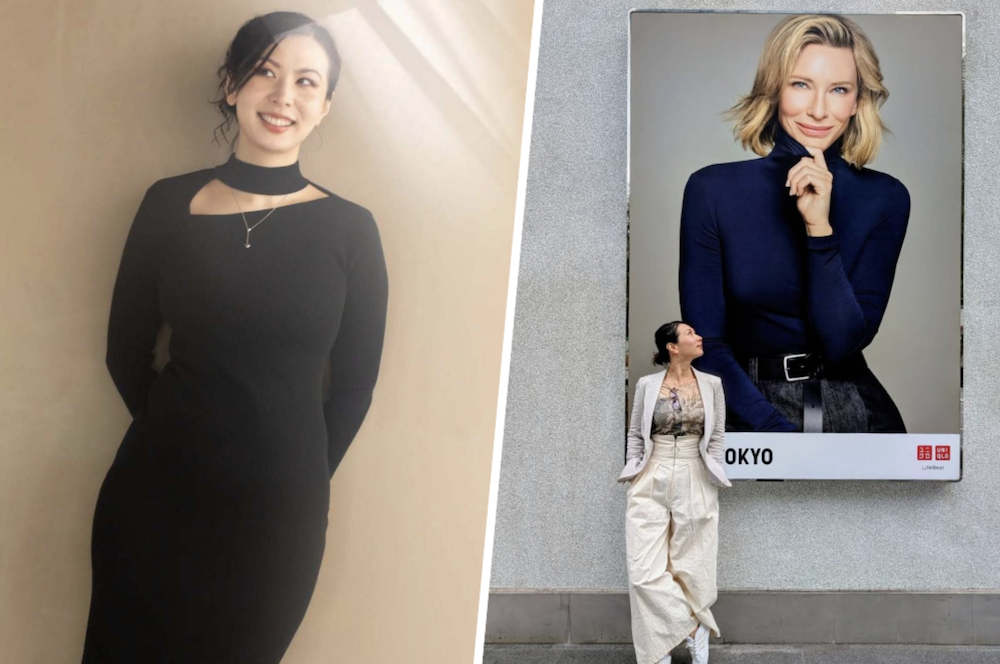
Mari Murakami – Photo Credit: Mari’s Instagram
What is one piece of advice you would give to another queer person in Japan about navigating the social scene here, and how does the culture differ from what you might have experienced elsewhere?
My advice is to find your safe space – the people and places where you feel truly safe and comfortable. You don’t owe the world a public coming-out story, and in fact, you don’t have to come out to anyone at all if you don’t feel ready. In Japan, privacy is a cultural norm, so it’s perfectly okay to keep your personal life private. The goal isn’t necessarily to be out to everyone, but to ensure you have at least one space where you can be your true self.
What is the most impactful or unforgettable piece of feedback or story you have received from the Japanese LGBTQ+ community through watching your videos?
I receive messages from all over the world, but the ones that stick with me are those who say my videos gave them the courage to come out to their family. I don’t advocate for coming out as a “requirement,” but knowing that my transparency helped someone bridge the gap with their own family is incredibly rewarding.
When someone asks you for a recommendation for their trip to Japan, what are some of your absolute favorite LGBTQ-friendly places that you always suggest visiting?
Honestly, most of my friends are straight, so I don’t seek out “LGBTQ+-specific” venues. That’s the thing about Japan: it is remarkably safe. When my partner was here, we held hands while walking through Tokyo and other cities and never encountered any issues. However, visitors should be aware that Japanese culture is generally quite reserved. Public Displays of Affection (PDA) are rare for everyone, regardless of orientation. It’s less about a lack of safety and more about a cultural preference for discretion.
Looking ahead, what is the goal you hope to achieve with your content in Japan?
It’s such an honor to share my story with Arigato Japan! Looking ahead, my goal is to collaborate with more global and domestic brands and media outlets, both as a solo creator and together with my partner, to keep pushing for visibility.
Anything else you’d like to share with our audience?
Thank you for taking the time to read my story. Japan is a beautiful and safe country. I hope you enjoy every moment of your time here!
You can follow more of Mari’s work and connect with her here:
Tiktok: https://www.tiktok.com/@yesqueenchannel
Instagram: https://www.instagram.com/yesqueen1102
YouTube: https://www.youtube.com/@YesQueen
Thank you to all the powerful voices who shared their journeys and tips. We are so proud of their powerful work in sharing their voices and bringing representation and visibility to the community. This is your invitation to experience the warmth and resilience of Japan’s queer renaissance.
Featured Photo Credit: Arthur Matsuo